 Save
Save The first time I heard that quiet sizzle of ginger and garlic in my kitchen, I was just spontaneous enough to try making miso ramen from scratch. The broth filled the house with warmth that seemed to gather everyone at the table before I even called. Rain tapped at the windows, reminding me that some meals are meant exactly for evenings like that. As mushrooms softened in the pan, even my skeptical partner drifted over, attracted by a comforting and savory aroma that couldn't be ignored. It's the type of dinner where each steam-filled spoonful makes you glad you didn't settle for takeout.
Last fall, I made this ramen on a chilly Saturday for some friends who'd never tried anything but instant noodles. We gathered in my cramped kitchen, cracking jokes as we peeled eggs and argued which nori shapes looked best. Even my friend who claimed not to be a soup person ended up scraping the last drops from his bowl. That night, laughter and slurping noodles mingled in a kitchen that finally felt like home. I'll never forget the soft glow of the stovetop, steaming glasses, and the happy chaos of five people reaching for toppings at once.
Ingredients
- Low-sodium vegetable broth: This is the backbone of the soup; I learned that using a good-quality or homemade stock makes the broth taste restaurant-worthy, especially if simmered gently.
- White miso paste: Adds the essential umami note without overpowering; always whisk it separately with broth so it dissolves smoothly—don't just drop it straight in or you'll get lumps.
- Soy sauce: Not just for salt, but for depth; I've found low-sodium works best since you can always add more to taste.
- Sesame oil: A drizzle at the start brings out a toasted aroma and carries all the aromatics—don't skip it.
- Freshly grated ginger: The zingy warmth makes the broth lively; grating rather than chopping helps it blend in beautifully.
- Garlic cloves: Mince it fine for the best flavor release; it's the first thing that hits the pan, so watch for golden edges.
- Mirin (optional): If you like a hint of sweetness, this balances saltiness elegantly—I've used rice vinegar in a pinch, but mirin feels more authentic.
- Chili paste (optional): A little goes a long way if you love heat; start with less as you can always add more.
- Fresh or dried ramen noodles: Springiness is a must; fresh noodles are worth seeking out, but dried work in a pinch—don't overcook them.
- Large eggs: That jammy yolk is pure luxury, but timing is everything; a 7-minute simmer gives perfect soft-boiled results every time.
- Shiitake or cremini mushrooms: They soak up flavor and give texture; always brown them a little for added depth.
- Baby spinach: Just wilted at serving, it adds freshness and color—don't let it stew too long, or it'll lose its pop.
- Corn kernels: Sweetness in every bite; frozen is fine, just thaw them first for best texture.
- Green onions: Slice thinly for topping; their bite gives balance to all the richness.
- Nori sheet: Cut into strips, these bring an oceanic flair; I like to crisp them lightly before adding.
- Toasted sesame seeds: For a nutty crunch on top; toasting them right before serving maximizes flavor.
Tired of Takeout? 🥡
Get 10 meals you can make faster than delivery arrives. Seriously.
One email. No spam. Unsubscribe anytime.
Instructions
- The Soft-Boiled Egg Trick:
- Carefully lower the eggs into gently boiling water, then set a timer for exactly 7 minutes—they emerge gloriously runny inside. Chill them in cold water, then peel for a glossy finish.
- Infuse the Kitchen:
- Start by warming sesame oil in a big pot; the aroma is your cue for ginger and garlic—stir, breathing in as everything goes golden.
- Sauté the Mushrooms:
- Add your mushrooms and let them sizzle until they've released their juices and browned at the edges.
- Build the Broth:
- Pour in the broth, soy sauce, and mirin, and let the mixture simmer gently for about 10 minutes—I usually taste at this point, adjusting if needed.
- Miso Magic:
- Ladle out some hot broth and whisk it with miso until no lumps remain, then swirl this back into the pot along with chili paste if you like a kick.
- Season to Taste:
- Scoop up a spoonful and adjust soy sauce or miso as you see fit—rich, balanced flavor is what to aim for.
- Noodle Time:
- Cook noodles in a separate pot according to their directions; drain and toss them to prevent sticking while you finish the soup.
- Bowl Assembly:
- Divide noodles into bowls, then ladle over fragrant, steaming broth.
- Top Creatively:
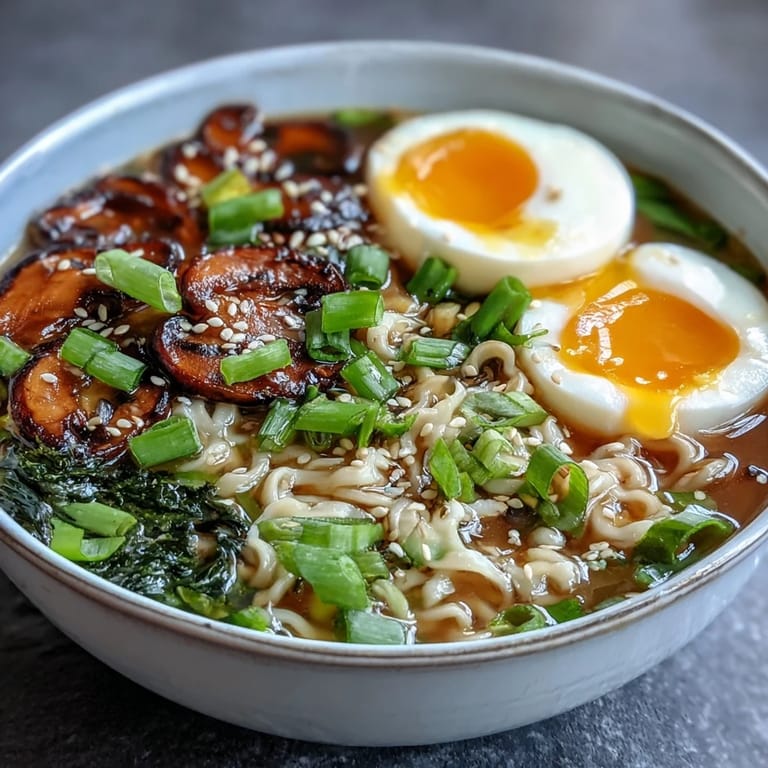
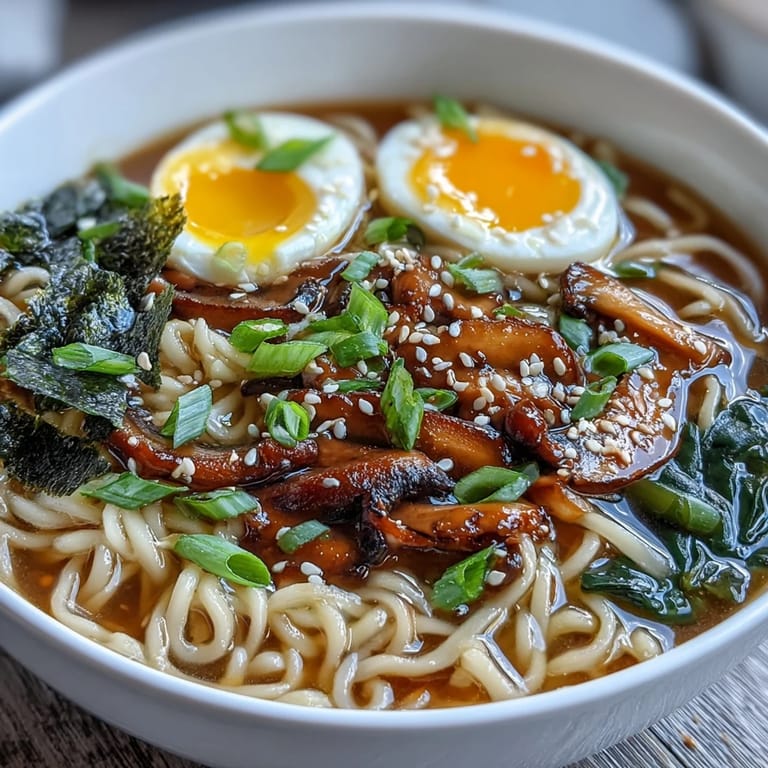
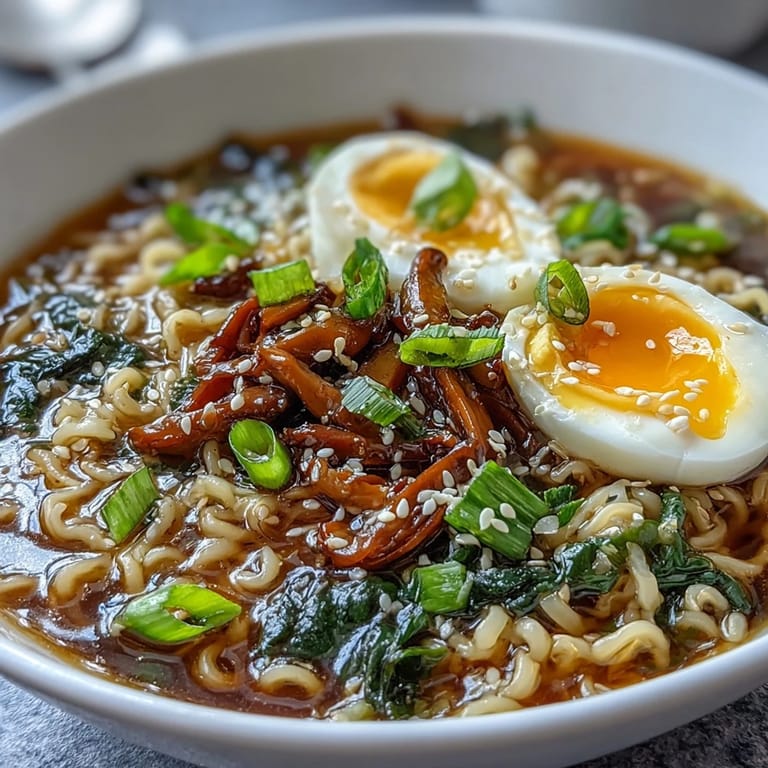
- Arrange mushrooms, spinach, corn, halved eggs, green onions, nori, and sesame seeds on top—this part always looks different and that's the fun.
- Serve and Savor:
- Enjoy right away, as everyone leans into their bowl—slurping is highly encouraged.
 Save
Save When my youngest niece asked me to teach her how to make ramen, the two of us stood at the counter, hands covered in cornstarch and laughter echoing as she tried swirling eggs in her palms. That afternoon, each step turned into a little lesson—about patience, tasting as you go, and how even kitchen mishaps (like a soft-boiled egg that wouldn't peel) can be delicious in the end. We ate our bowls together, proud of the mess and the meal alike.
Make It Your Own
Every time I cook miso ramen, I tweak the toppings based on what's hiding in my crisper or inspiring me at the market. Leftover roast veggies, sautéed tofu, or snap peas always find a way onto my table. If you're out of mushrooms, try adding thinly sliced bok choy or julienned carrots for crunch and sweetness. Sometimes, a drizzle of chili oil or a few extra sesame seeds brings a whole new edge. Customizing each bowl is half the fun, and everyone gets a bowl that feels just right to them.
Common Mistakes and Fixes
Don't be afraid to taste as you go—I've learned the hard way that what seems like enough seasoning at the start can fade as broth simmers. If your soup feels too salty, a splash of hot water brings it back into balance. Undercook the noodles slightly since they'll keep absorbing liquid even after you serve. Lost your broth oomph? Stir in a little extra grated ginger or a dash more mirin for revival. Little tweaks like these save ramen day more often than not.
How to Prep Ahead Without Stress
If you want ramen on a weeknight, prep the broth and toppings ahead—the flavors actually deepen when they rest a bit. Store each component separately and assemble just before serving for the springiest noodles. You can soft-boil and peel eggs the night before; just keep them chilled (I mark mine so I don’t mix them up with the raw ones). Reheat broth gently on the stove, not in the microwave, to keep those miso notes bright.
- Keep toppings fresh by storing them airtight.
- Always cook noodles right before serving for best texture.
- Soft-boiled eggs are easier to peel if you use slightly older eggs.
 Save
Save If you find a rhythm making this ramen, you'll crave it on cozy nights and joyful gatherings alike. The best bowls are the ones made with small improvisations, laughter, and a bit of patience together in the kitchen.
Recipe Q&A
- → How do I prevent miso from becoming grainy?
Whisk miso with a ladleful of hot broth until smooth before adding it back to the pot. Avoid boiling vigorously after adding miso to preserve its texture and delicate flavor.
- → What’s the best way to get a soft-boiled yolk?
Gently simmer eggs for about 7 minutes, then transfer to cold water to stop cooking. Peel carefully and halve to keep the yolks silky and slightly runny.
- → Can I make the broth ahead of time?
Yes. Cool the broth and refrigerate for up to 3 days or freeze for longer. Reheat gently and whisk in miso at the end to maintain brightness and texture.
- → How should I cook the noodles to avoid sogginess?
Cook noodles according to package instructions until just al dente, drain and briefly rinse under warm water if they’re likely to sit. Divide into bowls and pour hot broth over them to finish.
- → What are good protein or vegetable swaps?
For a vegan option, omit eggs and use tofu or extra mushrooms. Add bean sprouts, bamboo shoots or edamame for texture and more protein without changing the base flavors.
- → How can I adjust spice and salt levels?
Start with a small amount of chili paste and soy, taste after adding miso, then increase soy or a pinch of salt as needed. Miso is salty—adjust seasoning gradually.