 Save
Save The first time I made tikka salmon at home, I was trying to recreate a dish from a small restaurant tucked away on a rainy London street. I'd been intimidated by Indian spices for years, thinking they required some secret knowledge I didn't possess. But standing in my kitchen with a jar of tikka masala paste and a question mark in my mind, I realized the magic wasn't in perfection—it was in the smell of those spices hitting a hot pan, warming the whole apartment in minutes. That evening changed how I cooked fish forever.
I made this for my friend Sarah one Tuesday night when she was going through a rough patch, and she sat at my kitchen counter asking question after question about the marinade while it roasted. The kitchen filled with this golden, aromatic cloud, and by the time the salmon came out of the oven with those crispy edges catching the light, she was smiling for the first time in weeks. Food doesn't always fix things, but sometimes it reminds you why gathering around a table matters.
Ingredients
- Salmon fillets (4, about 150g each): Skinless or skin-on works equally well—I prefer skin-on for those crispy edges, but it's really about what you enjoy eating.
- Thick plain yogurt (3 tbsp): This is your base, the thing that makes the spices cling to the fish and cook into a gentle crust; use plant-based if dairy isn't your thing, and don't skip the thickness—thin yogurt won't coat properly.
- Tikka masala paste (2 tbsp): This is the heart of the dish; it carries the warmth and complexity so you don't have to juggle six different jars.
- Lemon juice (1 tbsp): Brightens everything and cuts through the richness without being pushy about it.
- Ground cumin and coriander (1 tsp each): These are the whispering voices in the background, adding depth that makes people ask what you did differently.
- Smoked paprika (½ tsp): Adds a gentle smokiness that makes it feel like it came from somewhere special.
- Chili powder (½ tsp): Adjust this to your comfort level; I learned the hard way that Indian chili powder packs more punch than the kind you might be used to.
- Olive oil (1 tbsp): Helps the marinade spread evenly and creates those beautiful golden-brown moments in the oven.
- Salt and freshly ground black pepper: Season properly, because a dish this simple depends on you tasting as you go.
- Fresh coriander, lemon wedges, and red onion for serving: The finishing touches that make people lean in and take another bite.
Tired of Takeout? 🥡
Get 10 meals you can make faster than delivery arrives. Seriously.
One email. No spam. Unsubscribe anytime.
Instructions
- Heat your oven and set the stage:
- Get your oven to 220°C (425°F) and line your baking tray with parchment paper or foil—this small step means no scrubbing later, and it gives you permission to focus on the real work. Your tray is now ready to hold something delicious.
- Build your marinade with intention:
- In a bowl, combine the yogurt, tikka masala paste, lemon juice, cumin, coriander, paprika, chili powder, olive oil, salt, and pepper, stirring until everything is evenly distributed and the color shifts to that beautiful russet-orange. You'll know it's right when it smells warm and inviting, like someone just whispered a secret in your kitchen.
- Prepare your salmon with care:
- Pat your salmon fillets completely dry with paper towels—this is non-negotiable if you want that crispy exterior later. Moisture is the enemy of crispiness, and we're after crispy.
- Coat and arrange:
- Spread the marinade over each fillet until every visible surface is covered in that spiced yogurt mixture, then arrange them on your prepared tray. This is where the transformation begins, even though you haven't turned on the oven yet.
- Let time do some of the work:
- Let the salmon sit for at least 10 minutes, or cover and refrigerate for up to an hour if you're thinking ahead. The spices will slowly seep into the fish, and the flavors will become more integrated and confident.
- Roast until golden and cooked through:
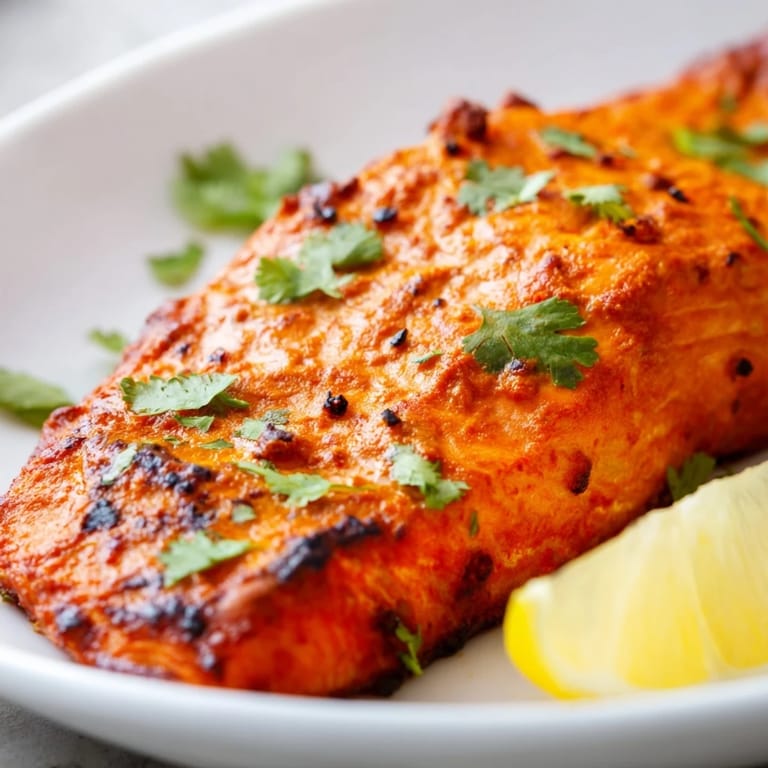
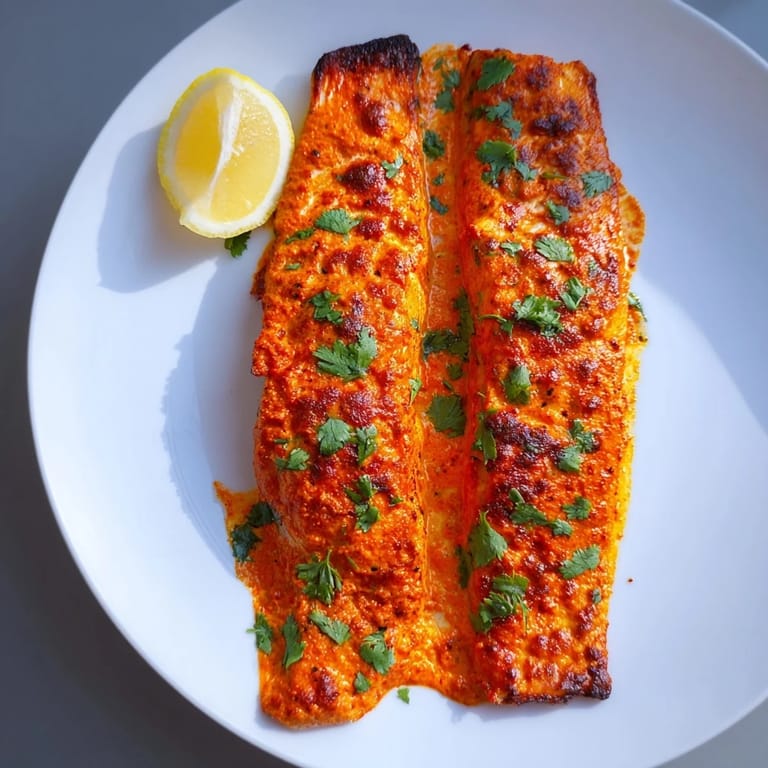
- Slide the tray into your hot oven for 15–18 minutes, checking around the 15-minute mark—the salmon is done when it flakes easily with a fork and the edges show just a hint of char. If you want extra drama, finish it under the broiler for 1–2 minutes, but watch it closely because things move fast up there.
- Finish with freshness:
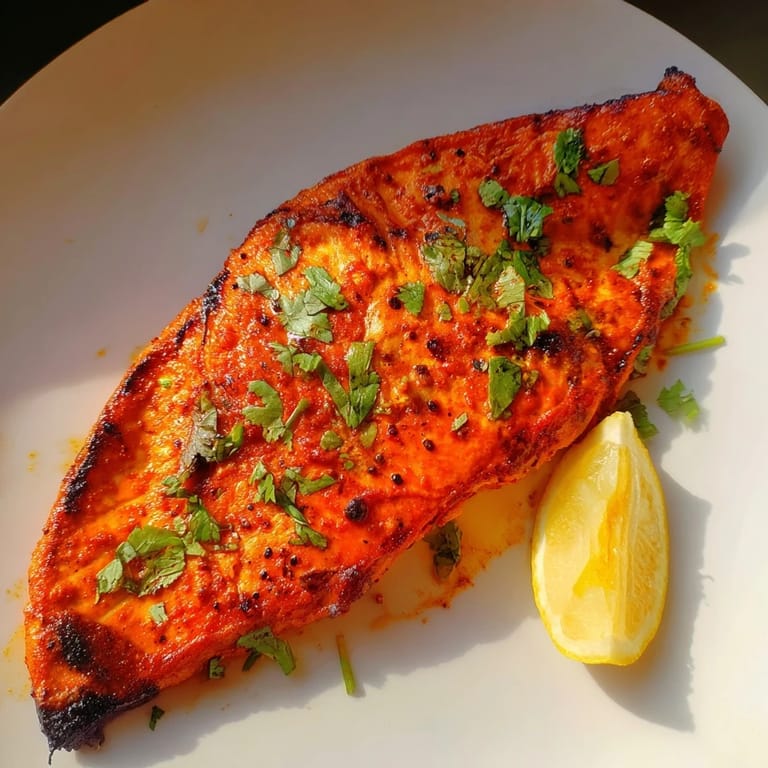
- Plate the salmon while it's still warm, scatter fresh coriander leaves across the top, add lemon wedges on the side, and a handful of sliced red onion if the mood strikes. Serve immediately, while everything is at its best.
 Save
Save The afternoon I realized this recipe was a keeper was when my partner came home unexpectedly early, and I had everything ready to go into the oven in five minutes. The whole house smelled incredible before the fish even hit the heat, and something about that moment—having a meal that felt impressive and caring ready to happen—shifted how I thought about cooking on busy days. It's not just food; it's a small gift you give the people you live with.
Why Tikka Salmon Works
There's something almost magical about the way yogurt and spices transform fish. The yogurt is acidic enough to gently cook the exterior while staying tender inside, and the spices don't overpower—they invite. Every element serves a purpose: the lemon juice keeps things bright, the smoked paprika adds subtle depth, and the chili powder gives you a quiet warmth that builds as you eat. It's the kind of dish that feels fancy but requires almost no special technique, which is exactly what makes it dangerous to your weeknight dinner rotation.
Serving and Pairing Ideas
I've served this over basmati rice, alongside naan, with cucumber salad, and even straight on a bed of leafy greens when I'm feeling lighter. The beauty is that it stands alone beautifully but also plays well with others. A simple cooling yogurt sauce on the side is a lovely touch if anyone needs to dial back the heat, and it gives guests a moment to customize their own plate.
Flexibility and Substitutions
This recipe is forgiving in ways that make it perfect for improvisation. Can't find tikka masala paste? Make a quick spice blend with more cumin and coriander, and a pinch of garam masala if you have it. Not a fish person? Cod and haddock work beautifully, or try thick slices of firm tofu if you're cooking for someone who doesn't eat fish—the marinade will soak in and create something equally delicious. The important part is the spices and the confidence to make it your own.
- Plant-based yogurt works perfectly if you need the recipe dairy-free, and honestly tastes just as creamy.
- Chili powder is your dial—taste the marinade and adjust before it goes on the fish, because personal heat tolerance is real.
- If you have time, marinating in the fridge overnight creates even deeper flavor, so plan ahead when you can.
 Save
Save This dish has become my answer to 'what do you make when you want something that feels special but aren't feeling fancy.' It's approachable, quick, and somehow makes your whole evening feel a little more intentional.