 Save
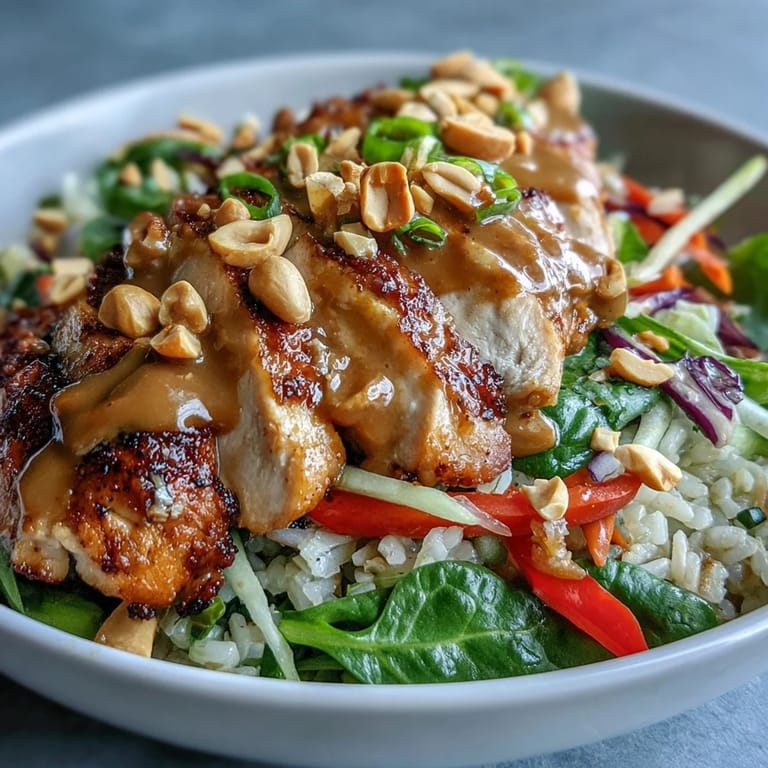
Save There's something about a bowl that just works on a Tuesday afternoon when you need to feel grounded again. I'd thrown this together after a friend mentioned she'd been eating the same sad desk lunch for weeks, and I wanted to show her that protein and vegetables could actually taste like something worth looking forward to. The peanut sauce was an afterthought, honestly—I had a jar sitting in the pantry and thought, why not?—but it turned everything into something that felt deliberate and nourishing, not just obligatory.
My partner ate four of these in a row during a work crunch week, and I knew I'd landed on something worth keeping in rotation. There's a comfort in knowing you can feed someone something that tastes indulgent but actually leaves them feeling energized instead of sluggish. That's when I realized this bowl wasn't just lunch—it was a small act of care.
Ingredients
- Boneless, skinless chicken breasts or thighs (500 g): Thighs stay juicier if you're not watching the clock, but breasts work fine if you don't overbake them; the smoked paprika gives them character without needing much else.
- Smoked paprika (1 tsp), garlic powder (1 tsp), ground cumin (½ tsp), salt (½ tsp), black pepper (¼ tsp): This combination tastes warm and slightly spiced without overpowering; adjust the cumin down if you're sensitive to it.
- Olive oil (1 tbsp): Just enough to keep the chicken from sticking and help the spices cling.
- Brown rice or quinoa (200 g uncooked): Brown rice gives you earthiness; quinoa is faster and adds a subtle nuttiness that plays beautifully with the peanut sauce.
- Water or low-sodium broth (2 cups): Broth adds a layer of flavor if you have it open; water works perfectly fine.
- Carrot, red bell pepper, cucumber, purple cabbage, spring onions, baby spinach: The colors matter here—they're not just pretty, they mean you're getting different nutrients and textures in every bite.
- Creamy peanut butter (80 g): Use the real stuff, not the powdered version; the fat is what makes the sauce silky and satisfying.
- Soy sauce (2 tbsp), rice vinegar (1 tbsp), honey (1 tbsp), sriracha (1 tsp optional): These four ingredients balance each other—the salt, the tang, the sweetness, and the heat—into something that tastes complete.
- Warm water (2–3 tbsp): Add gradually; you want it pourable but not thin enough to slide off.
- Roasted peanuts (2 tbsp), fresh cilantro, lime wedges: These garnishes aren't decoration—the peanuts add crunch, the cilantro adds a fresh note that cuts through richness, and lime brightens everything.
Tired of Takeout? 🥡
Get 10 meals you can make faster than delivery arrives. Seriously.
One email. No spam. Unsubscribe anytime.
Instructions
- Set the oven and prep your workspace:
- Preheat to 200°C (400°F) and line a baking sheet with parchment paper so cleanup feels effortless. This small step saves you from scrubbing later.
- Season the chicken with intention:
- Toss the chicken in a bowl with olive oil and all the spices until every piece is evenly coated—you want to see the paprika clinging to the surface. This is where the flavor is built, so don't rush it.
- Bake until golden and cooked through:
- Arrange chicken on your prepared sheet and bake for 20–25 minutes until the internal temperature hits 74°C (165°F). Let it rest for 5 minutes before slicing; this keeps the meat tender instead of tough.
- Start the grains while chicken cooks:
- Rinse your rice or quinoa under cold water, then add to a saucepan with water or broth and bring to a boil. Once boiling, reduce heat, cover, and let it simmer gently—brown rice takes about 25 minutes, quinoa about 15; you'll know it's done when the liquid is absorbed and a grain is tender but still has a slight bite.
- Prep vegetables while everything cooks:
- Julienne your carrot, slice the bell pepper and cucumber thin, shred your cabbage, chop the spring onions, and give your greens a quick rinse. Having everything ready before assembly means the bowl comes together in seconds.
- Whisk the peanut sauce until silky:
- In a small bowl, whisk peanut butter with soy sauce, rice vinegar, honey, and sriracha if using, then add warm water one tablespoon at a time until you reach a sauce that drizzles easily. It should coat the back of a spoon but flow from a whisk without pooling.
- Assemble each bowl with care:
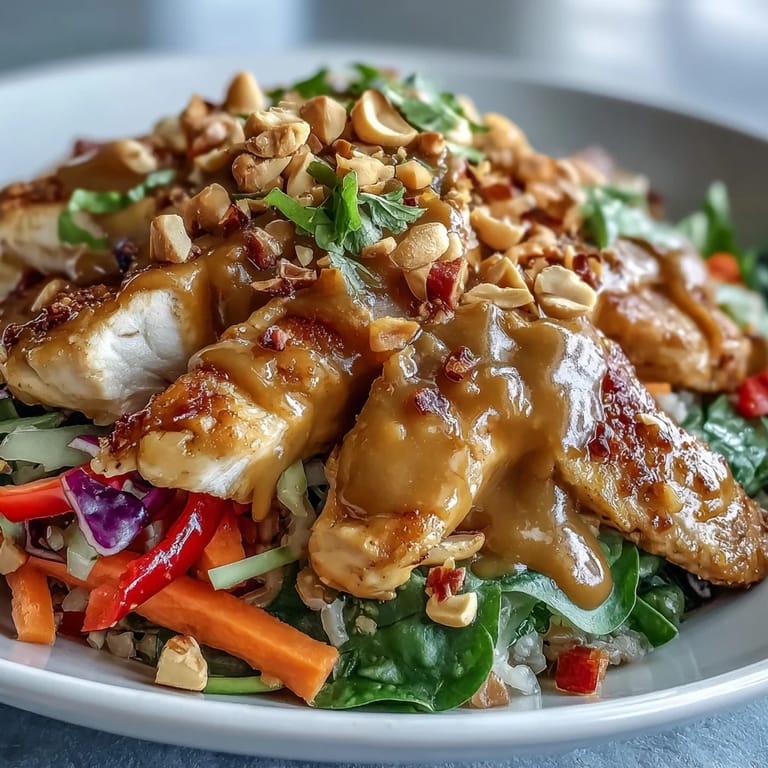
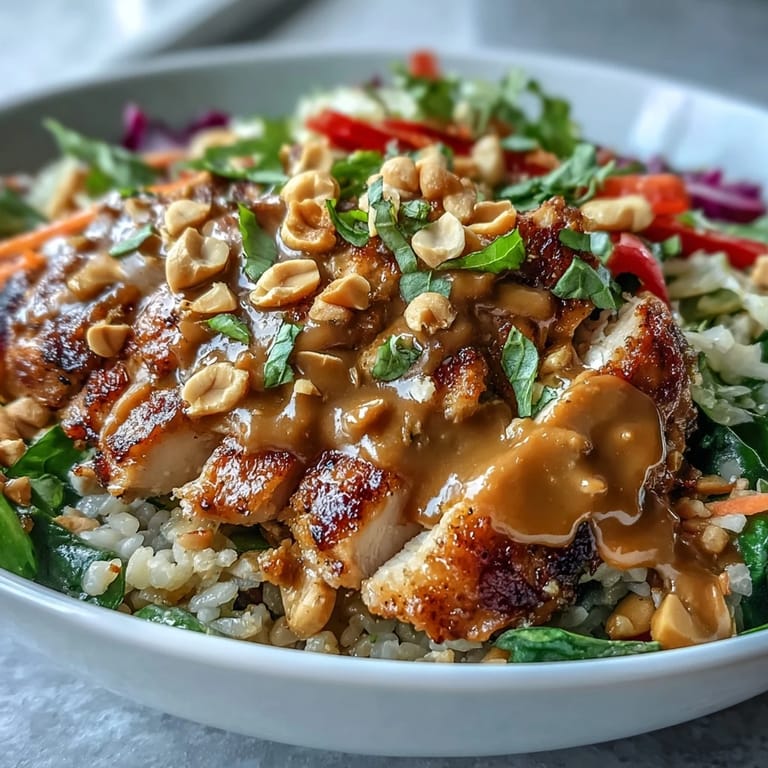
- Divide your cooked grains evenly among four bowls, then layer with sliced chicken, your prepared vegetables, and a handful of fresh greens on top. Drizzle generously with peanut sauce—don't be shy here.
- Finish with garnishes and serve:
- Scatter chopped peanuts over the top for crunch, add a sprinkle of fresh cilantro or parsley for brightness, and serve with a lime wedge for squeezing. Serve immediately while everything is still warm and the greens haven't wilted.
 Save
Save I made this for a friend going through a difficult stretch, and watching her eat it slowly, with intention, felt like one of those quiet moments where food becomes a small conversation about care. She still texts me when she makes it, which tells me something about how a good bowl can become part of someone's routine in the best way.
Why the Peanut Sauce Is Non-Negotiable
The sauce is honestly what transforms this from a regular grain bowl into something that tastes intentional. I've tried making it with peanut powder, with almond butter, with tahini—and every time I come back to creamy peanut butter because the fat content makes it coat your mouth in a way that feels indulgent while still tasting clean. The acid from the vinegar and the salt from the soy sauce keep it from being cloying, and the honey adds just enough sweetness to balance the sriracha if you use it. Mix it fresh, taste it, and adjust—a pinch more vinegar if it feels heavy, a touch more honey if it's too sharp. Trust your palate.
Grain Choices and What They Change
Brown rice gives you an earthy, slightly chewy texture that feels substantial and grounding, almost like eating something your body recognizes as real food. Quinoa is lighter, fluffier, and cooks in half the time, which matters on nights when you're hungry sooner rather than later. I've also done this with farro and with a mix of wild and brown rice, and both work beautifully—the key is making sure whatever grain you choose is cooked through but not mushy. Undercooked grains feel tough and unfinished; overcooked ones turn into porridge. The middle ground is where the magic happens.
Building Flavor Through Color
The vegetables aren't just there to look nice on Instagram—different colors mean different nutrients and flavors working together. The red bell pepper adds sweetness and crunch, the purple cabbage brings a subtle earthiness that plays against the peanut sauce, the cucumber keeps everything feeling fresh, and the carrot adds a natural sweetness that doesn't compete with the sauce. The greens get wilted slightly by the warm grains and sauce, which softens them without making them limp. Eating this bowl means tasting something different in every spoonful because you've built intentional contrast.
- If you can't find purple cabbage, regular green cabbage works just as well and tastes nearly identical.
- Slice your vegetables as thin as you can manage; thicker slices feel chewy instead of tender.
- Add avocado or roasted sweet potato if you want extra richness or want to make it more filling.
 Save
Save This bowl taught me that satisfaction comes from balance—protein and vegetables and grains and fat all playing together instead of competing. Make it often enough and it stops being a recipe and becomes something you reach for when you need to feed yourself well.
Recipe Q&A
- → Can I make this bowl ahead of time?
Yes, you can prep the components up to 3 days in advance. Store the chicken, grains, vegetables, and sauce separately in airtight containers. Assemble bowls when ready to serve.
- → What grains work best in this bowl?
Brown rice and quinoa are excellent choices. Both absorb the peanut sauce beautifully and provide satisfying texture. Farro or barley would also work well.
- → How can I adjust the sauce consistency?
Add warm water one tablespoon at a time until you reach your desired thickness. The sauce should be pourable but still coat a spoon nicely.
- → Is this bowl freezer-friendly?
The cooked chicken and grains freeze well for up to 3 months. Fresh vegetables and peanut sauce are best prepared fresh or refrigerated for up to 5 days.
- → What protein alternatives can I use?
Baked tofu, tempeh, or chickpeas make excellent vegetarian substitutions. Cook them similarly with the same spice rub for consistent flavor.
- → How spicy is this dish?
The sriracha is optional, so you control the heat. Even without it, the smoked paprika adds mild warmth. Adjust to your preference.