 Save
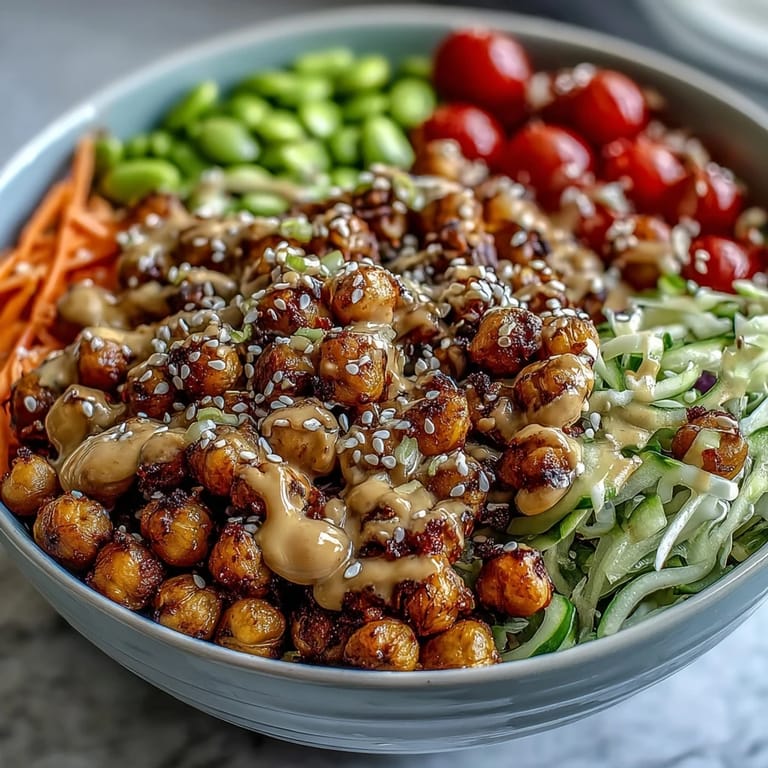
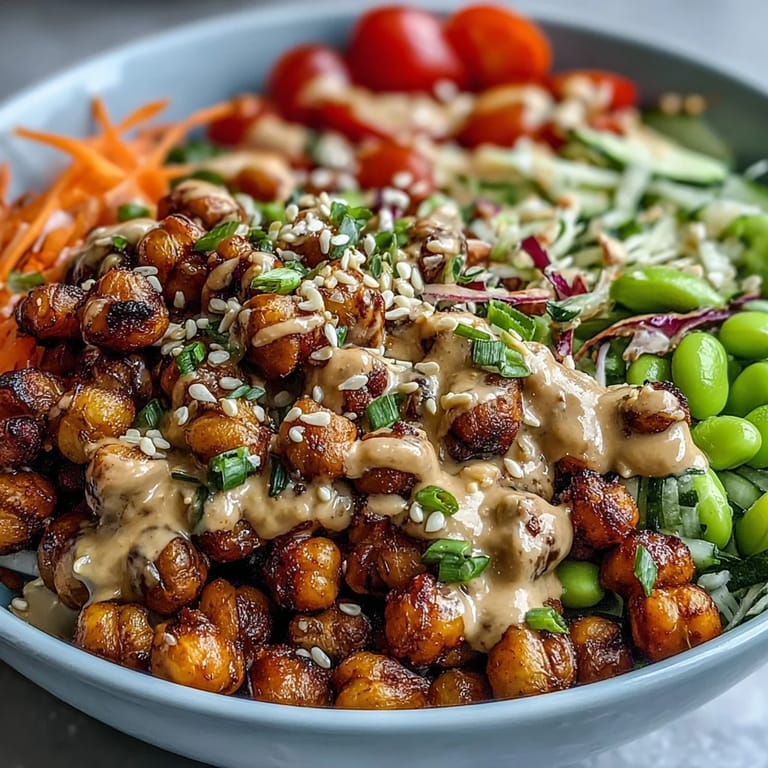
Save There's something about the moment when roasted chickpeas hit a hot pan and start crackling that made me fall in love with this bowl. I was rushing through lunch prep one Tuesday, tossing together whatever vegetables I had, when I realized I could turn a simple pile of ingredients into something that actually felt like a celebration on a plate. The creamy peanut sauce was the turning point—suddenly everything tasted intentional, connected, alive.
I made this for a friend who'd just gone vegetarian, and watching her eyes light up when she tasted that peanut sauce dripping over the crispy chickpeas—that's when I knew this bowl was something special. She asked for the recipe that same night, and now it's become her go-to meal when she needs to feel grounded and nourished.
Ingredients
- Chickpeas (2 cans, 15 oz each), drained and rinsed: These are your protein powerhouse, and rinsing them thoroughly removes that starchy liquid so they'll crisp up beautifully instead of steaming.
- Olive oil (1 tbsp): Just enough to coat without making them greasy—this is key for that crispy texture.
- Smoked paprika, ground cumin, garlic powder, salt, and black pepper: This spice combination creates a warm, savory crust on each chickpea that makes them taste like you've been smoking meats all day.
- Brown rice or quinoa (2 cups cooked): Choose whichever you have on hand; both absorb the peanut sauce beautifully and give you staying power.
- Red cabbage (1 cup shredded), carrots (1 cup julienned), cucumber (1 cup sliced), cherry tomatoes (1 cup halved), edamame (1/2 cup): The vegetables are your crunch and brightness; don't skip any of them because together they create a textural symphony.
- Fresh cilantro (1/4 cup chopped): This herb ties everything together with a fresh, citrusy note that keeps the bowl from feeling heavy.
- Creamy peanut butter (1/3 cup): Use the kind with just peanuts and salt, nothing else—it makes the sauce silkier and more honest.
- Soy sauce (2 tbsp, tamari for gluten-free): This adds umami depth that makes the sauce taste restaurant-quality.
- Maple syrup or honey (1 tbsp): A touch of sweetness balances the salty, tangy elements and rounds out the flavor profile.
- Rice vinegar (1 tbsp): This acid brightens everything and keeps the sauce from being one-dimensional.
- Sriracha or chili sauce (1 tsp, optional): Add this if you want a gentle heat that builds on your palate.
- Garlic (1 clove, finely minced): Fresh garlic in the sauce matters; minced fine so it disappears but leaves its signature everywhere.
- Warm water (2–4 tbsp): Start with less and add gradually so your sauce reaches that perfect drizzleable consistency.
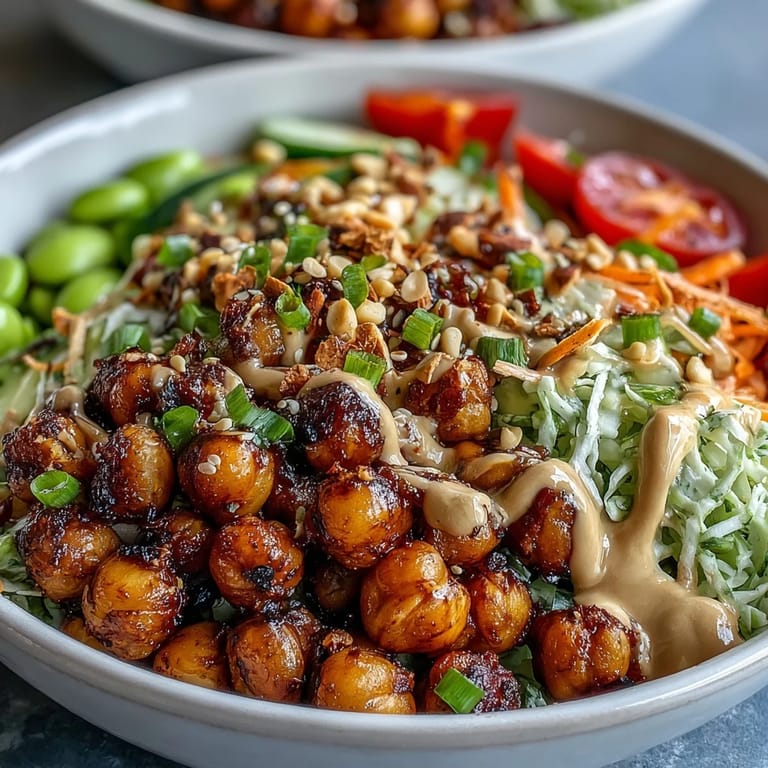
- Roasted peanuts (2 tbsp, roughly chopped) and sesame seeds (1 tbsp optional): These final toppings add crunch and nuttiness that makes each bite interesting.
- Lime wedges: Essential for brightening the flavors at the end; a squeeze over everything brings the whole bowl into focus.
Tired of Takeout? 🥡
Get 10 meals you can make faster than delivery arrives. Seriously.
One email. No spam. Unsubscribe anytime.
Instructions
- Get your oven ready:
- Preheat to 425°F and line a baking sheet with parchment paper so cleanup is effortless and your chickpeas won't stick.
- Season and roast the chickpeas:
- Toss your drained chickpeas with olive oil and all those warming spices, then spread them out on the baking sheet in a single layer. Roast for 20–25 minutes, giving them a good shake halfway through, until they're golden brown and making little crackling sounds in the oven.
- Build your peanut sauce:
- While the chickpeas are cooking, whisk together the peanut butter, soy sauce, maple syrup, rice vinegar, sriracha, and minced garlic in a bowl. Start with 2 tablespoons of warm water and gradually add more until you reach that perfect pourable consistency—you want it to coat a spoon but still flow easily.
- Prepare your components:
- If your rice or quinoa isn't already cooked, get it going now. Slice and chop all your vegetables so they're ready to assemble; the crispness will stay intact if you do this just before serving.
- Assemble your bowls:
- Divide your cooked grain among four bowls as your base, then arrange the roasted chickpeas and all your colorful vegetables on top in whatever pattern makes you happy. There's no wrong way to do this.
- Finish and serve:
- Drizzle each bowl generously with peanut sauce, then top with chopped roasted peanuts and sesame seeds. Serve with lime wedges on the side so everyone can squeeze in as much brightness as they want.
 Save
Save There was a Saturday morning when my sister came over feeling completely burnt out, and I made her this bowl without asking what she wanted. Watching her eat slowly, deliberately, seeming to find some peace in each spoonful—that's when food stopped being just nutrition and became something healing.
Customizing Your Bowl
This bowl is endlessly flexible, which is part of why it became my favorite go-to when I didn't know what to make. One week I added baby spinach underneath the grain because I had it in the fridge. Another time I swapped the brown rice for cauliflower rice when I was trying to keep things lighter. The structure stays the same—crispy chickpeas, fresh vegetables, creamy sauce—but you can rearrange the details based on what you're craving or what you have available.
The Peanut Sauce Magic
I learned something important when I first made this sauce: the water matters more than you'd think. Too little and it's thick as paste; too much and it becomes a soup. The trick is starting conservative and building up, whisking continuously so the peanut butter emulsifies smoothly instead of clumping. That's also when I discovered that a tiny pinch of minced garlic makes the whole sauce taste deeper and more complex, like it's been simmering for hours when really it took three minutes to whisk together.
Storage and Leftovers
These bowls travel beautifully and taste just as good the next day, which is why I often make four at once even if I'm eating alone—future me always appreciates having lunch already decided. Keep the peanut sauce in a separate container so the vegetables don't get soggy, and store everything in the fridge for up to three days. You can reheat the chickpeas and grain gently, or eat them cold on a warm day when the freshness feels especially welcome.
- Pack the components separately if you're taking this to work or a picnic, and assemble just before eating for maximum crunch.
- The peanut sauce thickens in the fridge, so let it sit at room temperature for a few minutes before drizzling, or add a splash of warm water to loosen it again.
- Double the sauce recipe if you want leftovers for drizzling on other bowls, roasted vegetables, or even as a dipping sauce for crispy tofu.
 Save
Save This bowl has become the meal I reach for when I need to feel taken care of, whether I'm the one cooking or the one being fed. There's something quietly powerful about putting this together, knowing that in about 45 minutes, you'll have something vibrant and nourishing in front of you.
Recipe Q&A
- → Can I make the peanut sauce ahead of time?
Yes, the peanut sauce can be prepared up to 5 days in advance and stored in an airtight container in the refrigerator. You may need to add a little warm water and whisk it before serving to reach the desired consistency.
- → What can I use instead of peanut butter?
Almond butter, cashew butter, or sunflower seed butter work well as substitutes. Tahini can also be used, though the flavor profile will be slightly different and you may want to add extra sweetener.
- → How do I store leftovers?
Store components separately in airtight containers in the refrigerator for up to 4 days. Keep the sauce, roasted chickpeas, and vegetables in separate containers to maintain optimal texture. Reheat chickpeas in the oven at 350°F for 5-10 minutes to restore crispiness.
- → Is this bowl gluten-free?
Yes, simply substitute tamari for the soy sauce. All other ingredients, including the chickpeas, vegetables, and peanut butter, are naturally gluten-free. Always check labels on packaged ingredients to confirm.
- → Can I use dried chickpeas instead of canned?
Absolutely. Soak 1 cup dried chickpeas overnight, then simmer for 60-90 minutes until tender. Drain thoroughly and pat dry before roasting. You'll need about 3 cups cooked chickpeas to equal 2 cans.
- → What other vegetables work well in this bowl?
Try shredded Brussels sprouts, bell peppers, radishes, snap peas, or steamed broccoli. For cooked vegetables, roasted sweet potato cubes or sautéed kale make excellent additions that complement the peanut sauce beautifully.