 Save
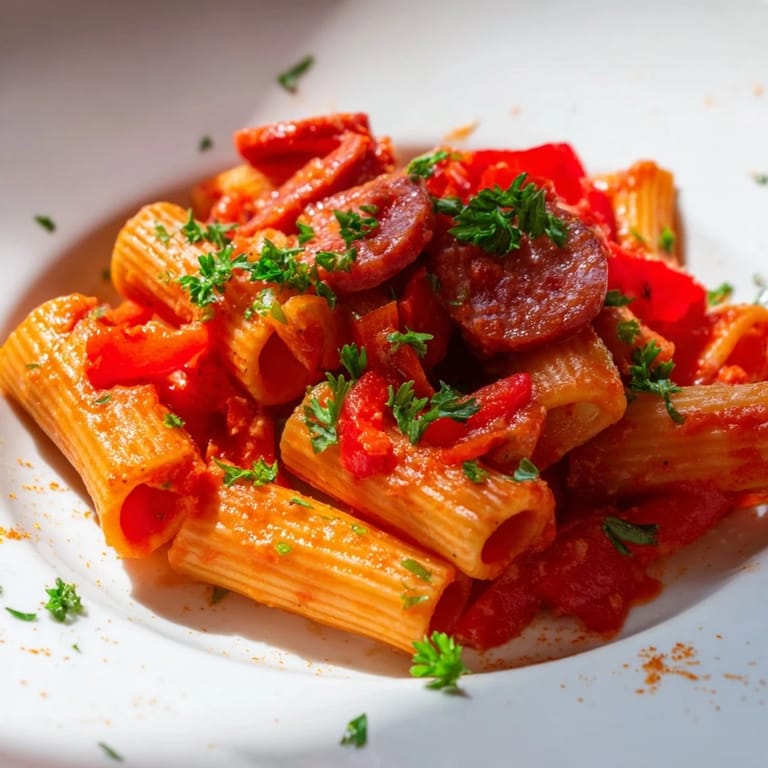
Save There's something about the sizzle of Spanish chorizo hitting a hot pan that stops me mid-thought every single time. I discovered this pasta quite by accident one weeknight when I had chorizo, tomatoes, and a half-empty box of penne staring back at me from the pantry. What started as making do with what I had turned into one of those dishes I now deliberately cook when I want the kitchen to smell like Spain and taste like comfort. The smoked paprika adds this mysterious depth that makes people ask what your secret ingredient is, and the best part is how quickly it all comes together.
I made this for my neighbor last spring when she brought over fresh basil from her garden, and she asked for the recipe before she'd even finished her plate. That's when I realized this wasn't just another pasta night—it was the kind of simple, honest food that makes people feel like you've done something special for them. Now whenever someone says they're tired of their usual weeknight rotation, this is what I reach for.
Ingredients
- Penne or rigatoni, 350g: The ridges and tubes catch that chorizo-infused sauce better than smooth pasta would, so don't swap this for spaghetti or you'll lose half the flavor.
- Spanish chorizo, 200g: Buy it in one piece if you can and slice it yourself—the thicker rounds stay juicier and release their oil more evenly than thin pre-sliced versions.
- Medium onion: Finely chopped means it melts into the sauce rather than sitting as chunks, creating a silky base for everything else.
- Garlic, 2 cloves: Minced fine so it dissolves into fragrance rather than biting your tongue halfway through.
- Red bell pepper: The sweetness is essential—it balances the heat from the chorizo and paprika so the dish doesn't feel aggressive.
- Canned chopped tomatoes, 400g: Canned is actually better than fresh here because the tomatoes have time to concentrate their flavor into the sauce.
- Smoked paprika, 1 tsp: This is the soul of the dish—use good quality and taste as you go because paprika brands vary wildly in intensity.
- Chili flakes: Optional but I use them because they add a gentle warmth that lingers without overpowering.
- Extra virgin olive oil, 2 tbsp: You'll be using the chorizo oil too, so don't hold back here.
- Fresh parsley: Chopped fresh at the end, it brings brightness that cuts through all that richness.
- Manchego or Parmesan cheese: A sharp cheese against the smoky sauce is the finishing touch that makes it sing.
Tired of Takeout? 🥡
Get 10 meals you can make faster than delivery arrives. Seriously.
One email. No spam. Unsubscribe anytime.
Instructions
- Get the pasta going:
- Bring a large pot of salted water to a rolling boil—you want it salty like seawater. Cook your pasta until it's just tender but still has a little resistance when you bite it, then reserve half a cup of that starchy pasta water before draining. That water is liquid gold for loosening your sauce later.
- Wake up the chorizo:
- Heat olive oil in a large skillet over medium heat and add your sliced chorizo. You'll watch it transform in 2 to 3 minutes as the edges brown and the fat renders out, filling your kitchen with that unmistakable Spanish smoke and spice.
- Build the flavor base:
- Toss in your chopped onion and red pepper, letting them soften for about 4 to 5 minutes until the onion becomes translucent and sweet. This is when the sauce really starts to smell like something worth making.
- Add the aromatic layer:
- Stir in your minced garlic, smoked paprika, and chili flakes if you're using them. Cook for just about a minute until everything becomes fragrant—don't let the garlic brown or it'll turn bitter.
- Simmer the sauce:
- Pour in your canned tomatoes and let everything bubble gently for 8 to 10 minutes. The sauce will thicken slightly and deepen in color as the flavors meld together and soften any raw edges.
- Bring it all together:
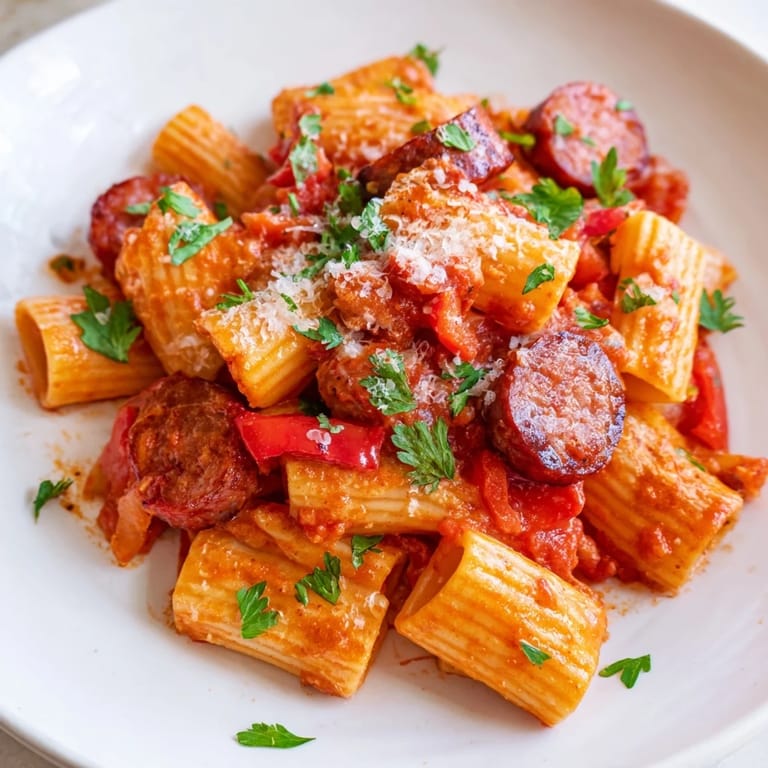
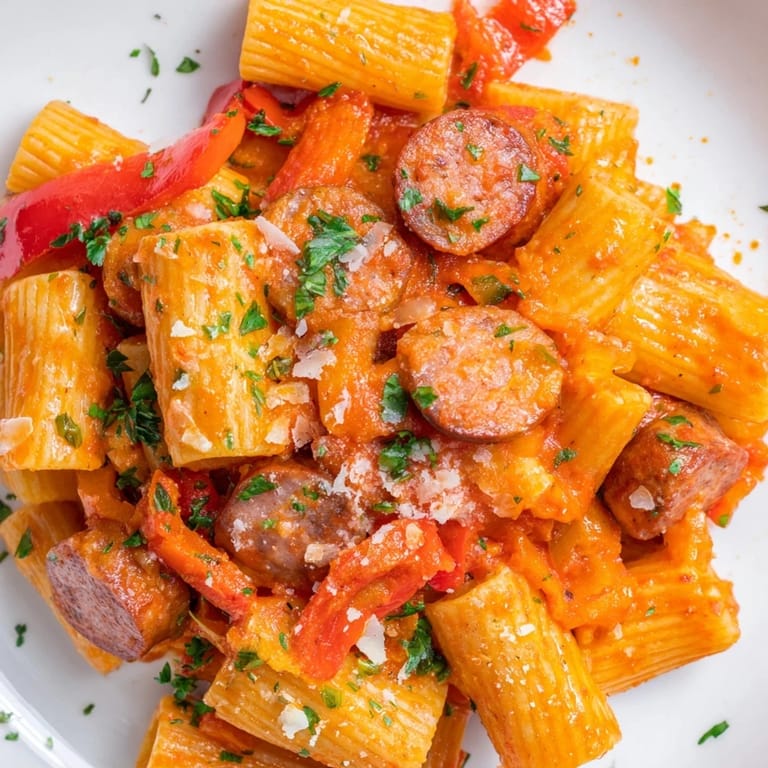
- Add your drained pasta directly into the skillet and toss until every strand is coated in that gorgeous red-orange sauce. If it looks too thick, add a splash or two of your reserved pasta water until it reaches that creamy, clingy consistency.
- Final seasoning and serve:
- Crack fresh black pepper over everything, taste, and adjust if needed. Transfer to a serving bowl or plate and shower it with chopped fresh parsley and grated cheese if you'd like that extra richness.
 Save
Save I'll never forget my partner tasting this for the first time and asking if I'd learned to cook Spanish food without telling him. The dish has this way of tasting more complicated than it actually is, which is exactly why I keep coming back to it on nights when I want to feel proud of dinner without spending hours in the kitchen.
The Magic of Chorizo
Spanish chorizo is different from other sausages because it's already seasoned with smoked paprika and garlic, which means it's doing half your work for you before you even start cooking. When that chorizo hits the hot pan, it releases its fat and all those spices right into your sauce, creating a base that's complex and layered without any extra effort on your part. Once you understand this, you realize you're not really making a pasta dish—you're just letting the chorizo season everything around it.
Why This Sauce Works
The combination of tomatoes, bell pepper, and onion creates what I think of as a Spanish soffritto base, which is totally different from the Italian version but equally powerful. The sweetness from the pepper and onion contrasts beautifully with the heat and smoke, while the tomatoes add acidity that keeps everything balanced and bright. It's why you don't need cream or butter here—the sauce tastes rich and full because the flavors are working together, not because you're covering them up with dairy.
Variations and Add-Ons
This dish is flexible enough to welcome additions without losing its identity, and I've found that small changes can push it in different directions depending on what mood you're in. A splash of dry white wine added after the vegetables will add depth, or fresh spinach stirred in at the very end brings a peppery green note that feels almost fancy. You can also swap the chorizo for spicy Italian sausage if that's what you have, though the flavor profile will shift from Spanish smoke to Italian herbs.
- A handful of baby spinach stirred in right at the end adds color and nutrition without changing the core flavor.
- A splash of white wine after sautéing the vegetables deepens the sauce and adds a subtle complexity.
- If you want it creamier, stir in a splash of heavy cream or add an extra handful of grated cheese instead of just topping it.
 Save
Save This is one of those recipes that proves you don't need a long ingredient list or complicated techniques to make something that tastes like you care. It's become my reliable answer when someone asks what to make, and I hope it becomes yours too.
Recipe Q&A
- → What pasta types work best for this dish?
Penne or rigatoni hold the sauce well, but other medium to large tubular pastas also work great.
- → Can I adjust the spiciness level?
Yes, adding or omitting chili flakes allows control over heat without overpowering the smoky flavors.
- → What can be used as a substitute for Spanish chorizo?
Spicy Italian sausage works as a good alternative if Spanish chorizo isn't available.
- → How to make the sauce more flavorful?
Sautéing the vegetables thoroughly and adding a splash of dry white wine enhances the depth of the sauce.
- → Can I add vegetables to this dish?
Yes, baby spinach or arugula can be stirred in towards the end for added freshness and nutrition.