 Save
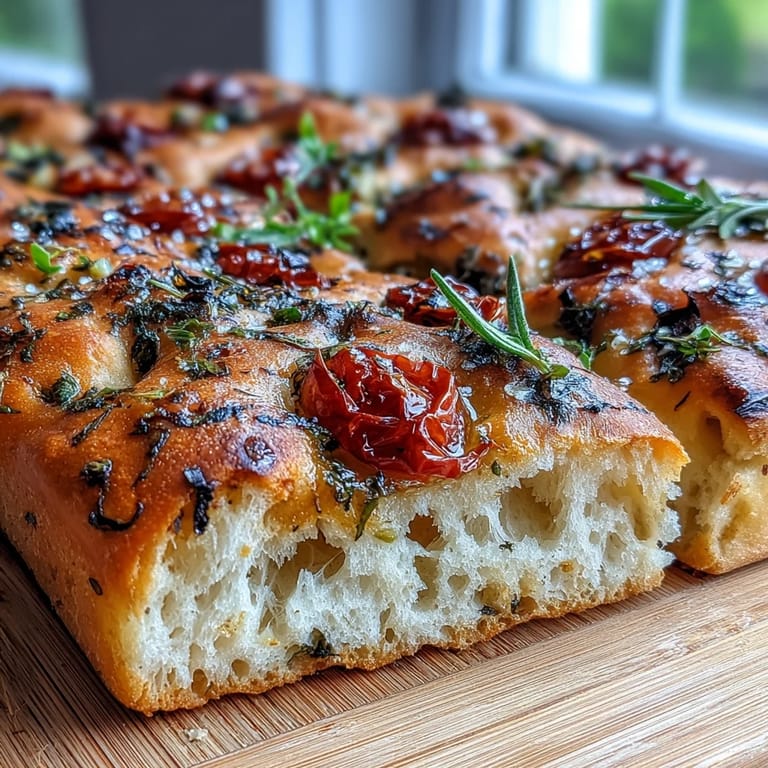
Save There is something hilariously therapeutic about punching down a pillow of dough on a quiet Saturday, the birds singing outside as I listen for that hollow thump. The aroma of just-chopped herbs always reminds me that spring is here, and the kitchen feels like a sun-dappled garden. It was never about perfection—rather, about impatient fingers stealing tomatoes off the cutting board, the anticipation thick in the air. The first time I tried baking focaccia, I splattered flour everywhere but was delighted at how forgiving this dough proved to be. By the end, a tray of golden bread cooling on the rack had everyone circling for a still-warm piece.
Last year, I brought this focaccia to a rainy-day potluck, placing it next to someone's ambitious lasagna; it was gone in minutes, each bite chased by laughter and requests to share the recipe. Watching people fight over edge pieces convinced me that crispy corners and herb-speckled tops win every time. Back at home, my family now expects focaccia to make an appearance any time cherry tomatoes are ripe and plentiful.
Ingredients
- Bread flour: Gives the focaccia its signature chew—I learned not to swap it for all-purpose if I want that bakery-style texture.
- Fine sea salt: Added to the dough for balance; don't skip this or your bread may taste flat.
- Active dry yeast: Helps the dough rise into a cloud; if it doesn't foam, toss it and start over.
- Lukewarm water: Just warm to the touch, not hot—I always stick a finger in to check.
- Extra-virgin olive oil: Key for flavor and the crisp, golden crust—don't hold back when drizzling.
- Cherry tomatoes: Their burst of juice is magical against the tender bread; the trick is to cut them in half so they don't roll away.
- Fresh rosemary: Adds piney depth; I bruise the leaves slightly to release the aroma.
- Fresh thyme: Sweet, earthy notes that infuse every bite; strip the leaves just before adding.
- Fresh chives: Brings in a subtle onion flavor; a fine chop stops them from clumping.
- Fresh basil: Torn at the last moment to keep the fragrance bright and lively.
- Flaky sea salt: The crowning touch—trust me, the crunch is worth every pinch.
- Freshly ground black pepper: Just a scatter wakes up all the other flavors.
Tired of Takeout? 🥡
Get 10 meals you can make faster than delivery arrives. Seriously.
One email. No spam. Unsubscribe anytime.
Instructions
- Mix the dry ingredients:
- Using your largest bowl, whisk together bread flour and fine sea salt; the scent is subtle but warm and inviting.
- Activate the yeast:
- Stir the yeast into lukewarm water and watch as it bubbles up; this is your sign that things are off to a good start.
- Combine and mix:
- Pour the foamy yeast and olive oil into the flour and mix until a sticky dough forms—don't worry, messy hands are part of the fun.
- First rise:
- Transfer the dough to a lightly oiled bowl and cover with a damp towel; after about an hour, it should be puffed and jiggly.
- Shape the dough:
- Oil your tray well, then gently stretch the dough out to the corners, pressing down to create playful dimples all over the surface.
- Second rise:
- Cover and let it rest again; this short wait makes the focaccia extra airy.
- Prepare the toppings:
- Preheat your oven and drizzle the dough with olive oil, then scatter tomatoes, herbs, flaky salt, and pepper in a joyful jumble.
- Bake:
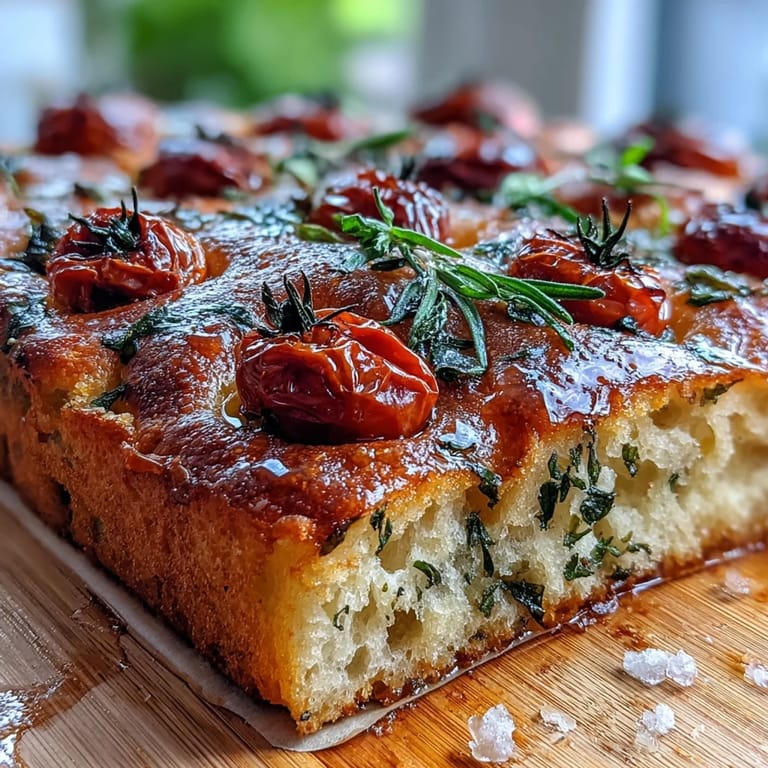
- Slide the tray into a hot oven; the aroma will fill your kitchen as the top turns gold and the tomatoes blister.
- Cool and serve:
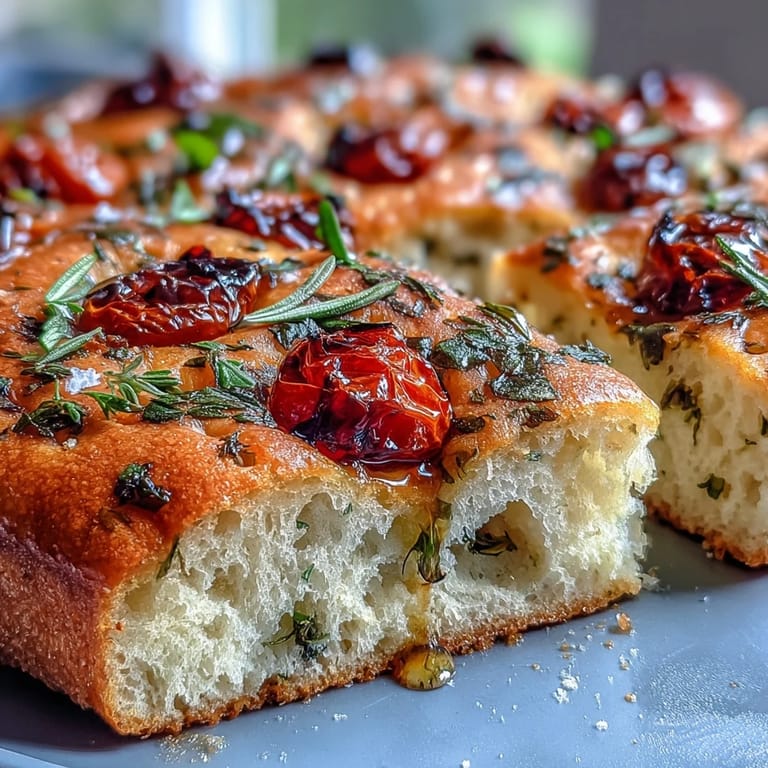
- Let it cool just enough to slice without burning your fingers—it's best shared while still slightly warm.
 Save
Save  Save
Save The day my neighbor stopped by unannounced on her birthday, I spontaneously made this focaccia, and we ended up eating half of it on my back steps, chatting as dusk rolled in—it was comfort disguised as bread, the kind of memory I wish I could bottle.
Making Focaccia Your Own
The beauty here is flexibility—I've swapped in dill, parsley, even delicate fennel fronds, all with fantastic results. Don't hesitate to use whatever soft herbs you come across at the farmers' market or in your own backyard pot. Sometimes a last-minute handful of Parmesan on top is the sort of mid-bake decision that feels like an inside joke just between you and your oven.
Little Kitchen Victories
I realized how much more flavorful the focaccia was when I lightly bruised the rosemary before scattering it on top. It doesn't need to be fussy—the dough loves to be handled gently, not perfectly. Even on days I've run low on tomatoes, it still comes out beautiful because it's mostly about the golden crunch and the wafting smell of herbs.
Serving Suggestions That Shine
Warm, the bread is almost buttery, and the crust sings when dipped into a pool of olive oil and balsamic vinegar. Any leftovers (rare though they are) reheat perfectly and make wonderful sandwich bases.
- Always use a sharp knife or a bread saw for clean slices
- Allow to cool for at least 10 minutes before cutting
- Use parchment paper on the tray for quick cleanup
 Save
Save 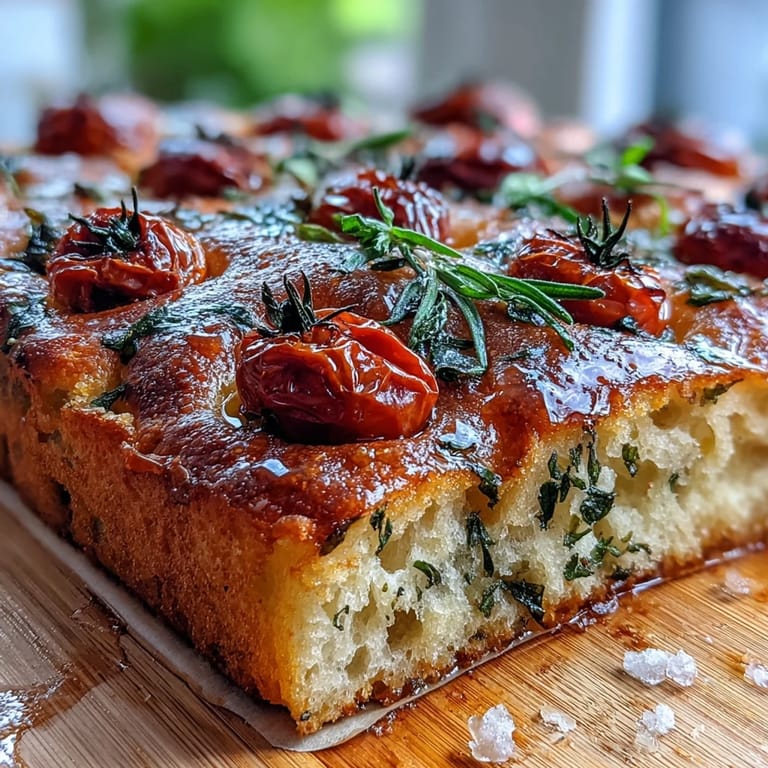 Save
Save I hope your kitchen fills with the bright, savory scents of spring and that each bite of this focaccia brings you the easy joy of sharing with others. There's nothing quite like a loaf that disappears before you even reach for a plate.
Recipe Q&A
- → How do I get a light, airy crumb?
Use warm (not hot) water to activate the yeast, mix until a sticky dough forms, and allow a full first rise until doubled. Gentle handling and a proper second proof on an oiled tray encourage air pockets for a fluffy interior.
- → Can I use all-purpose flour instead of bread flour?
All-purpose flour can work, but bread flour yields better gluten development and chew. If using all-purpose, expect a slightly softer structure; consider a longer knead or a short autolyse to improve strength.
- → How do I avoid a soggy bottom with tomato toppings?
Halve and lightly pat tomatoes to remove excess juice, ensure the oven is fully preheated, and bake on a middle rack. Dimpling the dough and brushing with oil creates a barrier that helps prevent excess moisture absorption.
- → What are good herb substitutions or additions?
Swap or add soft spring herbs like parsley, dill or tarragon, and try mixing grated Parmesan into the dough or sprinkling it on top for extra umami. Keep delicate herbs toward the end to preserve brightness.
- → How should I store and reheat leftover focaccia?
Store cooled focaccia wrapped at room temperature for up to 2 days or freeze slices for longer. Reheat in a 180–200°C oven until warmed and crisp—this restores texture better than a microwave.
- → Tips for shaping the dough on the tray?
Generously oil the tray, transfer the risen dough with oiled hands, and gently stretch to the edges without tearing. Use fingertips to create even dimples, then let it proof again before adding toppings and baking.