 Save
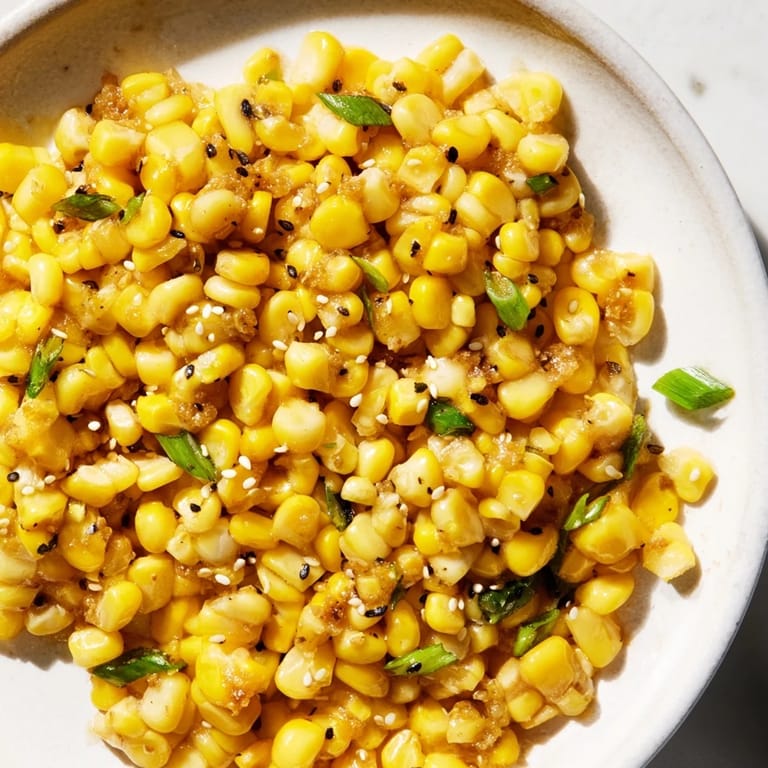
Save There's a moment every summer when I stand in front of a farmer's market corn display and can't decide which ears to buy—they're all so perfect. One July afternoon, I grabbed a bunch and decided to try the simplest Japanese preparation I could imagine: butter, garlic, soy sauce. Twenty minutes later, my kitchen smelled like a Tokyo izakaya, and I understood why this humble combination has quietly become one of my favorite ways to eat corn.
I made this for a dinner party where half the guests were from Osaka, and watching their faces light up at the first bite made me realize I'd accidentally tapped into something nostalgic for them. One woman asked for the recipe twice, which told me everything I needed to know about whether I'd nailed it.
Ingredients
- Fresh corn: Four ears at peak season are worth their weight in gold—but frozen kernels work beautifully in winter, and honestly, sometimes they're sweeter since they're frozen at peak ripeness.
- Unsalted butter: This is where the magic begins; you need real butter, not a substitute, so the garlic blooms properly in that foamy golden stage.
- Garlic: Two cloves finely minced release their perfume in seconds, so mince them small and watch them carefully—burnt garlic tastes like bitterness and regret.
- Soy sauce: A good soy sauce changes everything; cheap versions taste metallic and flat, while a proper one brings umami depth that makes the corn shine.
- Black pepper: Freshly ground is non-negotiable here—pre-ground pepper tastes like dust compared to what a grinder can do in ten seconds.
- Sea salt: Just a pinch as insurance, though the soy sauce already brings salt, so taste before you add.
- Scallions and sesame seeds: These are optional but worth it—they add a final layer of texture and toasted nuttiness that feels intentional.
Tired of Takeout? 🥡
Get 10 meals you can make faster than delivery arrives. Seriously.
One email. No spam. Unsubscribe anytime.
Instructions
- Shuck and cut:
- If using fresh corn, stand each ear upright on a cutting board and slice downward with a sharp knife, rotating as you go. The kernels should release cleanly without much resistance, and you're done in about a minute per ear.
- Toast the butter:
- Melt it slowly over medium heat until it stops sizzling and smells toasty and nutty—this takes maybe a minute. You'll see it transform from pale yellow to something richer, and that's when you know it's ready.
- Bloom the garlic:
- Add your minced garlic and stir constantly for just 30 seconds until the smell hits you hard and the garlic looks barely golden. Step back—don't let it brown, or the whole dish tastes bitter.
- Cook the corn:
- Add all your kernels and stir every 30 seconds for 4 to 5 minutes, until the corn is heated through and some kernels pick up light golden spots. This isn't just about temperature; the slight caramelization adds sweetness.
- Add the soy sauce:
- Pour it in and stir immediately to coat everything evenly. Keep cooking for 1 to 2 minutes more until most of the liquid evaporates and the corn glistens with a silky glaze that clings to each kernel.
- Season and serve:
- Taste, crack some fresh pepper over it, maybe add a tiny pinch of salt, then transfer to a bowl. Top with scallions and sesame seeds if you've got them, and serve while everything is still hot.
 Save
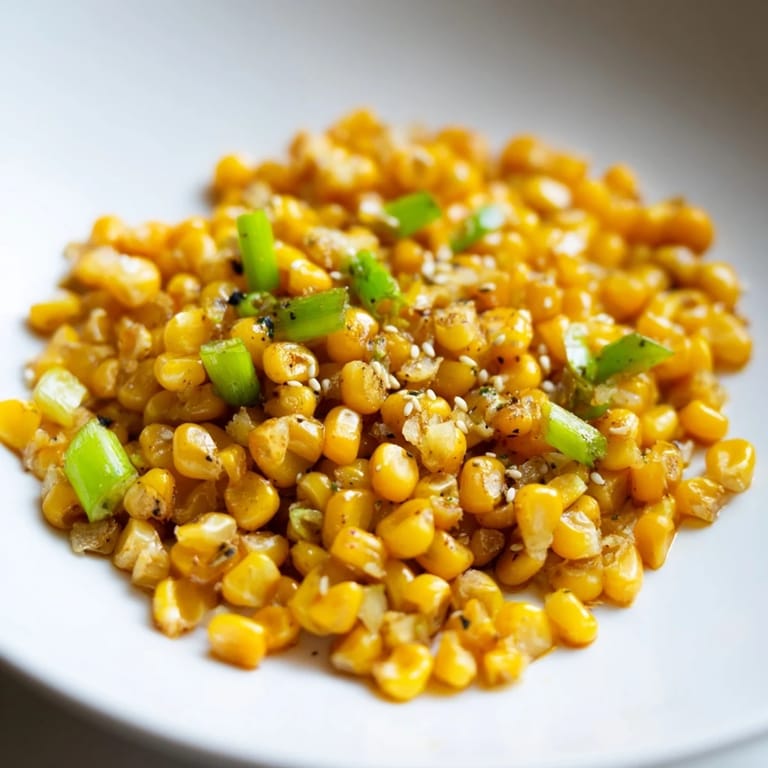
Save This dish has a quiet magic to it. At a dinner table with good people, corn prepared this way becomes less about a recipe and more about a moment—when everyone stops talking for a second because their mouth is too busy enjoying something simple and true.
Fresh vs. Frozen: A Kitchen Truth
Summer corn with kernels still milky is ideal, but winter frozen corn often tastes sweeter because it's frozen within hours of harvest. I've actually preferred frozen corn in this dish during cold months because the flavor is concentrated. The difference isn't huge, but it matters enough that I've stopped feeling guilty about using frozen when fresh isn't at its peak.
Why This Method Works
The secret isn't in any single ingredient—it's in the order. Blooming garlic in hot butter first creates a fragrant base that clings to each kernel. Adding corn to that fat, rather than starting with cold butter and cold corn, means every surface gets coated and slightly toasted. The soy sauce comes last as a glaze, not a bath, so it intensifies rather than dilutes. This sequence is why the dish tastes more refined than it has any right to.
Making It Your Own
This foundation is sturdy enough for small changes. A teaspoon of mayo stirred in adds richness; a splash of mirin brings subtle sweetness; a shake of furikake adds another layer of umami. I've even tried a small pinch of chili flakes once and it worked beautifully, though I don't make it that way often. The beauty is that corn is forgiving, and butter and soy sauce are a base that welcomes experimentation without demanding it.
- Try mirin if you want sweetness that whispers instead of shouts.
- Mayo sounds odd until you taste it—just a teaspoon, stirred in before the soy sauce.
- Serve it warm over rice or alongside grilled fish for a complete meal that feels Japanese without pretension.
 Save
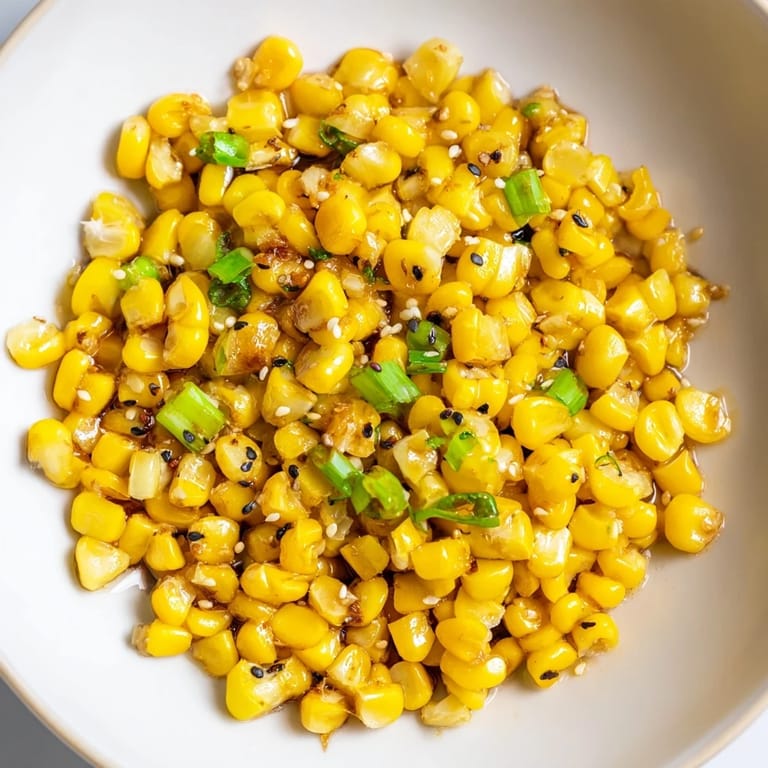
Save This is the kind of recipe that reminds you why cooking doesn't need to be complicated to be rewarding. Butter, garlic, corn, soy sauce—four things that belong together, and when you treat them with care, they become something worth remembering.
Recipe Q&A
- → What type of corn is best for this dish?
Fresh corn on the cob is ideal for the best texture and sweetness, but thawed frozen kernels also work well for convenience.
- → Can I adjust the seasoning for dietary preferences?
Yes, use gluten-free soy sauce for gluten sensitivity and substitute dairy butter with plant-based alternatives if preferred.
- → How do I prevent the garlic from burning during cooking?
Sauté the minced garlic briefly in melted butter over medium heat until fragrant but not browned, typically around 30 seconds.
- → What garnishes complement this corn dish?
Chopped scallions and toasted sesame seeds add fresh aroma and nutty crunch, enhancing both flavor and presentation.
- → Can I add extra richness or sweetness?
Stirring in a teaspoon of mayonnaise adds creaminess, or a splash of mirin can provide subtle sweetness to balance flavors.