 Save
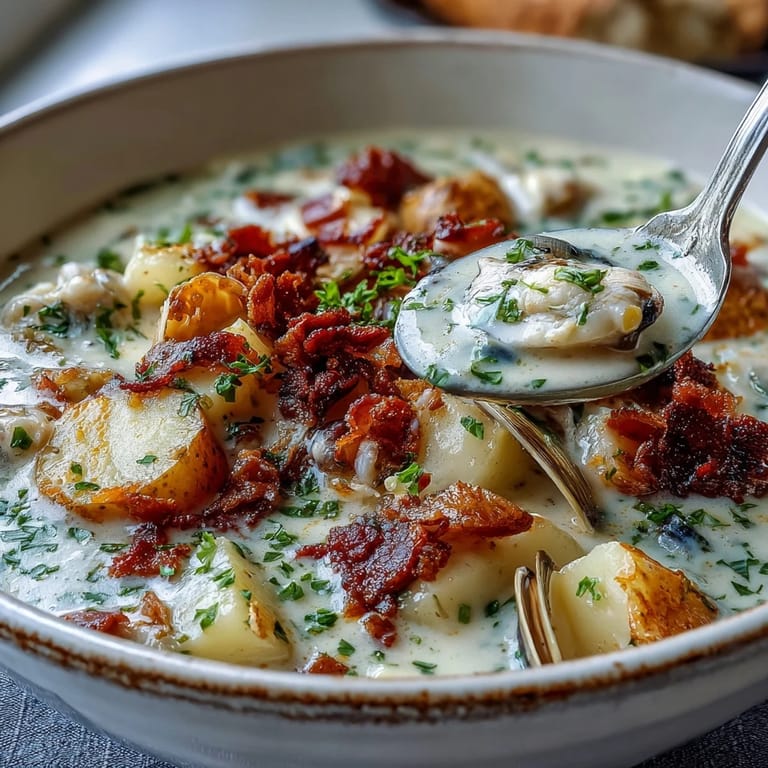
Save The smell of bacon fat and butter sizzling together stopped me mid-step the first time I walked into my college roommate's kitchen on a Sunday afternoon. She was from Maine, and she was making something she simply called "chowder" with a confidence I didn't yet have in my own cooking. I watched her dice potatoes without measuring anything, toss in clams like it was nothing, and create this impossibly creamy, comforting bowl that tasted like the ocean and home all at once. That afternoon changed how I thought about soup forever.
I made this for my dad once when he was recovering from surgery, and he ate two bowls without saying a word until he was done. Then he looked up and asked if I'd learned to cook like this from my mother. I laughed because she never made chowder in her life. But I took it as the compliment it was. Sometimes food just speaks for itself, and this one always does.
Ingredients
- Fresh clams or canned chopped clams: Fresh clams give you that briny, sweet flavor and their own cooking liquid, but canned clams are a lifesaver on busy nights and taste nearly as good if you don't skip their juice.
- Salt pork or thick-cut bacon: This is where the smoky, savory backbone comes from; render it slowly so the fat turns golden and the meat gets crispy enough to sprinkle back in later.
- Yukon Gold or russet potatoes: Yukon Golds hold their shape better and add a buttery texture, but russets break down slightly and thicken the chowder naturally.
- Onion and celery: These aromatics soften into the background but give the soup its subtle, savory foundation that you'd miss if they weren't there.
- Heavy cream and whole milk: The combination creates richness without feeling like you're drinking straight cream; whole milk keeps it from being too thick.
- All-purpose flour: Just two tablespoons create a roux that thickens the broth without making it gluey or starchy.
- Clam juice: Bottled clam juice is salty and oceanic; it's the secret to deepening the seafood flavor even if you're using canned clams.
- Fresh parsley: A handful stirred in at the end brightens everything and cuts through the richness with a hint of green freshness.
Tired of Takeout? 🥡
Get 10 meals you can make faster than delivery arrives. Seriously.
One email. No spam. Unsubscribe anytime.
Instructions
- Steam the clams:
- Scrub fresh clams under cold water and toss them into a pot with a cup of water, then cover and let them steam until the shells pop open, about six to eight minutes. Strain the liquid through a fine mesh sieve to catch any grit, chop the clam meat, and set everything aside.
- Render the pork:
- Cook diced salt pork or bacon in a heavy-bottomed pot over medium heat until the fat turns clear and the meat crisps up beautifully. Scoop out the crispy bits with a slotted spoon but leave all that flavorful fat behind.
- Soften the vegetables:
- Add butter to the pork fat and let it melt, then toss in the onion and celery, stirring until they turn soft and translucent without any color. Add the garlic and cook just until it smells fragrant, about a minute.
- Build the roux:
- Sprinkle flour over the vegetables and stir it in, letting it cook for a couple of minutes to get rid of that raw flour taste. This step is what keeps your chowder silky instead of thin.
- Add the liquids:
- Slowly whisk in the clam juice, reserved clam liquid, milk, and cream, stirring constantly so no lumps form. It should start to thicken almost immediately.
- Simmer with potatoes:
- Add the diced potatoes, bay leaf, and thyme, then let everything simmer gently until the potatoes are fork-tender, about twelve to fifteen minutes. Stir occasionally so nothing sticks to the bottom.
- Finish with clams:
- Stir in the chopped clams and crispy pork, letting them warm through for three to five minutes. Don't let it boil or the clams will turn rubbery.
- Season and serve:
- Pull out the bay leaf, stir in fresh parsley, and taste before adding salt and pepper. Ladle into bowls and serve with oyster crackers or crusty bread on the side.
 Save
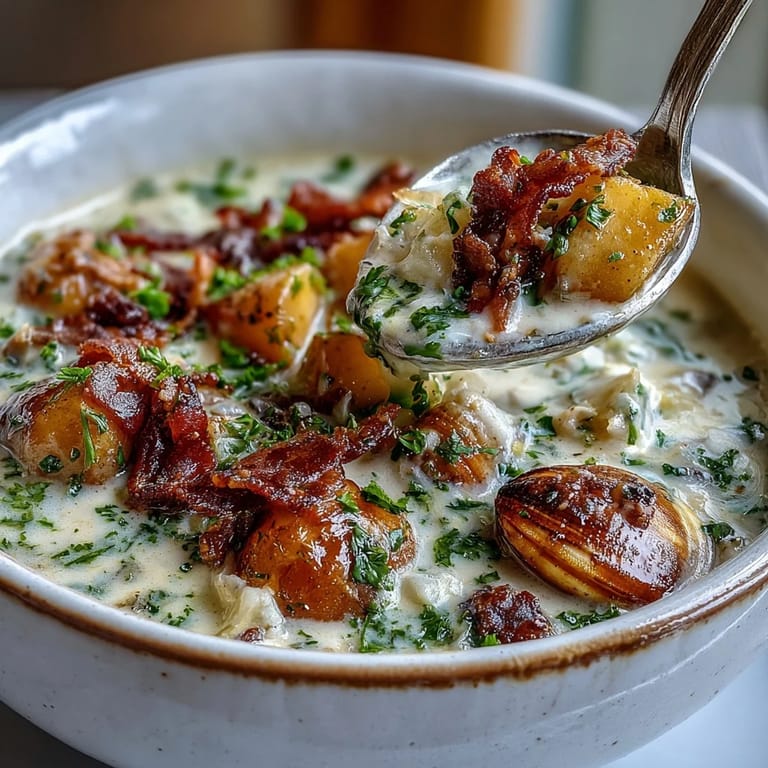
Save One winter, I served this to a friend who'd just moved from California and had never tasted real New England chowder. She went quiet after the first spoonful, then looked at me and said it tasted like a hug. I've never found a better description. It's exactly what this soup is meant to be.
What to Serve Alongside
I usually keep it simple with oyster crackers because their salty crunch is perfect for scooping up every last bit of creamy broth. A loaf of crusty sourdough or a warm baguette works beautifully too, especially if you like dragging bread through the bottom of the bowl. A crisp green salad with lemon vinaigrette balances the richness, and a glass of chilled Sauvignon Blanc ties the whole meal together without overpowering the delicate clam flavor.
How to Store and Reheat
Let the chowder cool completely before transferring it to an airtight container, then store it in the fridge for up to three days. When reheating, do it gently over low heat on the stovetop, stirring often, because high heat can cause the cream to separate or the clams to toughen. If it's too thick after chilling, add a little milk or clam juice to loosen it back up. I don't recommend freezing this one because dairy-based soups can get grainy when thawed, and the potatoes lose their texture.
Common Mistakes to Avoid
The biggest mistake is adding the clams too early and letting the soup boil, which turns them rubbery and unpleasant. Another common slip-up is not cooking the flour long enough after sprinkling it in, leaving a pasty, raw taste that lingers. Don't rush the vegetable sweating stage either; if the onions and celery brown, they'll add a bitter edge instead of sweetness.
- Always strain the clam cooking liquid to remove grit and sand.
- Use a heavy pot so the bottom doesn't scorch while the potatoes simmer.
- Taste as you go because every batch of clam juice and bacon has a different salt level.
 Save
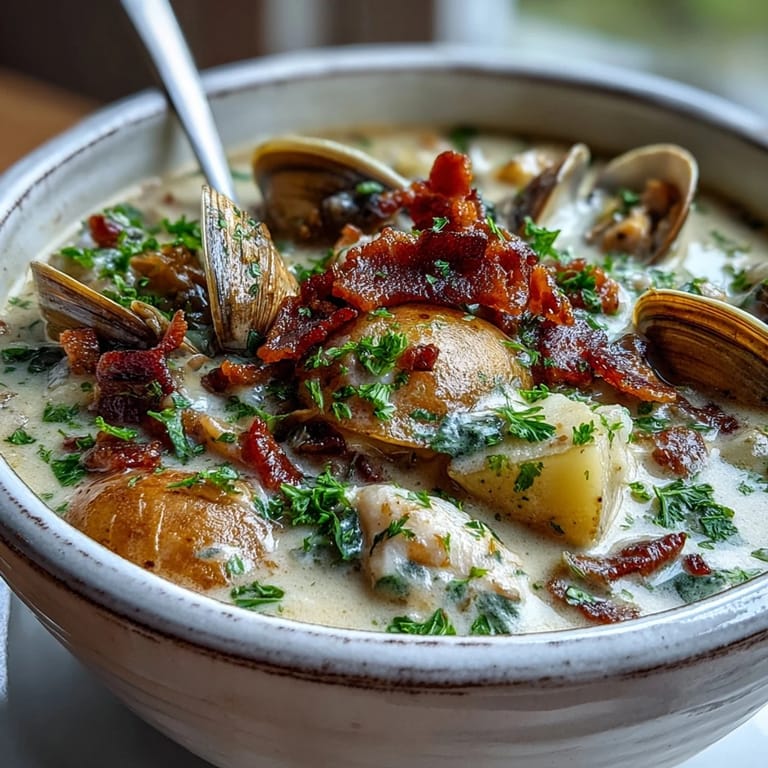
Save This chowder has become my go-to whenever I need something that feels like more than dinner, something that actually comforts. I hope it does the same for you.
Recipe Q&A
- → Can I use canned clams instead of fresh?
Yes, canned clams work perfectly. Use 2 cups of chopped clams with their juice and add them during the final simmering stage. The reserved juice adds essential briny flavor to the broth.
- → What type of potatoes work best?
Yukon Gold or russet potatoes are ideal. Yukon Golds offer a creamy texture and buttery flavor, while russets provide a fluffier consistency. Dice them evenly for uniform cooking.
- → How do I prevent the chowder from curdling?
Avoid boiling once you've added the cream and clams. Keep the heat at a gentle simmer and stir occasionally. High heat can cause the dairy to separate and the clams to become rubbery.
- → Can I make this lighter without sacrificing flavor?
Substitute half-and-half for heavy cream, or use a combination of whole milk and a smaller amount of cream. The flavor remains rich while reducing overall fat content.
- → How long can I store leftover chowder?
Store in an airtight container in the refrigerator for up to 3 days. Reheat gently over low heat, stirring frequently. Avoid freezing as dairy-based soups can separate when thawed.
- → What can I substitute for salt pork?
Thick-cut bacon is an excellent alternative and adds a smoky depth. Cook until crispy, then use the rendered fat as the base for sautéing your vegetables.