 Save
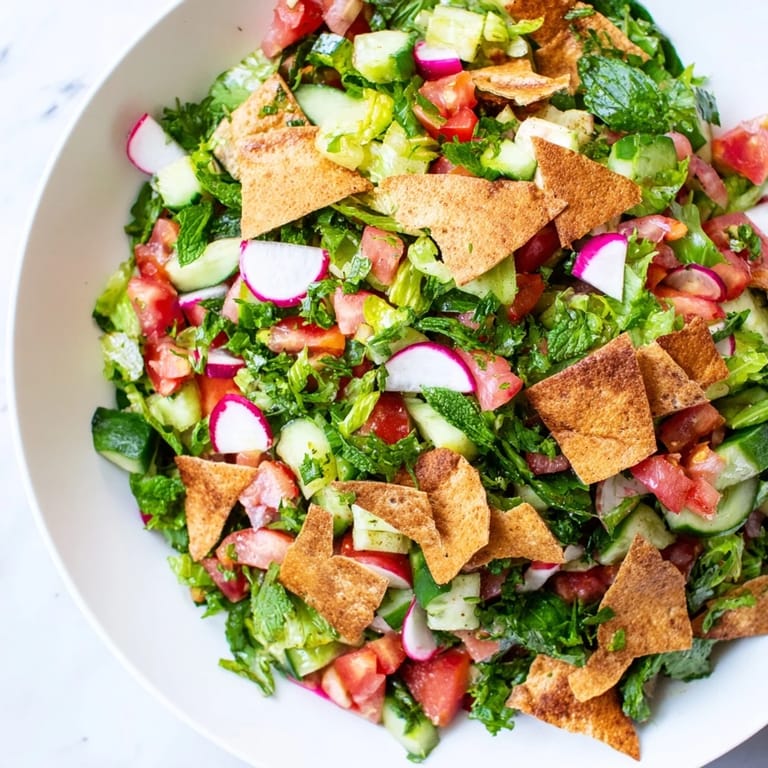
Save My aunt's kitchen in Beirut always smelled like fresh mint and lemon, and the first thing she'd teach visitors was how to make fattoush—not as some formal dish, but as something you threw together when the garden was overflowing and you wanted people to stay a little longer at the table. Years later, I realized the magic wasn't in any single ingredient; it was in that moment when you toss warm, salty pita chips into cold greens and everything becomes both crisp and satisfying at once.
I made this for a potluck once where everyone brought something heavy and cooked, and suddenly this bright, crunchy salad became the thing people actually wanted seconds of. The radishes caught someone's eye—they'd never thought to slice them thin before—and the whole conversation shifted to talking about what grows in gardens and how simple ingredients become something memorable.
Ingredients
- Mixed greens (romaine, arugula, or purslane): Use 2 cups chopped; arugula brings a peppery bite, while romaine gives you sturdy leaves that won't wilt before you eat.
- Tomatoes: 2 medium, diced—pick ones that are actually ripe and smell sweet, not pale supermarket ones.
- Cucumber: 1 large, diced; it's your cooling element, so don't skip it even if the recipe seems like it has enough vegetables.
- Radishes: 4, thinly sliced; they add a sharp brightness and that satisfying crunch that keeps the salad interesting.
- Red onion: 1 small, thinly sliced; raw onion is intense, so taste as you go if you're hesitant.
- Fresh parsley: ½ cup chopped; this is the herb that makes fattoush taste like itself, so don't substitute or skimp.
- Fresh mint: ¼ cup chopped; it should smell alive and fragrant when you tear it.
- Pita bread: 2 pieces for chips; day-old bread actually works better than fresh because it crisps instead of chewy.
- Olive oil: 5 tbsp total (2 for chips, 3 for dressing); good olive oil matters here since there's nowhere to hide.
- Sea salt: ½ tsp for chips, plus ½ tsp more in the dressing.
- Fresh lemon juice: 2 tbsp; use a real lemon, not the bottled stuff—squeeze it yourself and taste the difference.
- Red wine vinegar: 1 tbsp; this adds a gentle tang without overpowering.
- Ground sumac: 1–1½ tsp; this is the secret ingredient that makes people ask what you did differently—it's tangy and lemony and absolutely essential.
- Garlic clove: 1, minced; it should be fresh and pungent, and if you don't have a garlic press, mince it small so it dissolves into the dressing.
- Black pepper: ¼ tsp freshly ground; it should smell sharp when you crack it fresh.
Tired of Takeout? 🥡
Get 10 meals you can make faster than delivery arrives. Seriously.
One email. No spam. Unsubscribe anytime.
Instructions
- Toast the pita until it shatters:
- Preheat your oven to 375°F and cut pita into bite-sized pieces—they don't need to be perfect, just roughly the size of your thumb. Toss them with 2 tbsp olive oil and ½ tsp sea salt until every piece is lightly coated, spread them on a baking sheet in a single layer, and bake for 8–10 minutes until they're golden and completely crisp. You'll know they're done when they shatter if you bend one; let them cool on the pan so they crisp up more.
- Build your salad base:
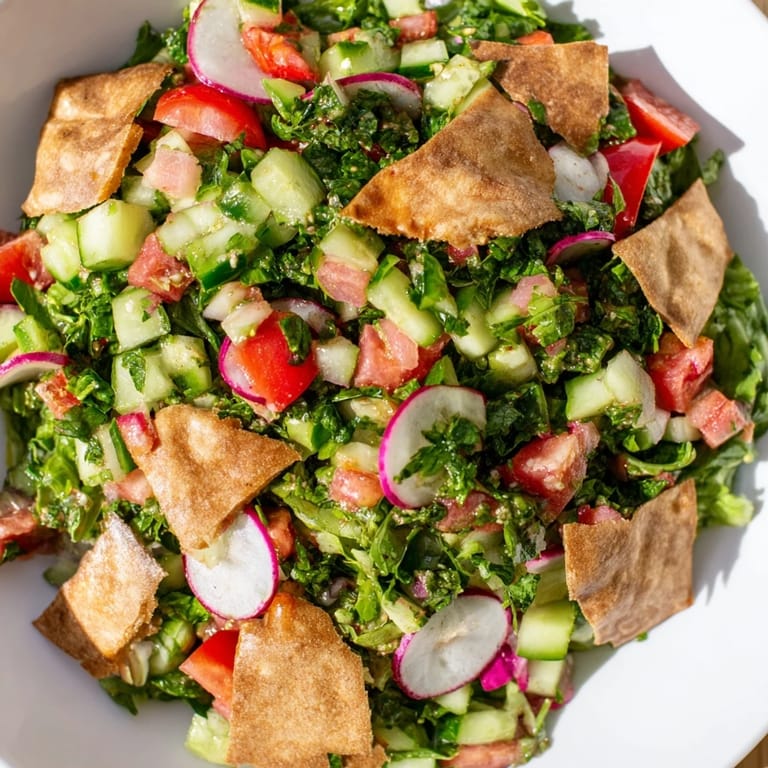
- In a large salad bowl, combine your chopped greens, diced tomatoes, diced cucumber, sliced radishes, thin red onion slices, chopped parsley, and mint. Don't dress it yet—this is your canvas, and it should look bright and fresh.
- Whisk your dressing into life:
- In a small bowl, combine 3 tbsp olive oil, 2 tbsp fresh lemon juice, 1 tbsp red wine vinegar, 1–1½ tsp sumac, minced garlic, ½ tsp salt, and ¼ tsp black pepper. Whisk vigorously for about a minute until it becomes slightly creamy and the flavors marry together. Taste it before you pour it on—this is where you catch any seasoning imbalances.
- Bring it all together at the last moment:
- Just before you serve, add those crispy pita chips to the salad bowl, pour the dressing over everything, and toss gently but thoroughly so every leaf gets coated without bruising. Taste and adjust salt or lemon if needed, then serve immediately while the chips are still crackling.
 Save
Save There was a moment when my neighbor watched me assemble this and said she'd never realized how much flavor could come from something so simple, and suddenly she wanted to know where to buy sumac and whether she could grow mint on her patio. That's when I understood that fattoush isn't just food; it's an invitation to taste something alive.
The Story Behind Sumac
Sumac is the ingredient that convinced me I didn't understand salads as well as I thought I did. It's tart and lemony without being acidic in the way lemon juice is, and it adds a complexity that makes people tilt their heads and try to figure out what makes this different from every green salad they've eaten. Once you use sumac in a dressing, you'll start seeing it everywhere—it's the backbone of za'atar blends, it's scattered over hummus in Lebanese restaurants, and it's the flavor that makes you pause mid-bite.
Why the Chips Matter More Than You Think
Homemade pita chips aren't just a textural contrast; they're the reason this salad has such a presence on the plate. Store-bought croutons are often over-seasoned and carry their own flavor agenda, but chips you make yourself taste like pita bread that's been transformed by heat and salt. The olive oil soaks in just enough that they don't taste fried, and the timing of when you add them is the difference between a salad that holds its crunch and one that becomes soggy. I learned this the hard way by making fattoush an hour ahead for a dinner party, only to watch everything turn limp by the time we sat down.
Ways to Make It Your Own
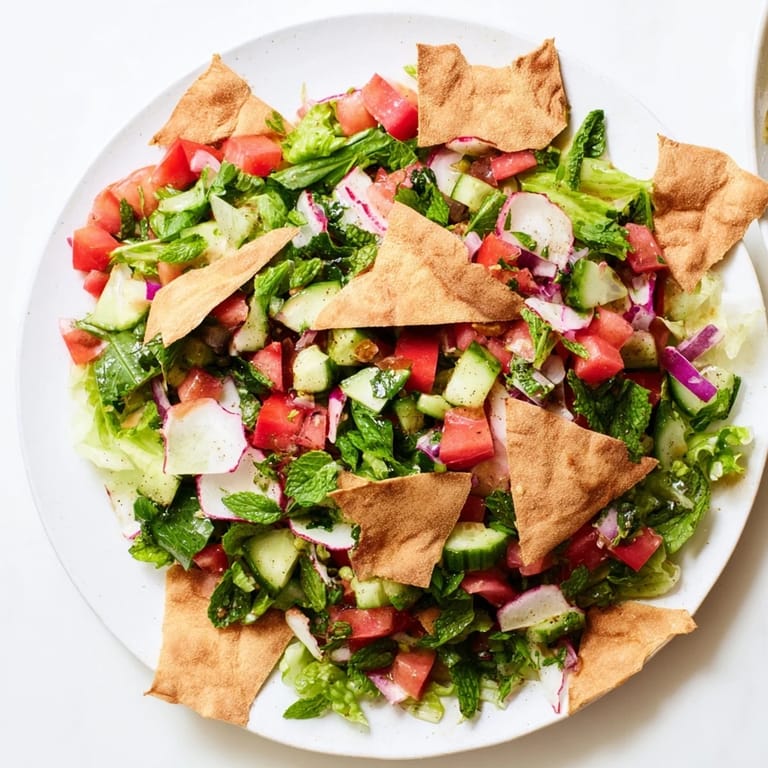
Fattoush is forgiving enough to adapt while staying true to itself. You can add diced bell pepper or sliced green onions for more sweetness and bite, toss in chickpeas if you want more protein, or swap in purslane for some of the greens if you can find it—it grows wild in Mediterranean regions and tastes slightly peppery and almost lemony on its own. The herb ratio can shift based on what you have and what you love; if you're a mint person, add more; if you find cilantro speaks to you, use it instead of or alongside the parsley. The only things I wouldn't change are the sumac and the fresh herbs generally—those are what make this taste like itself.
- Rub a cut garlic clove on the pita pieces before baking for a deeper, more savory flavor.
- If you can't find sumac, you can substitute with a bit more lemon juice, but it won't be quite the same.
- Make the chips up to a day ahead and store them in an airtight container so you can assemble this salad even faster when you need it.
 Save
Save Fattoush teaches you something quiet about cooking: that the best meals are the ones that come together quickly with real ingredients and actually taste like the place they come from. Make this on an evening when you want to remember why you love to cook.
Recipe Q&A
- → What is the key ingredient that adds tanginess to the dressing?
The sumac spice combined with lemon juice and red wine vinegar provides the distinctive tangy flavor in the dressing.
- → How are the pita chips prepared for this dish?
Pita bread is cut into pieces, tossed with olive oil and sea salt, then baked until golden and crisp to add crunch.
- → Can this salad be made gluten-free?
Yes, by using gluten-free pita or omitting the pita chips altogether, this dish can suit gluten-free diets.
- → Which herbs are commonly used in this salad?
Fresh parsley and mint leaves are added for a fragrant and fresh herbal note.
- → Is this dish suitable for vegans?
Yes, all ingredients used are plant-based, making it appropriate for vegan and dairy-free diets.
- → How can I add more flavor to the pita chips?
Rubbing a garlic clove on the pita before baking infuses them with extra savory aroma and taste.