 Save
Save Last October, I wandered through the farmers market looking for something that felt like autumn—not pumpkin, something different—and spotted these gorgeous burnt-orange squashes with deep ridges. The vendor called them red kuri, and something about their sweetness when I asked for a taste made me decide right then that I'd roast them with spices that morning. That bowl became the thing I made every chilly week after, each time tweaking the heat level or adding whatever greens I had on hand, and it somehow became the recipe friends now text me about when they need something that tastes both cozy and alive.
I made this for my sister during one of those surprise drop-by dinners where I had maybe fifteen minutes to plan something that didn't look thrown together. She sat at the counter while I roasted the squash, and the smell of cinnamon and smoked paprika filling the kitchen seemed to settle something in both of us after a long week. By the time those lime wedges hit the bowls, she was already asking for the recipe, and I realized this dish had become one of those quiet anchors in how we show up for each other.
Ingredients
- Red kuri squash: Look for one with deep color and a firm skin—they're sweeter than butternut and have this almost chestnut quality when roasted that makes the whole bowl sing.
- Red onion: The sharper edge mellows beautifully as it caramelizes, and the color bleeding into everything is half the magic here.
- Kale: Massage it first if you're sensitive to the texture, but honestly, wilting it just until tender keeps it bright and alive rather than sad and overcooked.
- Smoked paprika: This is non-negotiable—it adds a depth that regular paprika can't touch, like a whisper of bonfire in the background.
- Cinnamon and cumin: Together they create this unexpected warmth that tricks your brain into thinking this is comfort food and health food at the same time.
- Chili flakes: Start with half a teaspoon and taste as you go; your threshold matters more than any recipe.
- Maple syrup and apple cider vinegar: The vinegar keeps everything from feeling one-note sweet and adds a brightness that ties all the flavors together.
- Pumpkin seeds: Toast them yourself if you have time—they taste infinitely better and add the perfect crunch that saves the bowl from being all soft textures.
Tired of Takeout? 🥡
Get 10 meals you can make faster than delivery arrives. Seriously.
One email. No spam. Unsubscribe anytime.
Instructions
- Prep your vegetables and heat your oven:
- Set your oven to 400°F and line a baking sheet with parchment, then cut your squash into pieces that are roughly the same size so everything roasts evenly. You'll want them about an inch across—bite-sized but substantial enough that they don't disappear into themselves.
- Coat everything in spice:
- In a large bowl, toss your squash and sliced onions with oil and all those warming spices until every piece has a light, even coating. The bowl should smell like autumn at this point, and that's your signal you're on the right track.
- First roast:
- Spread everything on your baking sheet in a single layer and roast for about 25 minutes until the edges start to caramelize and the squash begins to soften. You might hear it sizzle as it hits the hot pan, and that sound is part of the process.
- Add sweetness and tang:
- Drizzle your maple syrup and apple cider vinegar over everything, give it a gentle toss, and back into the oven for another 10 minutes. Watch it get deeper in color as the edges catch and the whole thing takes on this honeyed appearance.
- Wilt the kale:
- While the squash finishes, heat a skillet over medium and quickly cook your kale until it's just tender and darker green—about 2 to 3 minutes depending on how finely you chopped it. You want it relaxed but still with some personality, not wilted into submission.
- Build your bowls:
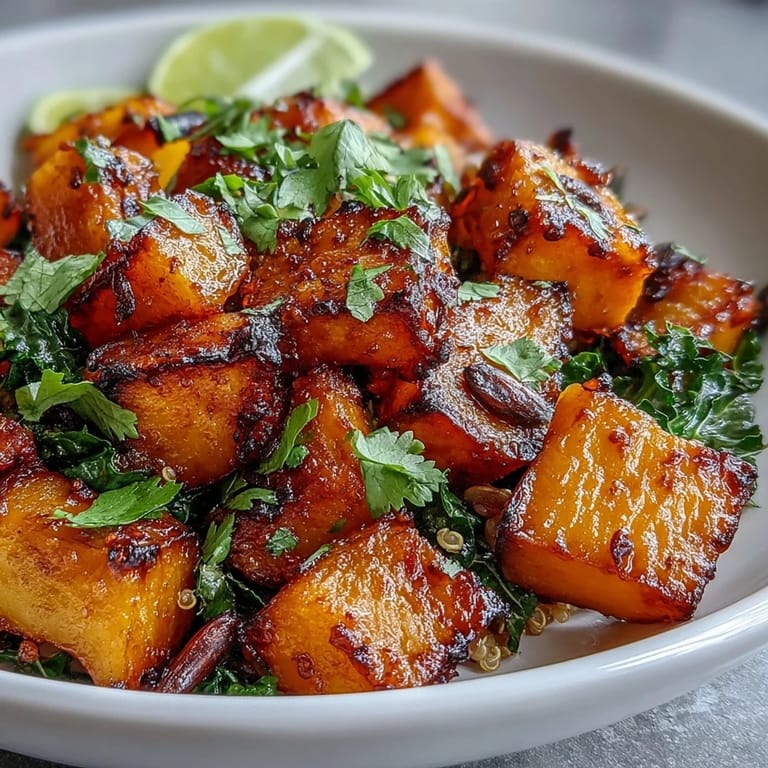
- If you're using quinoa, divide it among four bowls first, then pile your roasted squash and onions on top, followed by the warm kale. Everything should be warm when it meets the bowl so the textures stay distinct.
- Finish with brightness:
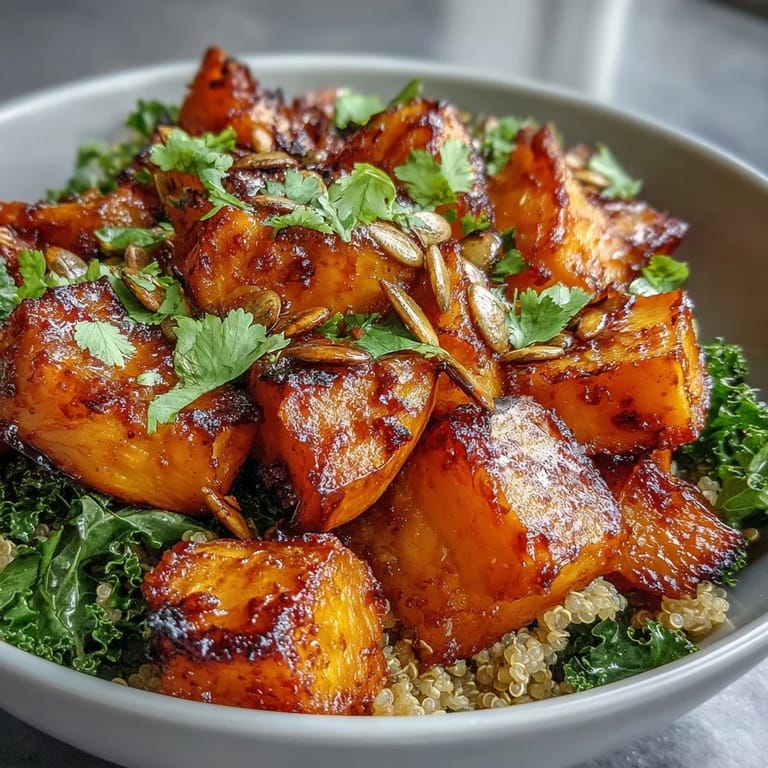
- Top each bowl with a scatter of pumpkin seeds for crunch, fresh cilantro for a green note, and a good squeeze of lime that ties everything together and makes it taste somehow both richer and lighter at once.
 Save
Save There's a moment when you add that lime juice and the whole bowl suddenly comes into focus—all the flavors stop being individual and become something whole. That's the moment I understood why this recipe keeps working, no matter who I make it for or what season it is.
The Secret of Squash Selection
Red kuri squashes aren't as common as butternut, but they're worth seeking out because they have this naturally sweet, almost nutty flavor that gets even deeper when roasted with spices. If you can't find one, a small butternut works, though you might need to roast it a few minutes longer since the texture is slightly different. I once tried this with kabocha squash on a whim, and honestly, it was just as good—slightly firmer, but the caramelization was beautiful and the flavors melded just as well.
Playing With Heat and Sweetness
The magic of this bowl lives in how you balance the spice, sweetness, and tang, and everyone's preference is different. I've made it for people who wanted more heat and barely used a quarter teaspoon of chili flakes, and others who pushed it to a full teaspoon and loved that slow burn that builds as you eat. Tasting as you go isn't just good cooking practice—it's how you make a recipe truly yours instead of just following instructions.
Making It Your Own
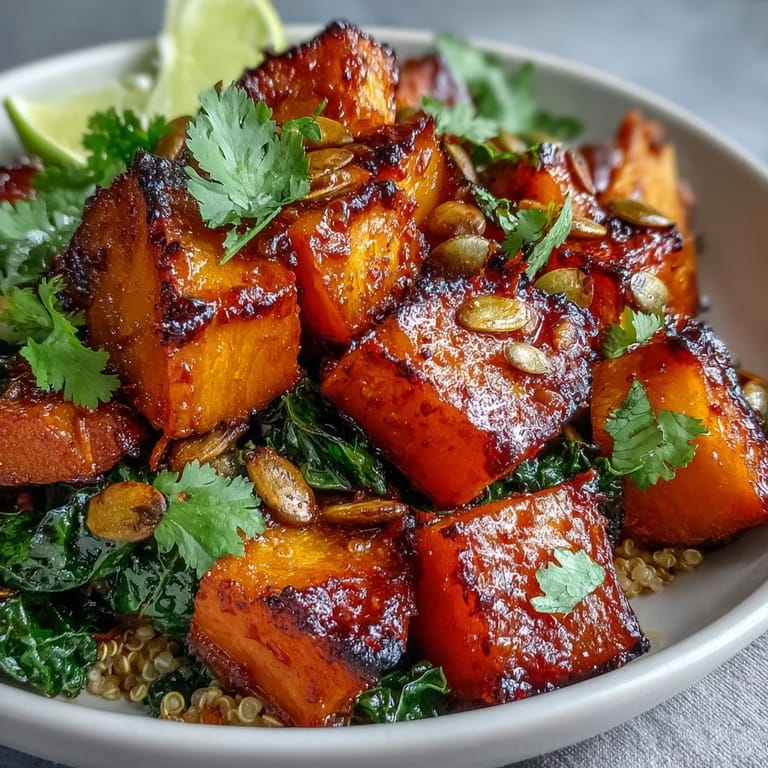
This bowl is a foundation that welcomes whatever you have in your kitchen and whatever you're craving that day. I've added crispy chickpeas for protein, scattered pomegranate seeds for tartness, used spinach instead of kale on mornings when I didn't feel like wrestling with stems, and even topped it with a soft egg once when I wanted something richer. The core—that roasted squash with its spiced glaze and the bright finish—stays the same, but the rest is pure improvisation.
- Add cooked lentils, chickpeas, or tofu if you want more protein holding the bowl together.
- Fresh pomegranate seeds or dried cranberries add a tart pop that plays beautifully against the sweetness.
- Drizzle with tahini or a simple yogurt sauce at the end if you want creaminess without making it heavier.
 Save
Save This bowl has become my answer to those days when I want to feel nourished without overthinking it, and somehow it always tastes like exactly what I needed. Make it once and you'll find reasons to come back to it all through the cooler months.
Recipe Q&A
- → What does red kuri squash taste like?
Red kuri squash has a naturally sweet, nutty flavor similar to chestnuts and a smooth, creamy texture when roasted. It's less fibrous than butternut squash and caramelizes beautifully with maple syrup.
- → Can I use other winter squash varieties?
Yes, butternut squash, kabocha, or acorn squash work well as substitutes. Keep in mind roasting times may vary slightly depending on the squash variety and cube size.
- → How do I adjust the spice level?
Reduce the chili flakes to ¼ teaspoon for mild heat, or increase to 1 teaspoon for more spice. The smoked paprika adds warmth without overwhelming heat, making it adjustable for all preferences.
- → Can I prepare this ahead of time?
The roasted vegetables keep well in the refrigerator for up to 4 days. Reheat in a 350°F oven for 10-15 minutes to restore caramelization. Add fresh garnishes just before serving.
- → What protein additions work well?
Cooked chickpeas, grilled tofu, or roasted chickpeas complement the flavors beautifully. For non-vegetarian options, roasted chicken or salmon would pair nicely with the sweet and spicy profile.
- → Is this suitable for meal prep?
Absolutely. Portion the roasted squash, onions, and kale into separate containers. Store quinoa separately to maintain texture. Reheat and add fresh garnishes when ready to eat.