 Save
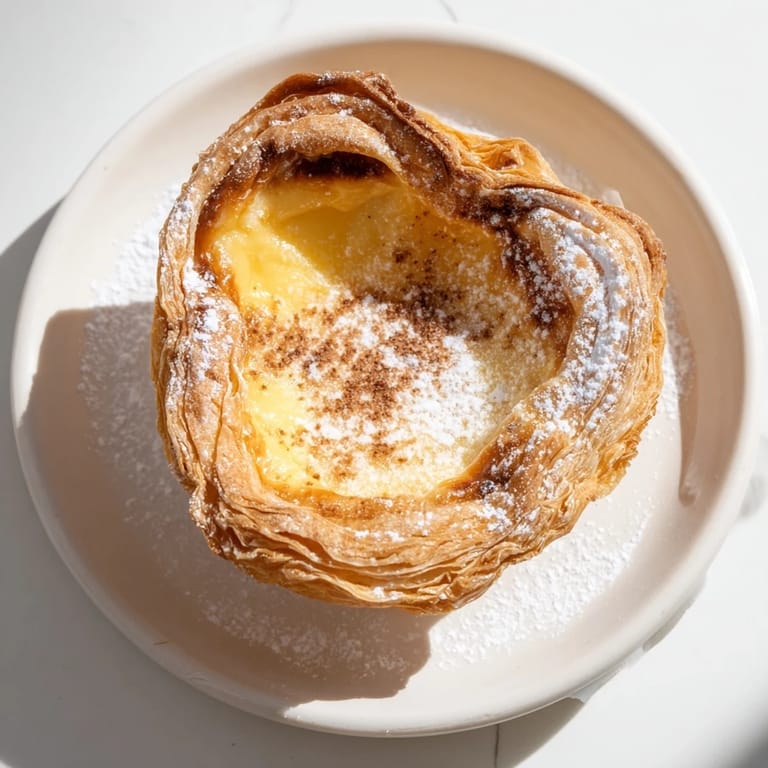
Save The first time I bit into a Portuguese egg tart at a little pastry shop in Lisbon, I understood why they call them pastéis de nata—these aren't just desserts, they're tiny moments of joy. The way the crispy phyllo shattered between my teeth, giving way to that silky, cinnamon-kissed custard, felt like biting into something both delicate and deeply satisfying. I spent the next three days trying to recreate them in my tiny rental kitchen, and while my first attempt was a little too custard-heavy and my phyllo slightly too brown, I eventually cracked the code. Now these are the tarts I make whenever I want to feel like I'm back in that sun-drenched café, minus the jet lag.
I made these for my book club once, and they became the thing people actually remembered instead of the wine or the discussion—which, honestly, felt like a small victory. One of my friends tried to grab two straight from the cooling rack and burned her fingers, then laughed so hard she nearly dropped them. That's when I knew I'd nailed it.
Ingredients
- Phyllo Pastry: Buy the good stuff from the freezer section—the thin, delicate sheets that look almost translucent when you unfold them, because they'll puff into those gorgeous golden layers.
- Unsalted Butter: Melted and brushed on each sheet with a light hand, this is what creates that shatteringly crisp texture that makes these special.
- Whole Milk: The base of your custard, providing a gentle richness that heavy cream alone would overpower.
- Cornstarch: Your secret weapon for a custard that sets without becoming rubbery—it's the difference between creamy and gluey.
- Heavy Cream: This adds luxurious richness and helps achieve that perfect silky consistency that makes these tarts crave-worthy.
- Granulated Sugar: Sweetness, obviously, but it also helps the custard set properly and creates those beautiful golden tops.
- Egg Yolks: Four yolks make this custard luxuriously yellow and velvety; don't skimp or substitute with whole eggs.
- Pure Vanilla Extract: A teaspoon might seem small, but it rounds out the flavor and keeps the cinnamon from feeling one-note.
- Ground Cinnamon: Half a teaspoon in the custard, plus more for dusting—this spice is the soul of the tart, so use the good stuff.
- Powdered Sugar: The final dusting, which tastes better when applied to still-warm tarts and melts into the custard just slightly.
Tired of Takeout? 🥡
Get 10 meals you can make faster than delivery arrives. Seriously.
One email. No spam. Unsubscribe anytime.
Instructions
- Get Your Oven Ready:
- Preheat to 200°C (400°F) so it's hot and ready when you need it.
- Build Your Phyllo Shells:
- Brush each phyllo sheet lightly with melted butter—use a feather-light touch, or they'll become soggy instead of crispy. Stack three sheets together, cut into squares that fit your muffin cups with a little overhang, then press gently into the tin, letting the corners rise slightly above the rim for that rustic look.
- Pre-Bake the Cups:
- Bake for 8–10 minutes until they're pale golden and smell like toasted butter. They'll crisp up even more as they cool, so don't wait for them to be dark brown.
- Make the Custard Magic:
- In a saucepan, whisk milk and cornstarch until completely smooth—lumps are your enemy here. Add cream, sugar, egg yolks, vanilla, cinnamon, and salt, then cook over medium heat while whisking constantly, watching as it gradually thickens into something that coats the back of a spoon. This takes about 5–7 minutes, and you'll feel it happen.
- Fill and Final Bake:
- Pour the warm custard into each phyllo cup—it should come right to the rim. Bake for 8–10 minutes more until the custard is just set (it should jiggle very slightly in the center, not slosh) and the tops are lightly golden.
- The Final Touch:
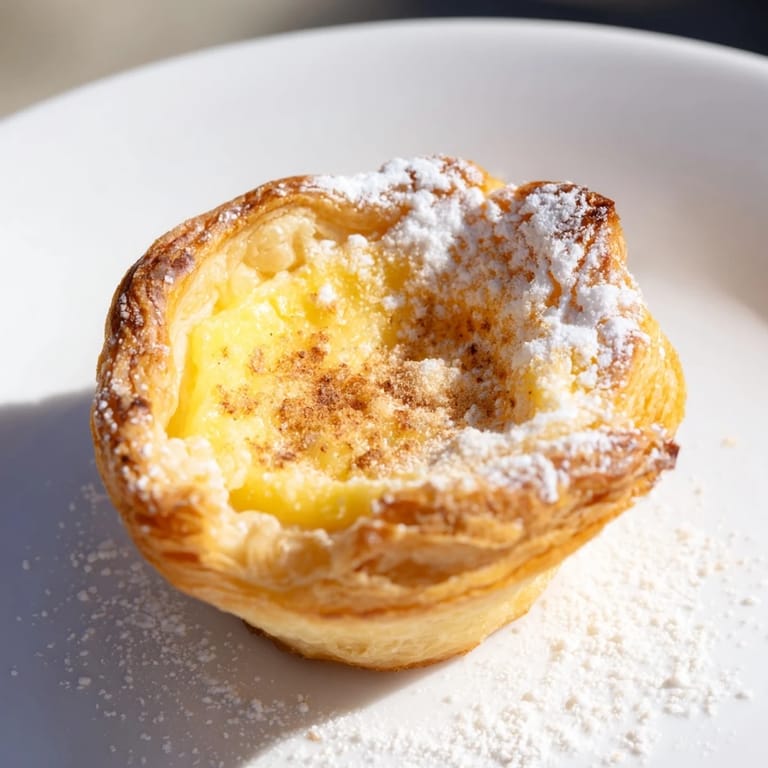
- Let them cool for a few minutes, then dust generously with cinnamon and powdered sugar while they're still warm enough that the sugar adheres slightly.
 Save
Save There's something almost spiritual about the moment when you dust those tarts with cinnamon and powdered sugar, watching the fine powder settle into the warm nooks and crannies. That small ritual reminds me why I love cooking—it's not just about feeding people, it's about creating these perfect little moments that taste like care.
Phyllo Handling Secrets
Phyllo intimidates a lot of home cooks, but honestly, it's more forgiving than you'd think. The key is working quickly and keeping unused sheets under a barely-damp towel so they don't dry out and become brittle. I learned this the hard way when I unrolled a sheet too early and it shattered like glass, but it taught me that even broken phyllo can be patched with a little butter and pressed into the muffin cup—no one will ever know once the custard goes in.
Custard Consistency Mastery
The texture of a perfect Portuguese egg tart custard is somewhere between a thick pudding and a firm flan—it should hold its shape but still feel creamy on your tongue. Temperature matters more than you'd expect; if your custard is too hot when you pour it, the phyllo will steam and lose its crispness, but if it's too cool, it won't fill the cups smoothly. I've found that letting it cool for just 30 seconds to a minute gives you the sweet spot.
Serving and Storage
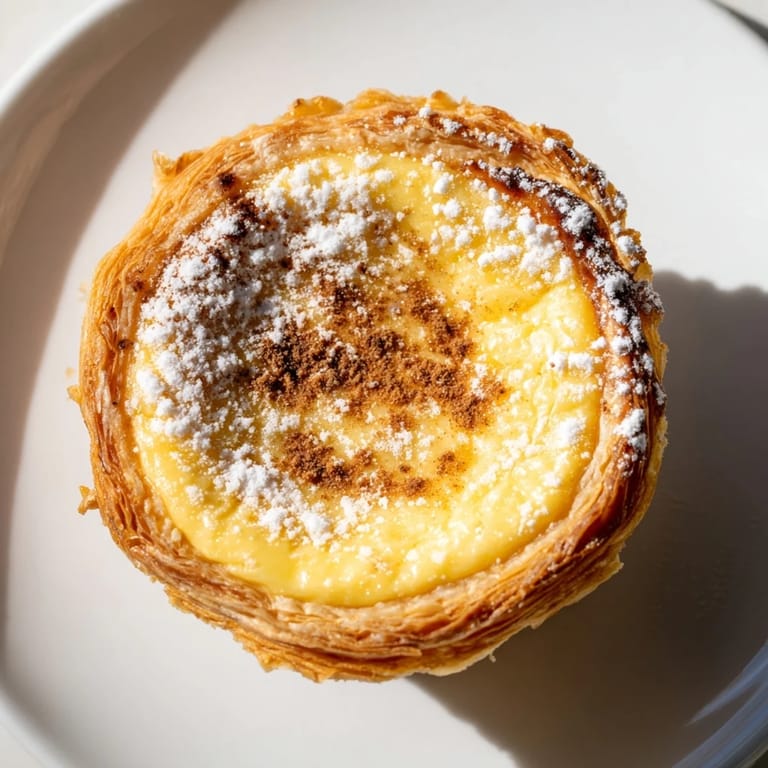
These tarts are best served slightly warm, when the phyllo is still crackling and the custard is creamy rather than cold and firm. If you're making them ahead—which you absolutely can—store them covered in the fridge and give them 4–5 minutes in a 180°C oven to warm through and re-crisp the pastry.
- For a traditional twist, add a small pinch of lemon zest to the custard while it's cooking.
- Pair with strong espresso in the morning or a chilled glass of white port in the afternoon.
- Leftovers keep refrigerated for three days, but they're truly best fresh, so make smaller batches if you're serving just a few people.
 Save
Save Making Portuguese egg tarts at home connects you to centuries of tradition and the hands that shaped this recipe in Lisbon's convents. Every time you serve one, you're sharing that same magic that made me fall in love with them.
Recipe Q&A
- → What is the best pastry choice for crispness?
Phyllo sheets brushed with melted butter provide a flaky, crisp texture once baked.
- → How is the custard thickened without lumps?
Whisking cornstarch into milk before heating ensures a smooth, lump-free custard base.
- → Can the filling flavor be customized?
Adding a pinch of lemon zest brightens the custard, complementing the cinnamon notes.
- → What temperature is ideal for baking these tarts?
Oven set to 200°C (400°F) allows the pastry to crisp and custard to set evenly.
- → How should leftovers be stored and reheated?
Keep chilled and reheat briefly in the oven to maintain crispness in the pastry.