 Save
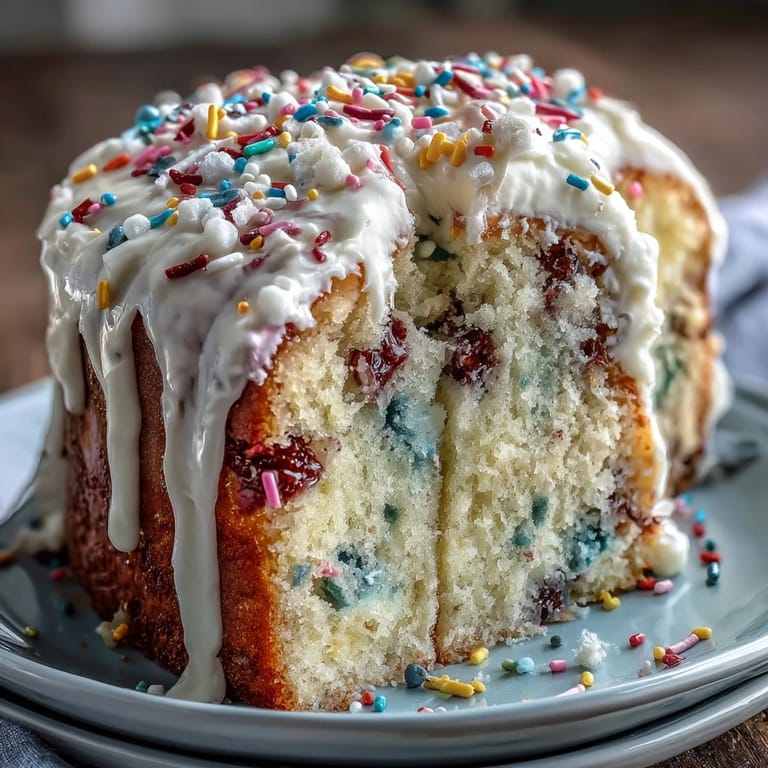
Save My neighbor showed up at my door with a box of pastel-colored sprinkles she'd found at a specialty bake shop, insisting I had to make something spring-worthy. I'd been in a baking rut, defaulting to the same chocolate cake for months, so her enthusiasm felt like permission to try something lighter and more playful. That afternoon, I mixed up this vanilla cake and watched the rainbow sprinkles dance through the pale batter like confetti falling in slow motion. The result was so cheerful I almost didn't want to frost it—almost.
I brought this to a birthday gathering last April, and a friend who'd been off sweets for months asked for a slice. She closed her eyes after the first bite and said it reminded her why cake exists. That moment—seeing someone remember joy in something simple—is when I stopped worrying if it was fancy enough and just let it be what it is.
Ingredients
- All-purpose flour (2 1/2 cups): The backbone of a tender crumb; room-temperature ingredients matter more than you'd think, so let everything sit out for 30 minutes before you start.
- Baking powder and baking soda (2 1/2 tsp and 1/2 tsp): The baking soda reacts with the sour cream for lift, while baking powder ensures even rise—don't skip either one.
- Unsalted butter (1 cup), granulated sugar (1 1/2 cups): Creaming these together for three full minutes isn't busywork; it's where the cake gets its tender structure.
- Eggs and vanilla (4 eggs, 2 tsp extract): Room temperature is non-negotiable here because cold eggs won't incorporate smoothly and you'll end up with a grainy texture.
- Milk and sour cream (1 cup milk, 1/2 cup sour cream): The sour cream adds tang and keeps the cake moist; don't substitute with plain yogurt unless you're comfortable with slight flavor shifts.
- Rainbow sprinkles (2/3 cup jimmies): Use jimmies, not nonpareils, because they stay crisp and don't bleed color into the batter like ball sprinkles do.
- Unsalted butter for frosting (1 1/2 cups): Room temperature, and honestly, splurge on good butter because you taste it when there's nothing else to hide behind.
- Powdered sugar (5 cups, sifted): Sift it before measuring or you'll end up with lumpy buttercream and regret.
- Food coloring gels (pastel pink, blue, yellow, purple): Gel colors won't thin out your frosting the way liquid food coloring does, and pastels give you that soft, spring-like palette.
Tired of Takeout? 🥡
Get 10 meals you can make faster than delivery arrives. Seriously.
One email. No spam. Unsubscribe anytime.
Instructions
- Prep your pans and heat your oven:
- Set the oven to 350°F (175°C) and grease two 9-inch cake pans, then line them with parchment paper—this step feels fussy but makes turning out warm cakes effortless.
- Combine your dry ingredients:
- Whisk flour, baking powder, baking soda, and salt in a medium bowl until they're evenly distributed; you're creating an even lift system for the whole cake.
- Cream butter and sugar until clouds form:
- Beat the butter and sugar for about three minutes until the mixture looks pale, fluffy, and almost mousse-like; this is where the cake gets its tender crumb, so don't rush it.
- Add eggs one at a time:
- Drop in each egg individually and beat well after each addition, watching the mixture go from slightly curdled-looking to smooth again; this ensures even incorporation.
- Mix in vanilla:
- Stir in the vanilla extract and let the mixer run for a few more seconds to distribute the flavor evenly.
- Prepare your wet mixture:
- Whisk milk and sour cream together in a separate bowl until they're just combined.
- Layer flour and milk mixture into wet ingredients:
- Add the flour mixture to the butter mixture in three additions, alternating with the milk mixture and beginning and ending with flour—this prevents overmixing, which would make the cake tough.
- Fold in the sprinkles gently:
- Use a spatula to fold in the rainbow sprinkles with a light hand so you don't crush them or overwork the batter.
- Divide and smooth:
- Divide the batter evenly between the prepared pans and use a spatula to smooth the tops so they bake level.
- Bake until a toothpick emerges clean:
- Bake for 28 to 32 minutes, checking at the lower end of the range to avoid overbaking; you're looking for a toothpick inserted in the center to come out with just a crumb or two clinging to it.
- Cool with patience:
- Let the cakes rest in their pans for 10 minutes (this helps them set), then turn them out onto a wire rack to cool completely before frosting—warm cake and frosting is a mess.
- Beat butter until silky smooth:
- For the buttercream, beat the room-temperature butter for about two minutes until it's creamy and pale; this is your base for fluffy frosting.
- Gradually incorporate powdered sugar:
- Add the sifted powdered sugar slowly on low speed so you don't cloud your kitchen with sugar dust, then mix until it's all incorporated and the frosting looks thick.
- Add milk, vanilla, and salt:
- Pour in the milk, vanilla, and a pinch of salt, then beat on high for two to three minutes until the frosting becomes light and fluffy enough to hold peaks.
- Divide and tint with pastels:
- Divide the buttercream into four bowls and add a tiny amount of each pastel gel color, stirring gently until you reach the soft, spring-like tone you want.
- Decorate with color and confidence:
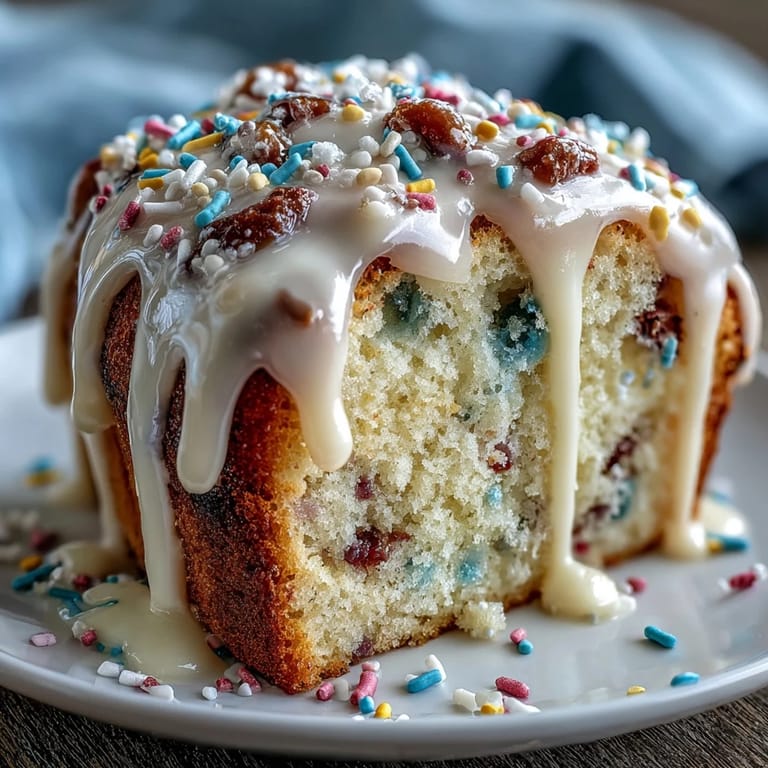
- Dollop or pipe the colored buttercream onto the cooled cake layers, then swirl the colors together with a spatula for a marbled pastel effect that looks like edible clouds.
 Save
Save There's something about serving a cake this visually joyful that changes the mood of a gathering—suddenly everyone is smiling before they even take a bite. I've learned that sometimes the most meaningful thing you can bake isn't technically complex; it's just honest and bright.
Why Room Temperature Matters
Cold ingredients don't blend smoothly, which sounds technical until you end up with buttercream that feels grainy or a batter that looks separated. Letting your butter, eggs, and dairy sit on the counter for 30 minutes before you start isn't fussy—it's the difference between a cake that's tender and one that's dense. I learned this the hard way when I tried to speed up a batch and ended up with something that baked unevenly and tasted slightly heavy.
The Sprinkle Situation
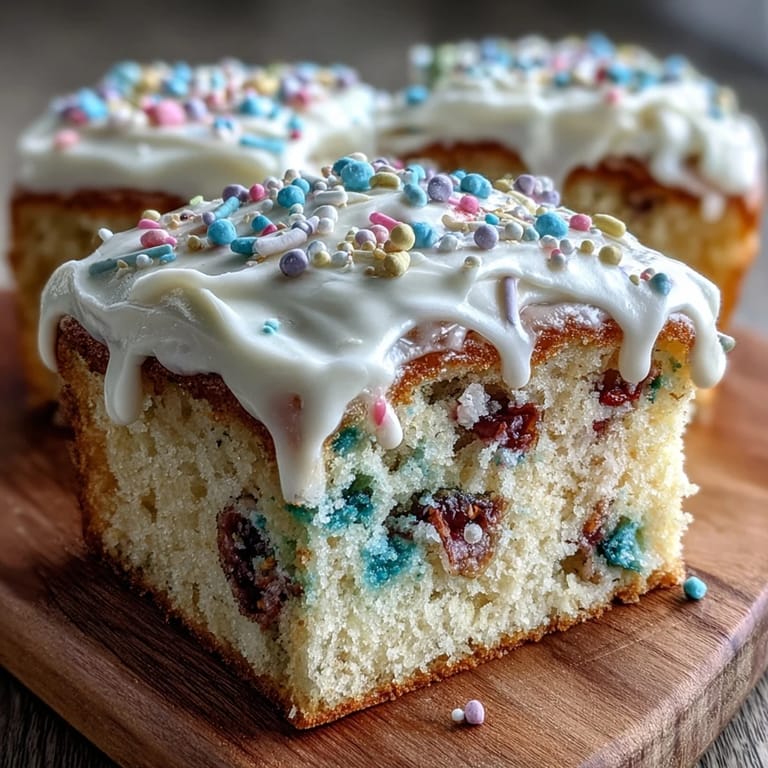
Not all sprinkles are created equal, and this is one of those places where it actually matters. Ball sprinkles (nonpareils) are pretty but they bleed color into light-colored batter and turn your cake a murky shade. Jimmies, the classic rod-shaped sprinkles, stay crisp, hold their color, and scatter throughout the cake like happy punctuation marks instead of pooling into dark streaks.
Decorating with Confidence
The marbled pastel effect looks impressive but it's forgiving—you literally can't mess it up because swirling colors together is the point. If you're nervous about piping, just dollop the buttercream with a spatula and let the colors sit next to each other without over-blending; the softness of pastels means imperfection looks intentional.
- Chill the frosted cake for 20 minutes before serving if your kitchen is warm, so the buttercream doesn't start to soften.
- Leftover cake stays moist and fresh for three days covered at room temperature or up to five days in the refrigerator.
- If you're making cupcakes instead, reduce the bake time to 22 to 24 minutes and watch them closely so they don't overbake.
 Save
Save This cake has become my go-to for spring celebrations because it's light, uncomplicated, and genuinely joyful to look at. Every time I make it, I think about my neighbor and her box of sprinkles, and I'm grateful she reminded me that sometimes the best baking moments are the ones where you let playfulness win.
Recipe Q&A
- → How are the sprinkles incorporated?
Sprinkles are gently folded into the batter last to maintain their shape and add bursts of color throughout.
- → What creates the pastel colors in the buttercream?
Gel food coloring is divided into batches of buttercream and tinted softly in pink, blue, yellow, and purple hues.
- → Can sour cream be substituted?
Yes, Greek yogurt can be used as a substitute to maintain moisture and tender texture.
- → What baking pans are best to use?
Two 9-inch round cake pans lined with parchment paper provide even baking and easy removal.
- → How long should the cake cool before frosting?
Allow cakes to cool completely on a wire rack, about 1 hour, to ensure buttercream spreads smoothly.
- → What is the recommended baking temperature and time?
Bake at 350°F (175°C) for 28–32 minutes, or until a toothpick comes out clean.