 Save
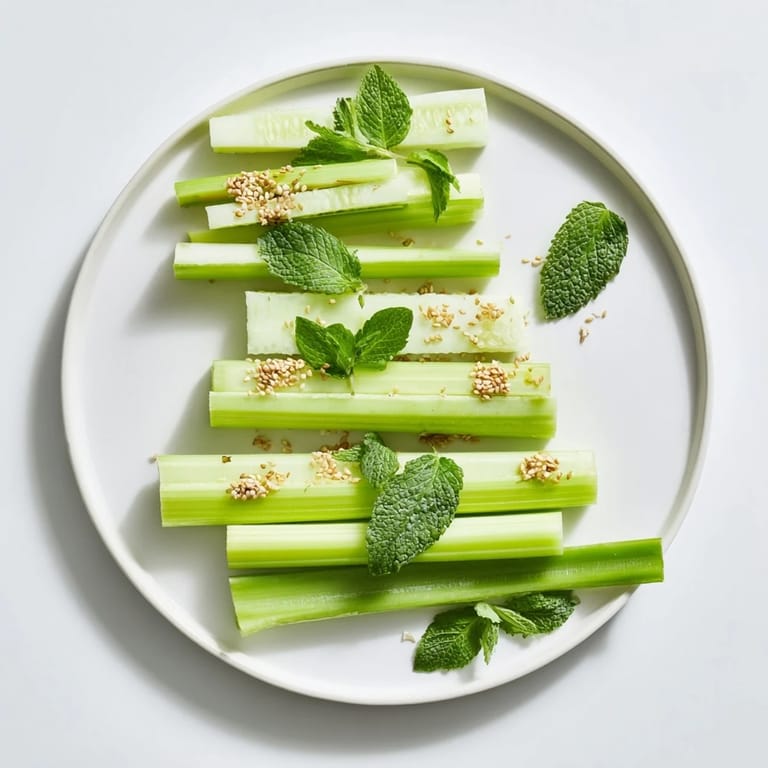
Save There's something about the quiet perfection of a plate that makes you pause before eating. I discovered The Bamboo Zen not in a restaurant, but in my own kitchen on an ordinary Tuesday afternoon when I'd overthought every appetizer option and ended up with nothing but fresh vegetables and an urge to stop complicating things. The moment I arranged those crisp green stalks vertically on a white ceramic plate, something clicked—simplicity became its own kind of elegance, and I realized the most impressive dishes sometimes demand the least effort.
I served this for the first time when my mother-in-law mentioned she was on a strict diet and I panicked. Instead of scrambling to cook something elaborate, I arranged these vegetables with care and a drizzle of sesame seeds, and she actually lingered over it longer than she did over the main course. That's when I understood that presentation paired with quality ingredients can feel more luxurious than complexity ever could.
Ingredients
- Cucumbers, 2 large: Choose firm ones without soft spots; they'll hold their crunch even after sitting on the platter for a while, which is exactly what you want.
- Celery stalks, 4 large: The inner pale stalks are milder and more tender than the outer ones, so hunt for those if you can.
- Toasted sesame seeds, 1 tablespoon: Toast them yourself if you have time—that nutty warmth makes all the difference between adequate and memorable.
- Light soy sauce or tamari, 1 tablespoon: Tamari works beautifully if you need to keep things gluten-free, and honestly tastes slightly deeper.
- Rice vinegar, 1 teaspoon: Just a whisper of it; too much and you've crossed from subtle into sharp.
- Fresh mint or basil leaves: Mint brings coolness, basil brings bite—choose based on your mood and what's growing in your kitchen or nearby.
Tired of Takeout? 🥡
Get 10 meals you can make faster than delivery arrives. Seriously.
One email. No spam. Unsubscribe anytime.
Instructions
- Wash with intention:
- Run cool water over the cucumbers and celery, letting your fingers find any hidden dirt in the crevices. This matters more than it sounds because you're eating these raw.
- Trim the ends:
- Cut away about half an inch from each end; this removes any browning and gives you a clean canvas to work with.
- Cut into long sticks:
- Aim for roughly 4 to 5 inches, keeping them uniform so they look intentional rather than haphazard on the plate. A sharp knife makes this meditative instead of frustrating.
- Build your composition:
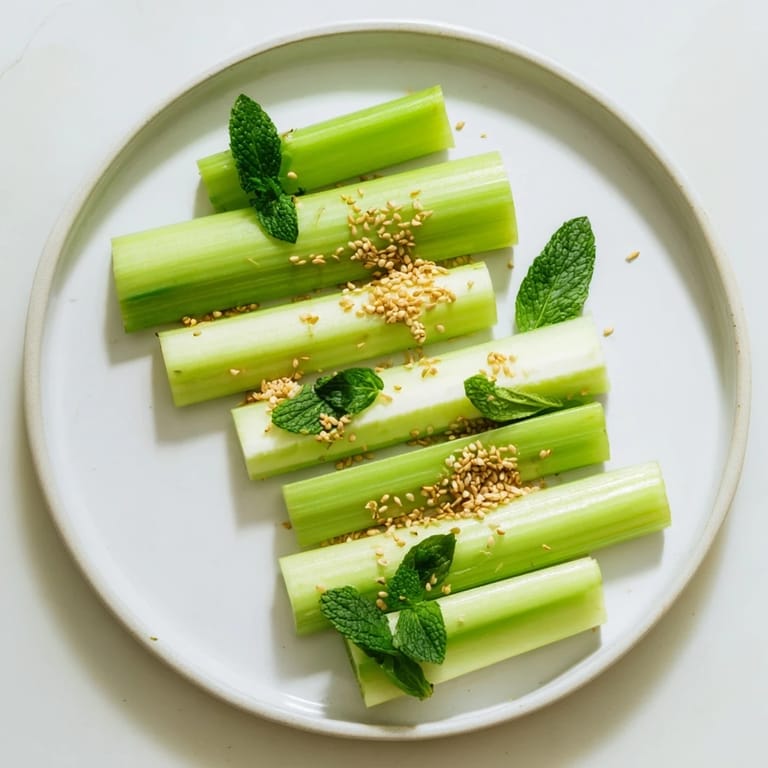
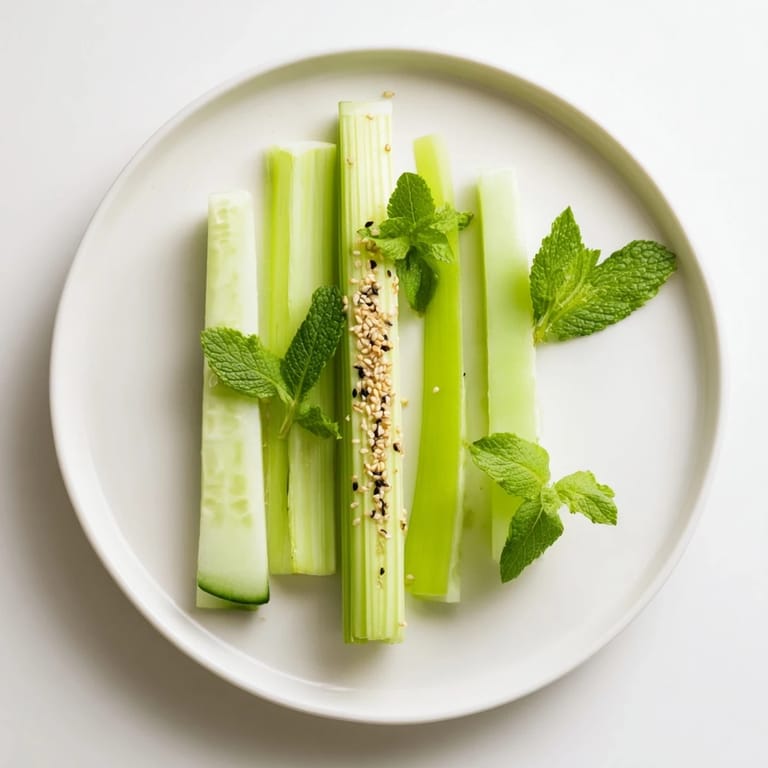
- Stand the sticks upright in clusters, then lay some horizontally across the top—think less salad and more minimalist art installation. This is where the magic happens visually.
- Garnish with grace:
- Scatter sesame seeds across the top and tuck a few herb leaves into the arrangement where they'll catch light and seem to float above the vegetables.
- Prepare the dipping sauce:
- Stir the soy sauce and rice vinegar together in a small bowl and place it beside the platter, inviting people to customize their bite.
 Save
Save I'll never forget when my seven-year-old nephew pointed at this plate and said it looked like a little forest, then asked if he could eat it with his eyes closed. He did, bite by bite, and suddenly it wasn't just an appetizer anymore—it was permission to enjoy food in whatever way felt right.
The Beauty of Simplicity
There's a reason minimalist cuisine keeps showing up in the most respected kitchens around the world. When you strip away the noise, you're forced to care deeply about one thing: quality. Each ingredient here speaks for itself because there's nowhere to hide. The sweetness of a truly fresh cucumber, the earthiness of good celery, the subtle warmth of sesame—these aren't supported by heavy sauces or technique, they're just themselves. This is the opposite of showing off; it's confidence in the purest form.
When Less Becomes More
I used to think appetizers needed to be complicated to impress. This recipe taught me that restraint is actually a skill, and maybe the harder one. It's easy to throw ten ingredients together and hope something good happens. It's genuinely harder to look at three ingredients and know exactly how to make them shine. Once you learn this lesson with one simple dish, you start seeing it everywhere—in design, in conversation, in the way someone arranges flowers. Simplicity isn't easy; it's just worth it.
Serving Suggestions and Moments
This appetizer asks for a particular kind of gathering—the kind where people actually stop to notice what's in front of them. Serve it when you want the evening to feel intentional rather than rushed. Pair it with sparkling water and fresh herbs if it's summer, or with warm sake if the mood is contemplative. This dish works best when it has space to breathe, literally and figuratively, on your table.
- Try standing the sticks in a tall glass for a dramatic presentation that doubles as a conversation piece.
- If you're feeling adventurous, add thin ribbons of daikon or colored carrots for a subtle pop without breaking the Zen.
- Make the dipping sauce earlier in the day and let the flavors marry; it'll be noticeably richer by evening.
 Save
Save This is the recipe I return to when I need to remind myself that cooking can be about presence instead of performance. Make it for someone, and watch what happens when they slow down to really taste something simple.
Recipe Q&A
- → How do I achieve the bamboo-like presentation?
Cut celery and cucumber into long, even sticks about 4-5 inches, then arrange them vertically and horizontally on a platter to mimic bamboo structures.
- → Can I prepare this appetizer ahead of time?
Yes, cut and soak the sticks in ice water to keep them crisp, then store chilled until serving.
- → What are good garnishes to enhance aroma and color?
Fresh mint or basil leaves and toasted sesame seeds add both visual appeal and subtle fragrance.
- → Is there a suggested dipping sauce?
A mixture of light soy sauce or tamari with rice vinegar complements the fresh vegetables with a tangy, savory note.
- → Are there any suitable drink pairings?
Try pairing with chilled sake or a light white wine to complement the crisp, fresh flavors.