 Save
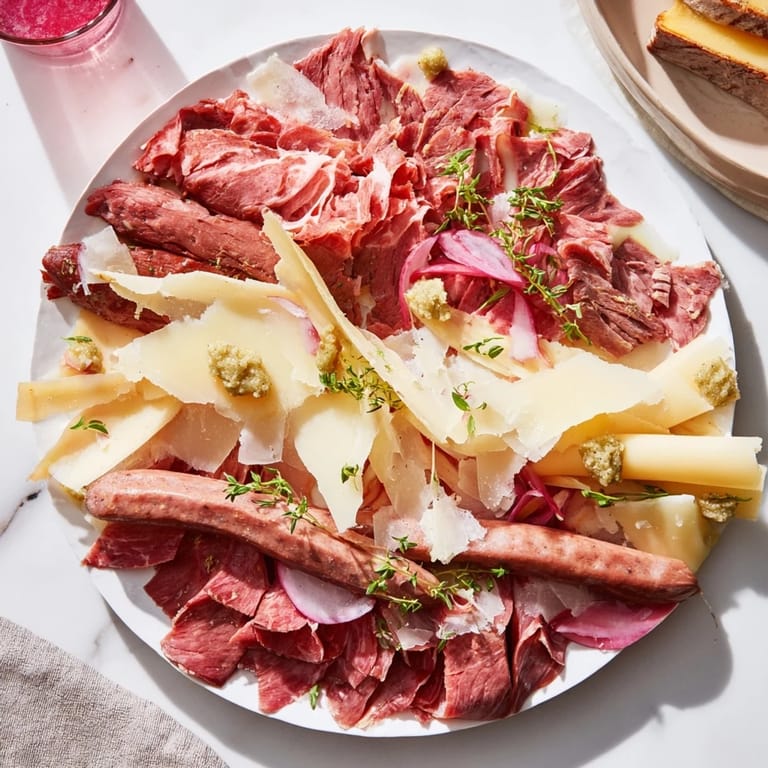
Save There's something about building a charcuterie board that feels less like cooking and more like storytelling with your hands. I discovered this particular arrangement on an evening when I had mismatched cheeses in the fridge and a craving for something that tasted deliberate rather than thrown together. The contrast between rough, torn meats and those delicate, paper-thin cheese ribbons struck me as honest somehow—bold without pretense. It became my favorite way to feed people without exhausting myself in the kitchen.
I remember setting this out for my neighbor's impromptu dinner party when she texted asking what I was bringing. Twenty minutes later, the wooden board emerged from my kitchen looking like something from a magazine, and watching people's faces as they realized it took almost no time to create felt like sharing a small secret. That's when I knew this arrangement wasn't just food—it was a conversation starter.
Ingredients
- Smoked beef: Thick slices or hand-torn pieces give you that rustic, generous feel; the smoke adds depth that anchors the whole platter.
- Rustic country ham: Roughly chopped rather than sliced keeps the texture interesting and speaks to the unrefined elegance of the whole thing.
- Smoked sausage: Thick-cut rounds or wedges provide a hearty, satisfying element that makes people feel properly fed.
- Parmigiano Reggiano: Those crystalline, paper-thin shavings taste almost sweet when done right and catch the light beautifully on the board.
- Aged Manchego: Its nutty complexity pairs surprisingly well with the smoke, and shaving it creates ribbons that feel delicate in contrast to the meats.
- Gruyère: Adds a slightly sweet, complex note that rounds out the flavor story without overwhelming it.
- Cornichons: The sharp, briny pop cuts through richness and palate-cleanses between bites in the best way.
- Red onion: Thinly sliced, it adds a whisper of crunch and color; the raw bite feels fresh against aged meats and cheeses.
- Grainy mustard: Small dollops scattered across the board offer a moment of heat and texture without demanding attention.
- Fresh thyme or rosemary: More than garnish, the aroma rising from the board sets a mood before anyone takes a single bite.
- Crusty bread: Optional but perfect for those who want to build small, indulgent bites.
Tired of Takeout? 🥡
Get 10 meals you can make faster than delivery arrives. Seriously.
One email. No spam. Unsubscribe anytime.
Instructions
- Arrange the meats first:
- Lay them in overlapping layers or casual mounds on your wooden board or platter. Think generosity, not geometry. The irregularity is part of the charm.
- Create the cheese ribbons:
- Using a vegetable peeler or cheese plane, shave each cheese into thin, translucent ribbons with steady pressure and a gentle hand. Drape them over and beside the meats like you're tucking them into place.
- Fill the gaps thoughtfully:
- Scatter cornichons, sliced red onion, and small dollops of mustard around the platter, leaving some negative space so the eye can rest and the flavors don't compete.
- Finish with fragrance:
- Tuck fresh thyme or rosemary sprigs among the meats and cheeses. The green brings visual warmth and promises aroma the moment someone leans in.
- Serve with intention:
- Bring it to the table immediately while cheeses are still cool and the herbs still release their scent. Set out bread on the side if using.
 Save
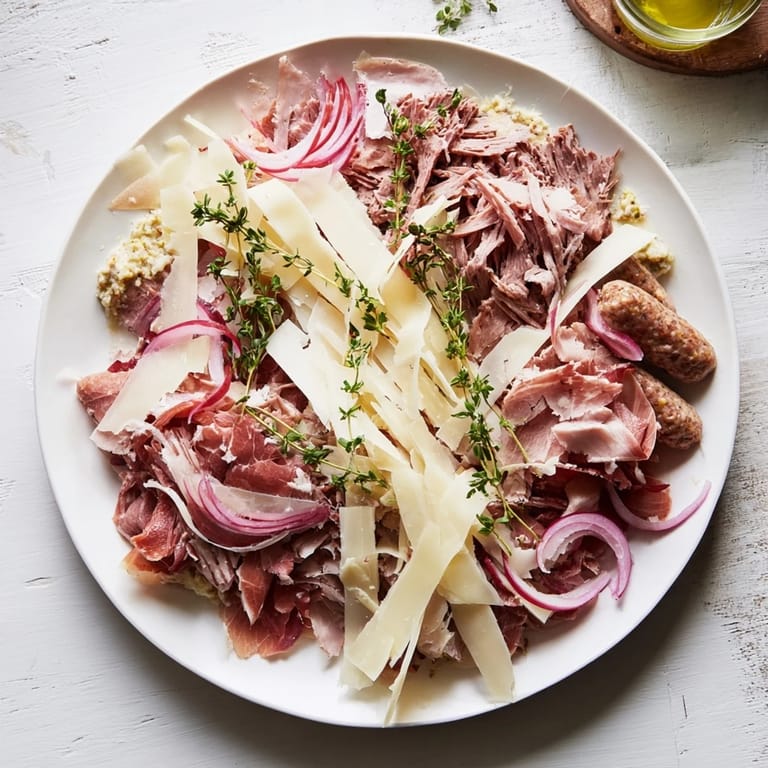
Save The moment that cemented this as my go-to was watching my mother-in-law, who usually critiques everything I make, reach straight for a cheese ribbon without saying a word. She came back three times, each time pairing it differently with the meats and mustard, and suddenly I understood that the best recipe is one that lets people be creative.
The Art of the Board
Building a charcuterie platter is less about following rules and more about understanding balance. I learned that the eye needs both boldness and restraint at once—plenty of meat and cheese, but enough breathing room that each element can be appreciated separately. A wooden board ages beautifully with use, picking up flavors and stories from every gathering. After a few gatherings, it stops being just a platter and becomes part of your kitchen's personality.
Wine and Pairing
The interplay between what's on the board and what's in the glass matters more than people realize. A bold red wine brings out the earthiness in smoked meats, while a crisp white highlights the bright edges of the cheese. I've found that letting guests pour their own wine and build their own bites creates a kind of relaxed elegance where everyone feels like they're part of something special rather than being fed.
Beyond the Basics
Once you master the foundation, the board becomes a canvas for small experiments. I've added toasted walnuts for crunch, dried apricots for sweetness, and even a small crock of honey for unexpected moments. The beauty is that you can substitute cheeses based on what's good at your market, swap the meats for what speaks to you, or keep it exactly as written every single time.
- Try tucking a small dish of good olive oil into one corner for drizzling over bread or cheese.
- Add fresh fruit like grapes or sliced pear if you want something to balance the richness.
- Keep a sharp knife nearby so people can cut pieces to their preferred thickness.
 Save
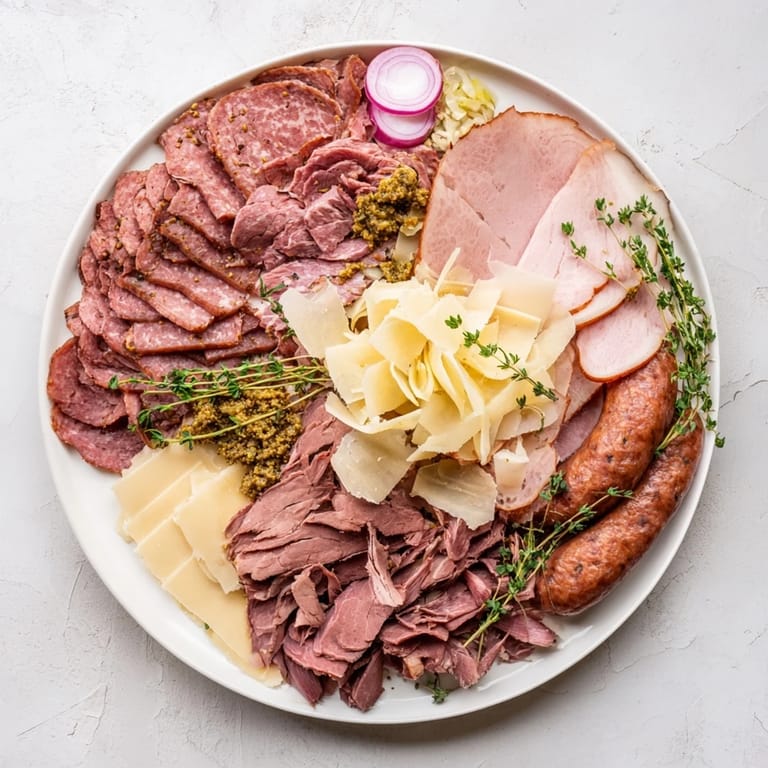
Save This is the kind of food that brings people together without demanding anything of you except good ingredients and a moment to arrange them with care. It's become my answer to almost every gathering, and I've never regretted it.
Recipe Q&A
- → What cheeses work best for this platter?
Aged, firm cheeses like Parmigiano Reggiano, Manchego, and Gruyère provide the perfect balance of texture and flavor.
- → Can I prepare the platter ahead of time?
It's best assembled just before serving to preserve the delicate texture of the shaved cheeses and freshness of herbs.
- → What accompaniments enhance the flavor profile?
Cornichons, sliced red onion, and grainy mustard add bright, tangy accents that complement the rich meats and cheeses.
- → Are there suitable alternatives for fresh herbs?
Rosemary or thyme sprigs are ideal, but oregano or sage can also provide aromatic depth.
- → How can this platter be paired with beverages?
Try bold red wines or crisp, dry whites to enhance the rich, smoky, and tangy elements of the platter.