 Save
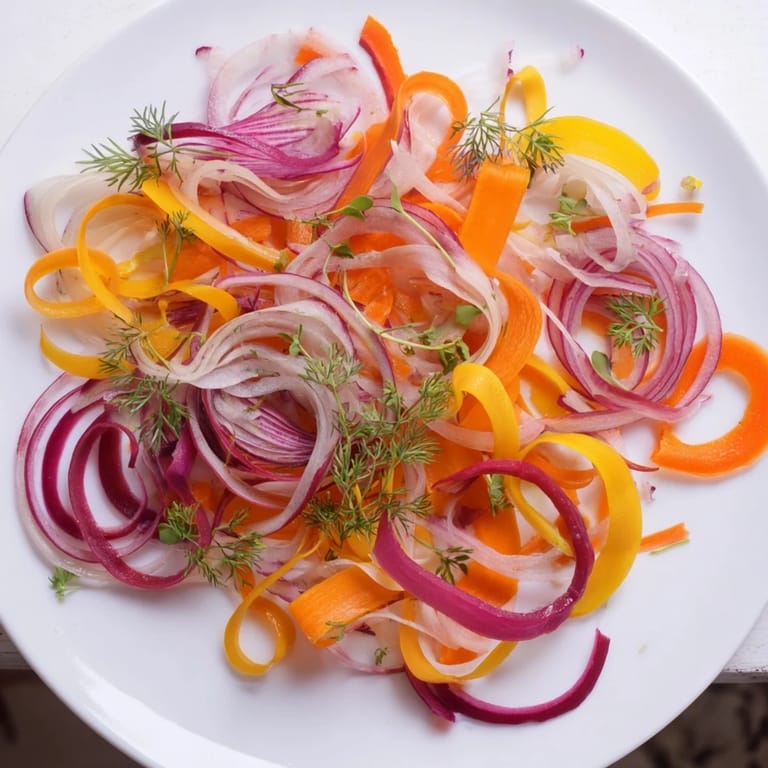
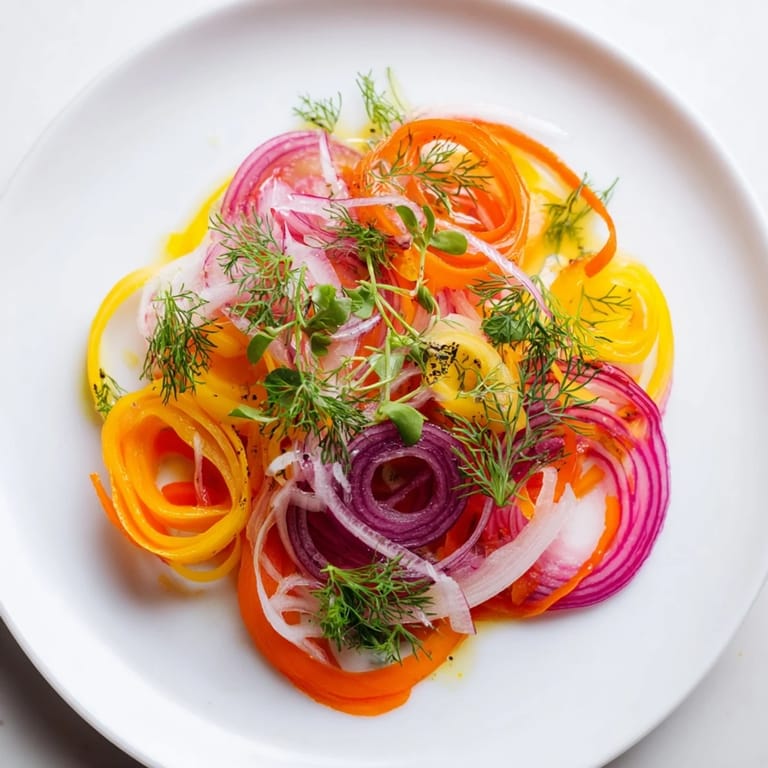
Save I discovered this salad by accident during a chaotic dinner party when I knocked over a bowl of thinly sliced vegetables across a plate. Instead of panicking, I watched as the ribbons settled into this mesmerizing spiral, and I thought, why not lean into it? The result was so visually striking that guests actually gasped before tasting it. That happy mistake became The Spinning Top, a salad that proves sometimes the most impressive dishes come from embracing beautiful chaos.
My cousin once spent an entire afternoon scrolling through her phone at my table until I placed this in front of her, and she actually set it down. We didn't talk much while eating, just made eye contact and nodded at each other. Sometimes a dish doesn't need conversation, just presence and appreciation for the moment.
Ingredients
- Fennel bulb: Its delicate licorice notes balance the earthiness of the beet, and it shaves into the silkiest ribbons when sliced against the grain.
- Rainbow carrots: Different colors aren't just pretty, they taste subtly different too—use them to create depth and visual rhythm in your spiral.
- Golden beet: Milder and sweeter than red beets, so it won't bleed and stain everything, which is why it's essential here.
- Red onion: A thin slice adds sharpness without overpowering, and it mellows beautifully after the ice bath.
- Fresh dill and chervil: These feathery herbs are your secret to that wispy, dynamic edge—don't skip them or substitute with heavier herbs.
- Microgreens: They're delicate anchors that catch light and add that final flourish of sophistication.
- Extra-virgin olive oil: Quality matters here since it's doing all the heavy lifting flavor-wise with so few ingredients.
- Lemon juice and honey: Together they create a subtle brightness that doesn't overwhelm the vegetables.
- Dijon mustard: Just a whisper of it adds backbone to the dressing without any sharp bite.
Tired of Takeout? 🥡
Get 10 meals you can make faster than delivery arrives. Seriously.
One email. No spam. Unsubscribe anytime.
Instructions
- Slice your vegetables into gossamer ribbons:
- A mandoline is your best friend here—keep your fingers curled back and let the blade do the work. If you don't have one, a sharp vegetable peeler works beautifully too, just take your time.
- Give them an ice bath:
- This curls the edges naturally and makes everything crisp enough to hold its shape. Five to ten minutes is perfect; any longer and they get waterlogged.
- Make the dressing in a separate bowl:
- Whisk the oil, lemon juice, honey, and mustard together until slightly emulsified. Taste it before you plate—you might want an extra squeeze of lemon or a pinch more salt.
- Build your spiral on a large, shallow plate:
- Start from the center and work outward, slightly overlapping each ribbon. Let some edges curl naturally off the plate for that blurred, spinning effect.
- Scatter herbs with intention:
- Place denser herbs in the center, then let the delicate dill and chervil feather toward the outer edges where they'll catch the light.
- Dress it just before serving:
- Drizzle the dressing lightly over the top so it pools in the small gaps without making anything soggy.
 Save
Save I made this for someone I was trying to impress, and halfway through plating I realized I was smiling at my own plate. There's something about creating something beautiful with your own hands that changes how you experience eating it, and I think that's what this salad is really about.
The Mandoline: Your Most Important Tool
The difference between a mandoline and a knife isn't just speed, it's consistency. Every ribbon should be nearly transparent, almost like thin shards of glass. When vegetables are sliced this thin, they become tender enough to eat with just a fork, and the dressing reaches every surface instead of pooling on top.
Color as Flavor
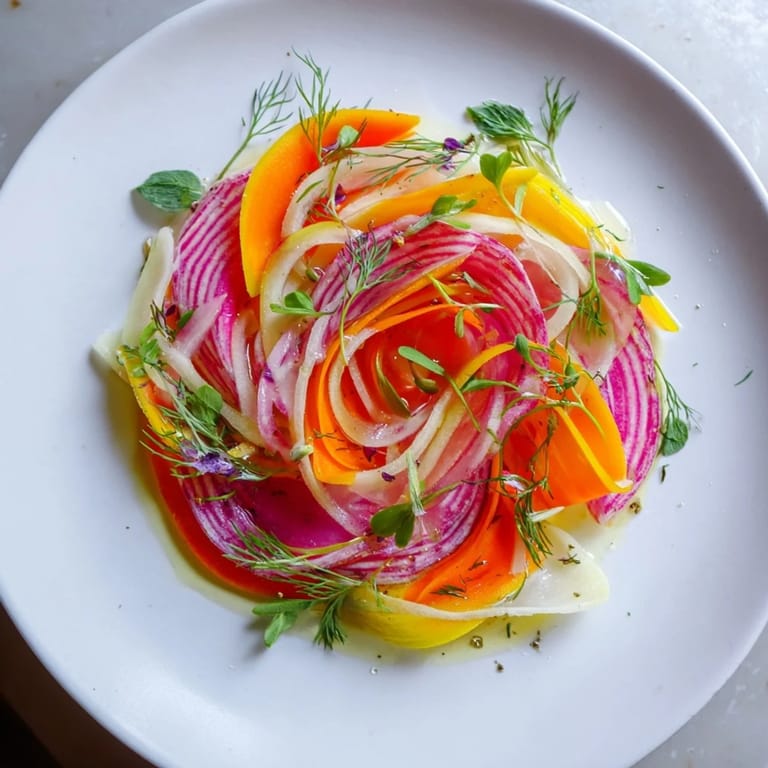
This salad teaches you something most cooking doesn't: vegetables of different colors genuinely taste different. Rainbow carrots have more complexity than orange ones, and a golden beet's sweetness is distinct from a red beet's earthiness. When you arrange them intentionally, you're not just making something beautiful, you're creating layers of flavor that unfold as you eat.
Timing and Presence
This is a salad that demands to be eaten fresh, which means it demands your attention. There's no reheating, no prep ahead of time, just you in the moment making something that will only last as long as you're present to it. That constraint is actually a gift.
- Slice your vegetables only when your guests are sitting down, or keep them in ice water covered until the last possible moment.
- If you're making this for a dinner party, assemble the spiral while everyone is finishing their previous course so it arrives at peak crispness.
- Serve it on the largest, shallowest plate you own so every part of the spiral is visible.
 Save
Save This salad reminds me that the most memorable dishes aren't always the most complicated ones. Sometimes it's just about paying attention to what's in front of you and arranging it with care.
Recipe Q&A
- → How do you achieve the crispy texture of the vegetables?
Soaking the thinly shaved vegetable ribbons in ice water for 5-10 minutes helps them crisp up and curl, enhancing texture and presentation.
- → What tools are best for creating the thin vegetable ribbons?
A mandoline slicer or a sharp vegetable peeler can be used to create uniform, wispy ribbons of fennel, carrots, beets, and onion.
- → Can other herbs be used in place of dill and chervil?
Yes, parsley or other fresh herbs like tarragon can be substituted to maintain fresh, bright herbal notes.
- → Is the dressing suitable for vegan diets?
The dressing contains honey, which some vegans avoid; you can substitute with maple syrup for a vegan-friendly option.
- → How should the salad be served to preserve its freshness?
Serve immediately after dressing to keep the vegetable ribbons crisp and visually appealing.
- → What wine pairs well with this salad?
A crisp white wine like Sauvignon Blanc complements the fresh, light flavors and herbs in the salad.