 Save
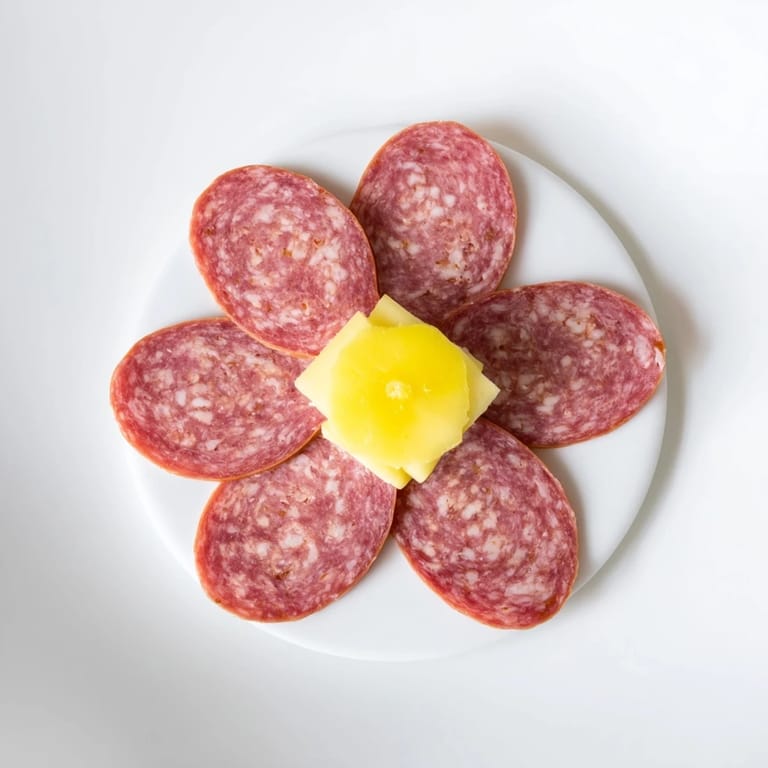
Save I discovered the Tudor Rose at a London dinner party where everything felt impossibly elegant, and here was this appetizer that looked like it belonged in a Renaissance painting. The host arranged five perfect salami slices in a circle, crowned with a single golden button of cheese, and I realized right then that the most memorable food doesn't always demand hours in the kitchen. Sometimes it just needs an eye for symmetry and the confidence to let simplicity be the statement. I've been making these ever since—they're my secret weapon when I want something that feels special without the stress.
I remember setting these out on my friend's vintage platter during a casual wine night, and watching people stop mid-conversation to photograph them. There's something about a perfectly arranged flower that makes people pause. She asked if I'd learned to cook French food, and I had to laugh—it's just salami, cheese, and a little geometry.
Ingredients
- Salami slices: Five pieces cut about 6–8 cm across—thick enough to hold their shape but thin enough to drape naturally when you overlap them. The quality of the salami matters more here than you'd think; a good cured salami with slight moisture will keep its color and won't curl up the edges.
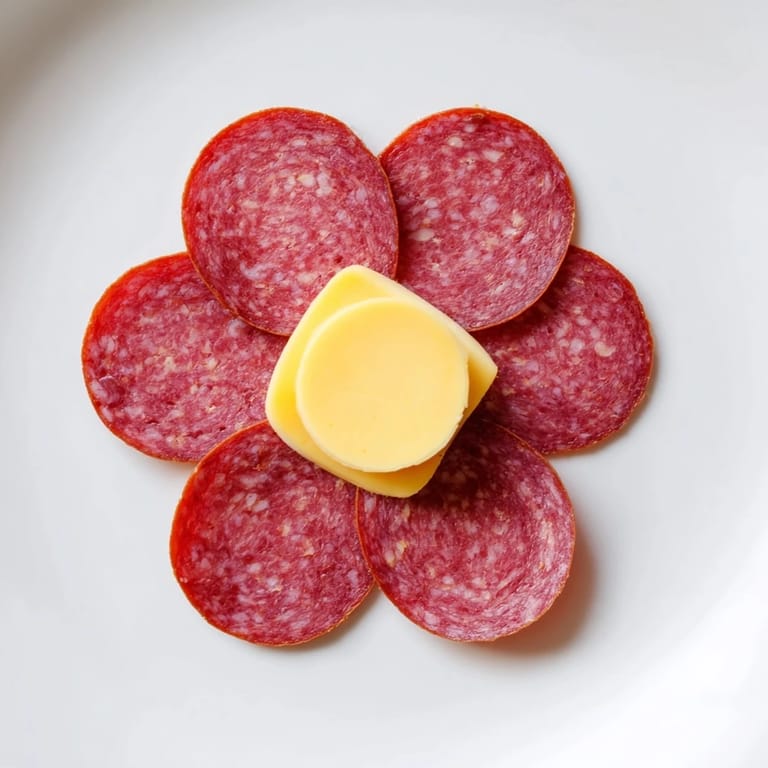
- Yellow cheese: A round slice of Gouda, aged Cheddar, or similar firm cheese about 3–4 cm across and roughly half a centimeter thick. This is your rose's heart, so pick something that feels substantial and has a little visual warmth to it.
Tired of Takeout? 🥡
Get 10 meals you can make faster than delivery arrives. Seriously.
One email. No spam. Unsubscribe anytime.
Instructions
- Arrange your petals:
- Lay the five salami slices on your plate in a circle, each one slightly overlapping the next like they're reaching inward. You want them to look intentional—it takes about thirty seconds to get the symmetry right, and honestly, slight imperfections add character.
- Place your center:
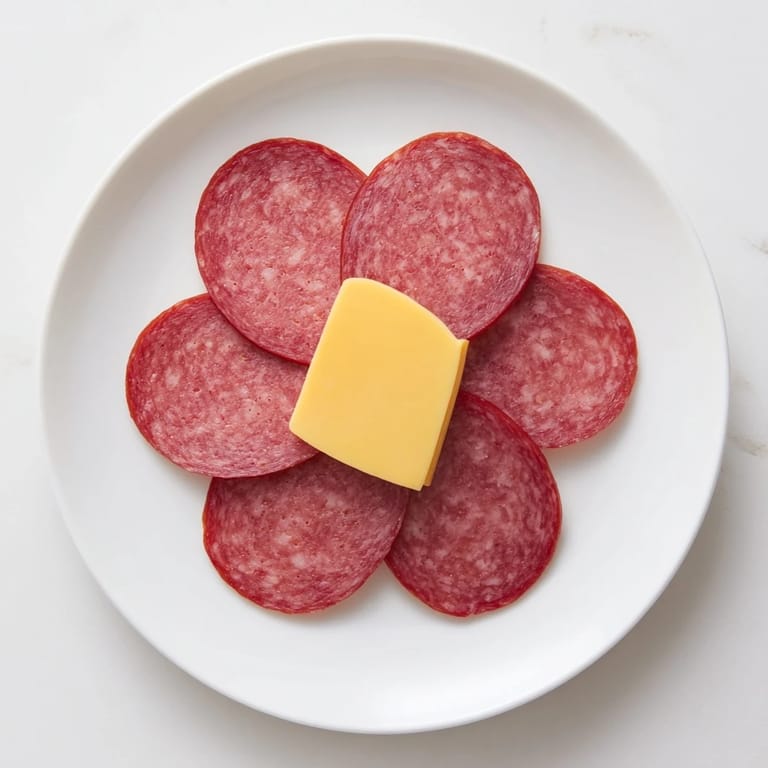
- Set the cheese slice gently in the middle, letting it cover where the salami edges meet. Press down just enough so it stays put, and step back to see the whole thing—if it looks like a flower, you're done.
- Fine-tune and serve:
- Adjust any petals that feel out of place, then bring it straight to the table. This is a now-or-never situation, so serve it as soon as you've made it.
 Save
Save This little rose has become a tradition at my table—people expect it now, which is both a compliment and a gentle pressure to keep delivering. But that's the beauty of it: it never disappoints because it's so straightforward that there's nowhere to hide, and somehow that honesty makes it feel more special than recipes that try too hard.
How to Make It Your Own
The Tudor Rose is a canvas if you want it to be. I've played with different salamis—spicy ones, smoked ones, even some with pepper flecks—and each brings its own character. The cheese is equally flexible; a sharp white cheddar looks striking, smoked gouda adds warmth, and creamy brie softens the whole thing into something almost romantic. Once you understand the structure, the fun is in the variations.
Presentation and Plating
The plate you choose matters more than you'd expect. I learned this the hard way by making these on a crowded cutting board, and they just looked like scattered lunch meat. A clean white plate or a slate board makes the rose feel like art. Some people nestle them on a bed of fresh greens or tuck little herb sprigs between the petals—basil looks beautiful, and parsley adds a whisper of green without competing for attention.
Serving Suggestions and Pairings
These shine on a charcuterie board where they become the focal point among cheeses, nuts, and crackers, but they're equally at home as a standalone appetizer passed around a crowded room. They pair beautifully with crisp white wine, sparkling water with a twist of lemon, or even a light red if that's what's being poured. The beauty is that they complement almost anything because they're so visually simple that they feel like an opening act rather than a main statement.
- Serve them at room temperature or just slightly cool—straight from the fridge feels a bit too rigid.
- Make them no more than thirty minutes before serving so the cheese stays firm and the salami doesn't start to curl.
- Keep extra salami and cheese nearby if you're hosting, because people will ask for seconds or want to watch you make another one.
 Save
Save The Tudor Rose taught me that sometimes the most impressive moments in cooking aren't about complexity or technique—they're about noticing when something simple arranged with intention becomes beautiful. It's a reminder I come back to again and again in the kitchen.
Recipe Q&A
- → What type of cheese works best for this dish?
Soft, mild cheeses like Gouda or Cheddar, sliced thin and round, complement the salami and maintain the balance of flavors.
- → Can other meats replace salami?
Yes, thinly sliced cured meats such as prosciutto or pepperoni can be used for variation while preserving the floral presentation.
- → How can I keep the arrangement looking fresh?
Arrange salami petals shortly before serving and consider lightly garnishing with fresh herbs to enhance visual appeal and freshness.
- → Is any special equipment needed?
A round cutter or small knife helps shape the cheese slice neatly, but it can also be hand-cut with care for the best effect.
- → What can be served alongside this dish?
Pair this with crackers, crusty bread, or a selection of olives and nuts for a complete appetizer experience.