 Save
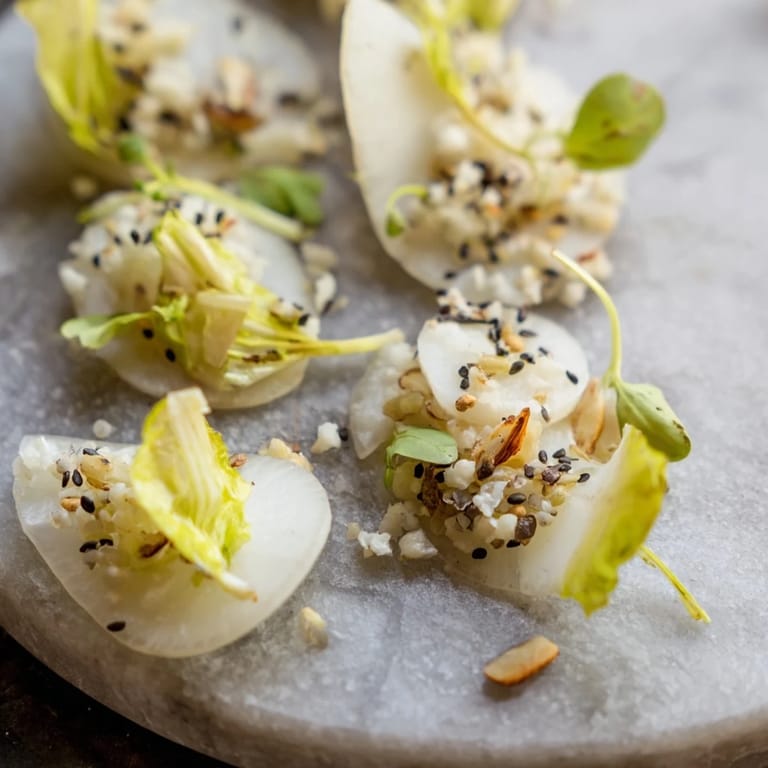
Save The first time I truly understood minimalism in cooking was in a Nordic restaurant kitchen where the chef arranged vegetables on a slate tile like they were pieces in a contemporary art gallery. I watched her place each slice of daikon with deliberate care, and it struck me that sometimes less really does mean more. That moment inspired me to create The Tundra Trek at home—a dish that captures that same austere beauty but feels entirely approachable.
I made this for a dinner party on the coldest night of winter, and I remember my friend Sarah gasping when I set the frozen stone in the center of the table. She said it looked like something from a museum, but then she took a bite and immediately asked for the recipe. That's when I knew this dish had crossed over from concept to something genuinely delicious.
Ingredients
- Daikon radish: The thin slices provide a sharp, peppery bite that feels crisp even when chilled—it's the backbone of this dish's textural appeal.
- Kohlrabi: This mild, slightly sweet vegetable adds gentle earthiness and an almost creamy crunch that balances the radish's intensity.
- Belgian endive: The leaves serve as both ingredient and structural element, offering a subtle bitterness that makes everything taste more sophisticated.
- Cauliflower florets: Finely chopped, they become almost a powder that softens the overall presentation and adds a delicate vegetal note.
- Unsweetened coconut flakes: They bring an unexpected tropical whisper and creaminess without any sweetness that would throw off the balance.
- Sesame seeds: The white and black varieties create visual contrast and a toasted, nutty depth that ties everything together.
- Microgreens: Pea shoots or radish sprouts add a final flourish of color, peppery freshness, and the feeling that your plate just came from a garden.
- Flaky sea salt: Use it sparingly—it's the only seasoning that should announce itself, giving each bite a mineral finish.
- Extra-virgin olive oil: This is your only fat, so choose one you actually love; its quality shapes the entire flavor profile.
- Lemon juice and white wine vinegar: Together they create a bright, clean acid that wakes up pale vegetables without overpowering them.
- White pepper: It's sharper and more floral than black pepper, and it won't create dark specks that disrupt the minimalist aesthetic.
Tired of Takeout? 🥡
Get 10 meals you can make faster than delivery arrives. Seriously.
One email. No spam. Unsubscribe anytime.
Instructions
- Chill your canvas:
- Pop that stone or marble platter in the freezer for 15 minutes while you prep everything else. A cold plate isn't just for temperature—it keeps the vegetables snapping crisp and adds a tactile element guests won't forget.
- Make the dressing:
- Whisk olive oil, lemon juice, white wine vinegar, and white pepper together in a small bowl until they're emulsified and balanced. Taste it—the acid should feel bright but not aggressive, the oil should coat your mouth gently.
- Slice with intention:
- Using a sharp knife or mandoline, slice your daikon and kohlrabi into thin, even pieces; they should be nearly transparent if you can manage it. This isn't just for looks—thin vegetables absorb the dressing better and feel more delicate on your tongue.
- Arrange the landscape:
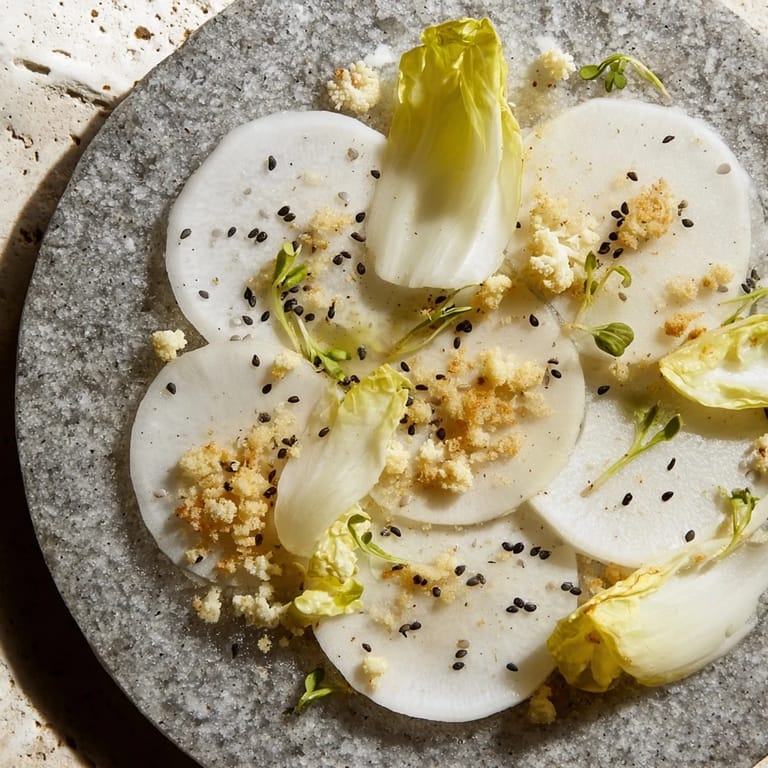
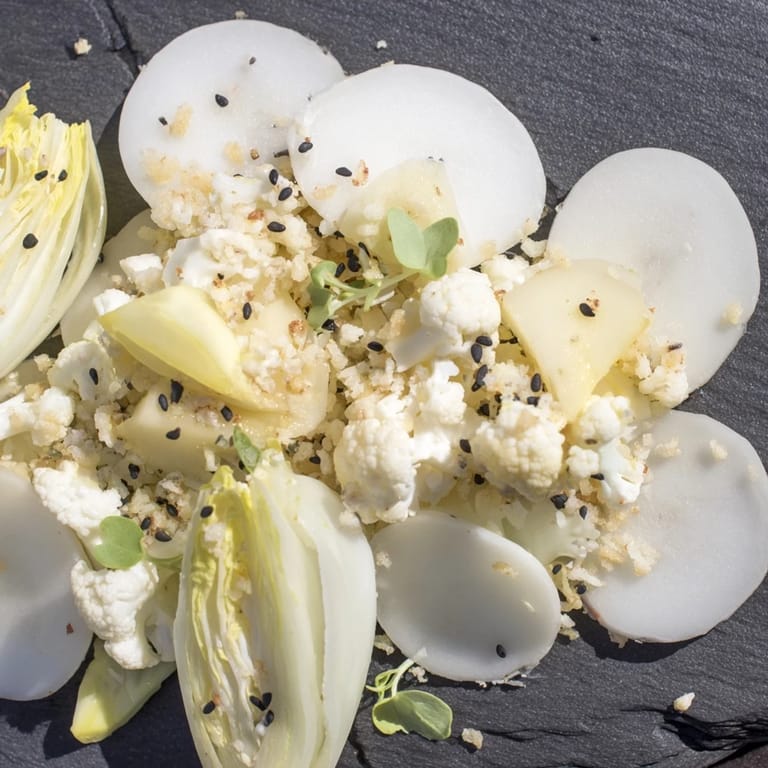
- Remove the cold stone from the freezer and begin placing daikon, kohlrabi, and endive leaves across it in a deliberately scattered, asymmetrical pattern. Think windswept, not organized—let them overlap slightly and leave white space showing.
- Build texture:
- Sprinkle the finely chopped cauliflower, coconut flakes, and both varieties of sesame seeds across the arrangement in random clusters, as if nature scattered them there. Step back and look—you want visual surprise, not perfect symmetry.
- Dress lightly:
- Use a spoon to drizzle the dressing in thin, deliberate lines or droplets across the plate. Don't saturate it; the goal is for vegetables to stay crisp, with pockets of brightness where the dressing pools.
- Final touch:
- Just before serving, scatter microgreens across the top and finish with a pinch of flaky sea salt. Serve immediately while everything is still cold and the textures haven't begun to soften.
 Save
Save There was a moment when my seven-year-old nephew looked at The Tundra Trek and said it looked like a painting he couldn't eat. Then he took a bite and his face completely changed—he realized that food could be beautiful and surprising at the same time. That's exactly what this dish is meant to do.
The Art of Negative Space
In cooking, we often think abundance is generosity. But this dish taught me that emptiness on the plate can feel luxurious. The white stone showing through, the gaps between vegetables—they're not mistakes. They're part of the composition, inviting your eye to rest and your palate to appreciate each individual flavor without competition.
Temperature as an Ingredient
A warm salad tastes completely different from a cold one, and The Tundra Trek relies on that chilled stone plate to deliver something that feels almost architectural. The cold makes textures pop, flavors feel sharper, and the whole experience becomes more memorable. It's the difference between a meal and a moment.
Variations and Flexibility
While this recipe celebrates simplicity, it's incredibly open to interpretation. Swap vegetables based on season, experiment with different vinegars, or play with garnishes that reflect your own kitchen discoveries.
- For protein, scattered flakes of smoked whitefish or chilled poached shrimp transform this into a light main course.
- Try yuzu juice or rice vinegar for an entirely different acidity profile that shifts the whole character of the dish.
- Pair it with chilled aquavit or dry white wine for a Nordic-inspired experience that feels complete.
 Save
Save The Tundra Trek reminds me that sometimes the most elegant food is the simplest food—vegetables at their finest, dressed with respect, served on something beautiful. It's a dish that invites conversation and slowing down, which feels increasingly precious.
Recipe Q&A
- → What vegetables are featured in the tundra trek?
The dish highlights thin slices of daikon radish, kohlrabi, Belgian endive leaves, and finely chopped cauliflower florets.
- → How is the dish served to enhance its presentation?
Arranged on a chilled stone or marble plate to maintain crispness and evoke an arctic ambiance.
- → What ingredients add texture and flavor accents?
Toasted white and black sesame seeds, unsweetened coconut flakes, and fresh microgreens provide crunch and subtle flavor contrasts.
- → What is the dressing composition for this dish?
A light dressing made from extra-virgin olive oil, fresh lemon juice, white wine vinegar, and white pepper enhances the natural flavors without overwhelming them.
- → Can this dish accommodate dietary preferences?
It is vegetarian and gluten-free, with options to add protein like smoked whitefish or poached shrimp for non-vegetarian variations.