 Save
Save I discovered the art of the scythe platter on a sunny afternoon when a farmer's market visit turned into an impromptu gathering at my place. A friend arrived with fresh rye bread still warm from the bakery, and suddenly I was raiding my fruit bowl, searching for something that felt intentional rather than thrown together. That's when the image hit me—sweeping the breads and grains across the board like the curved blade of a scythe, letting the harvest spill across the platter in golden arcs. It wasn't just food; it was a love letter to abundance.
I made this for my book club last month, and it became the thing people remembered more than the wine. One friend actually took a photo and said it looked too beautiful to eat, which made me laugh because that's exactly the point—until someone breaks the spell by grabbing a slice of baguette with brie, and then everyone follows. That's when it stops being decoration and becomes what it was always meant to be: an excuse to linger at the table together.
Ingredients
- Sliced baguette: The crisp backbone of your platter; slice it at an angle to catch the light and give people easy handles.
- Multi-grain crackers: These add textural contrast and hold their shape beautifully, even when topped with spreads.
- Seeded rye bread: The earthier flavor grounds the sweetness of the fruits and brings visual depth with its dark, hearty color.
- Cooked farro or barley: A quiet grain that adds bulk and creates a sense of rusticity; cook it a day ahead if you want to save time.
- Seedless red grapes: They're the jewels of this platter—pop them in your mouth whole or slice them to reveal their bright centers.
- Sliced pears and apples: Toss these lightly in a bit of lemon juice right before arranging to prevent browning and add a subtle brightness.
- Dried apricots: These bring concentrated sweetness and a chewy texture that contrasts beautifully with crisp breads.
- Fresh figs: When in season, they're almost too good to share; their deep purple and seeded interior feel luxurious and special.
- Brie and aged cheddar: Optional, but the creamy brie melts into bread while the cheddar's sharpness plays against sweet fruit—a study in balance.
- Honey or fig jam: A small drizzle transforms simple bread into something worthy of lingering over.
- Fresh mint and roasted nuts: These final touches add aroma and crunch, turning every bite into an experience.
Tired of Takeout? 🥡
Get 10 meals you can make faster than delivery arrives. Seriously.
One email. No spam. Unsubscribe anytime.
Instructions
- Lay out your canvas:
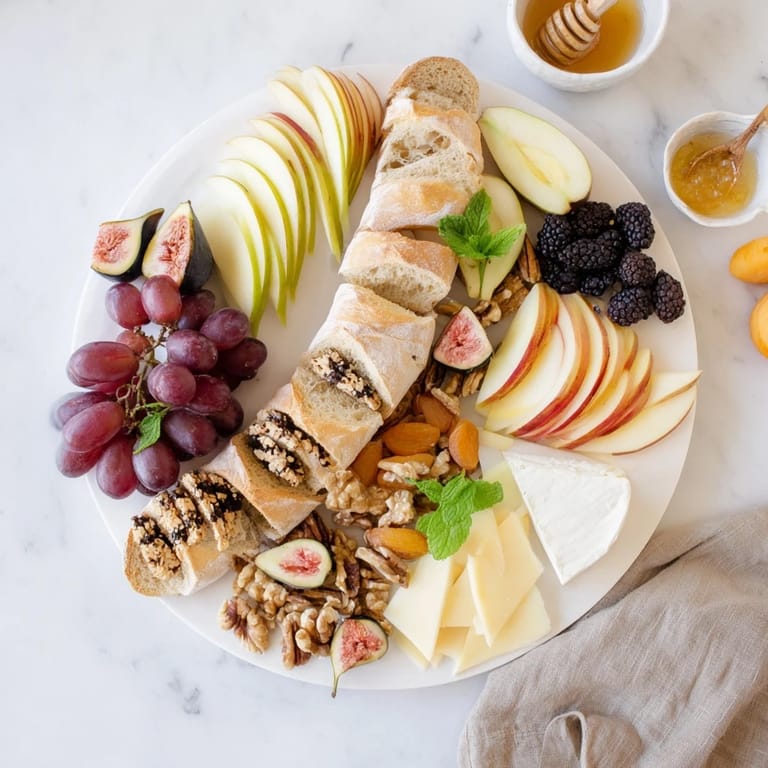
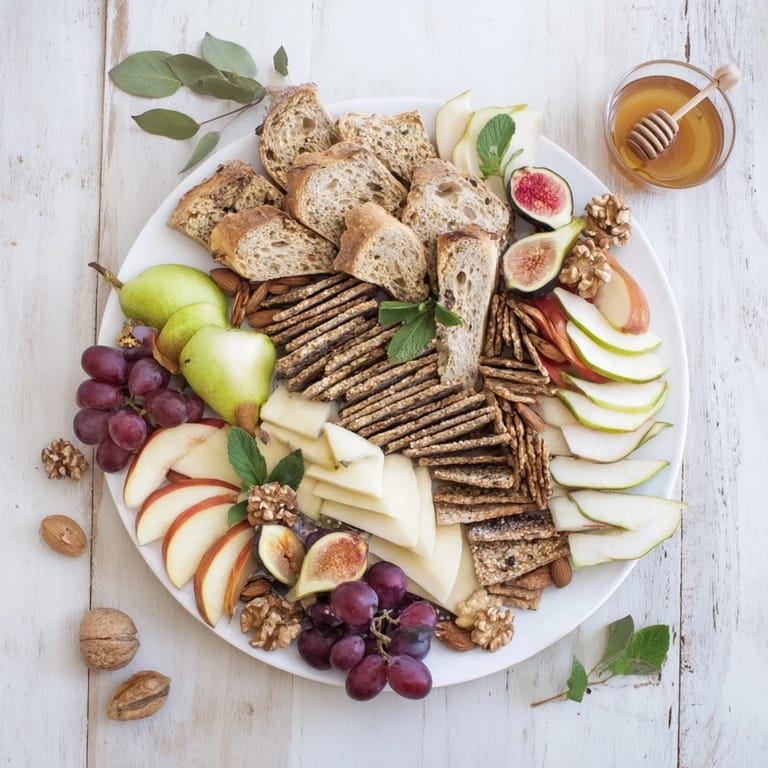
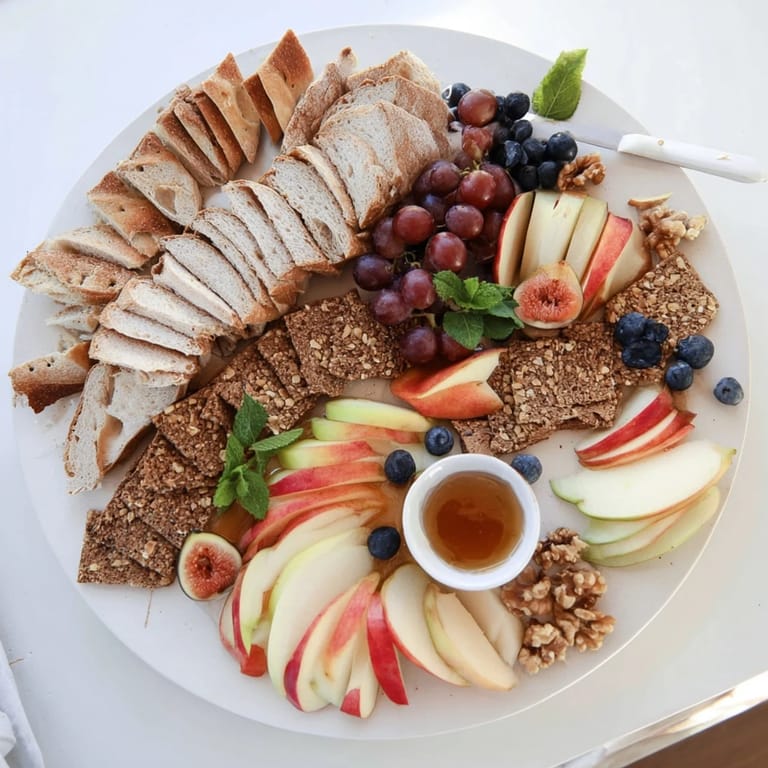
- Find a wooden board or platter that feels generous—you want room for the arrangement to breathe. Arrange your breads and crackers in a sweeping curve, angling the slices slightly so they lean into one another like wheat stalks in a gentle breeze.
- Create the field:
- Scatter the cooked grains along the inside of your scythe curve in a thin, even layer. This is where you're painting with texture; let some grains cluster while others drift slightly apart.
- Dance the fruit:
- Fan your fruit slices between the breads—this isn't rigid, so let colors guide you. Reds next to golds, pale apple slices near dark figs, grapes tucked into gaps like seeds scattered by wind.
- Nestle the cheese:
- If using cheese, place small clusters near the breads where people naturally reach. Think of them as small invitations to pair and explore.
- Add the finishing touches:
- Set small bowls of honey or jam at the platter's edge—accessible but not dominating. Scatter mint leaves across the arrangement for color and freshness, then rain roasted nuts over the top for that final textural flourish.
- Serve with intention:
- Bring it to the table while the fruits are still cool and the breads still hold their structure. This is best enjoyed immediately, while everything is at its peak.
 Save
Save There's a moment during every platter gathering when the grazing begins, and suddenly your carefully arranged geometry dissolves into organic chaos. A friend will say something like, "This tastes like a picnic," and you realize you've accidentally created an experience that reminds people of simpler, slower moments. That's the real magic of this dish—it's permission to eat with your hands, to linger, to break bread with people who matter.
Arranging for the Scythe Effect
The beauty of this platter lives in its deliberate asymmetry and flowing lines. Start by imagining a giant scythe blade sweeping across your board in one continuous arc, then build your breads along that curve with confidence. Don't second-guess the placement—the slight imperfections are what make it feel alive and organic rather than sterile. Once your scythe is laid, treat the interior space like an artist's palette, building depth through color, texture, and the way light hits a perfectly halved fig versus a slice of pale pear.
Timing and Freshness
This platter thrives on its moment of peak freshness, which makes it perfect for last-minute entertaining. You can prep your breads and grains hours ahead, but the fruit should be sliced within 15 minutes of serving, and anything that browns quickly—apples, pears, stone fruits—needs that protective squeeze of lemon. A wooden board that's been oiled and left to breathe for a day carries the scent of good food and history, which somehow makes the platter taste better before you even take your first bite.
Building Flavor and Texture Layers
Every element on this board was chosen to work in conversation with every other element. The rye bread's earthiness plays against bright apricots; the soft give of brie melts against crunchy nuts; honeyed sweetness finds its foil in the grain's nuttiness. When you build a platter this way, you're not just feeding people—you're inviting them into a story where each flavor adds a new verse. The mint leaves aren't just decoration; they refresh your palate between bites. The nuts aren't just texture; they're the final note that lingers.
- Always taste your components as you arrange them to understand how they balance together.
- Let the board sit for five minutes before serving so colors can settle and deepen in the light.
- Keep a small damp cloth nearby to wipe your hands as you arrange—it keeps the platter looking intentional instead of fingerprinted.
 Save
Save This platter is a reminder that some of the most memorable food moments don't require recipes or precision—they require intention and ingredients you actually love. Serve it with someone worth lingering over bread and fruit with.
Recipe Q&A
- → How do I best arrange the breads and fruits?
Arrange sliced breads and crackers in a sweeping curved line, mimicking a scythe’s blade. Fan fruits alongside and between breads to mix colors and textures naturally.
- → Can I substitute the grains used in the platter?
Yes, cooked farro or barley works well, but you can also use quinoa or wheat berries for a similar chewy texture and nutty flavor.
- → What cheeses pair well with this assortment?
Brie and aged cheddar provide creamy and sharp contrasts that complement the fruits and breads. Feel free to swap for plant-based cheeses if preferred.
- → How should I serve the honey or fig jam?
Place small bowls of honey or fig jam along the platter’s edge for easy dipping or drizzling over fruits and cheeses.
- → What garnishes enhance the platter’s flavor and presentation?
Fresh mint leaves add a bright aroma while roasted nuts contribute crunch, elevating texture and visual appeal.
- → Are there suitable options for dietary restrictions?
Use gluten-free breads and crackers, and substitute vegan cheese varieties to accommodate dietary needs while maintaining the platter’s balance.